
Planning to install a glass railing on your deck or balcony? One of the first questions you’ll face is: how high should a glass railing be? Getting this wrong can mean failed inspections, costly fixes, and safety risks.
Glass railing height requirements vary based on where you live, the type of building, and how the space is used. In Seattle, the rules can be different from other parts of the country. This guide covers everything you need to know about glass railing height requirements in Seattle and beyond.
Table of Contents
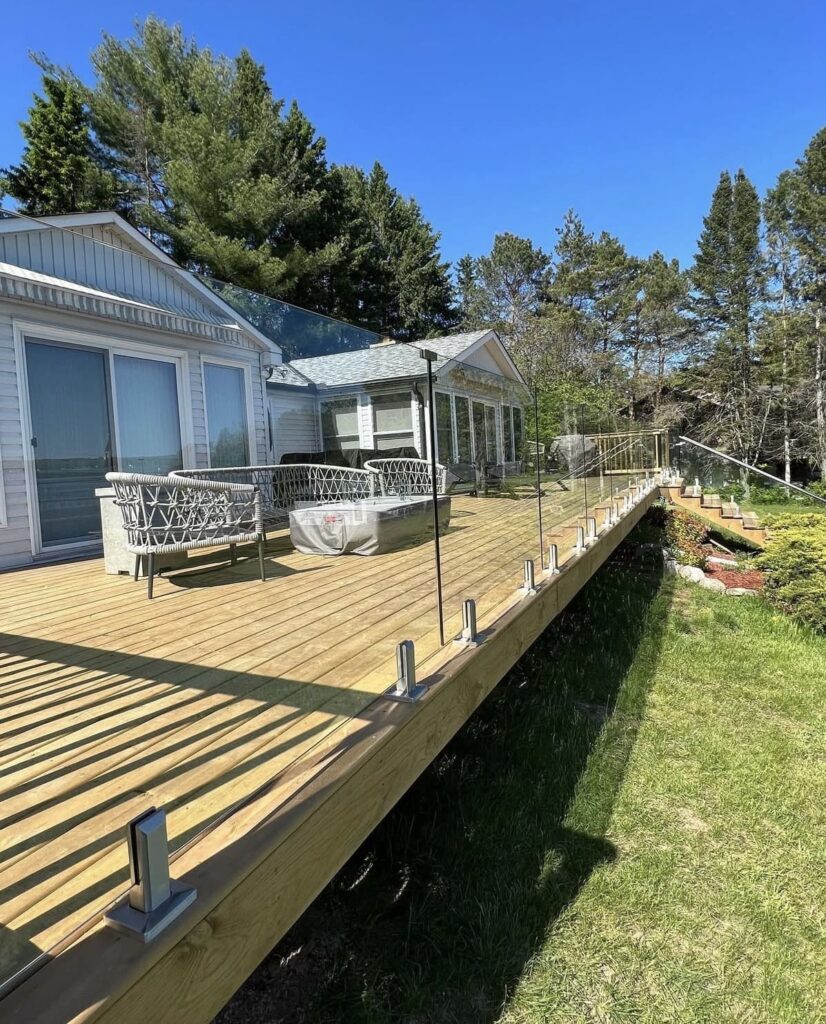
Quick Height Reference
Before we dive into the details, here’s a quick reference table for glass railing heights.
| Application | Minimum Height |
| Residential Decks (Single-Family) | 36 inches |
| Commercial Buildings | 42 inches |
| Multi-Family Residential | 42 inches |
| Stair Handrails | 34 to 38 inches |
How High Should a Glass Railing Be?
The height of your glass railing depends on two main factors: the type of building and where you’re located.
For most residential homes in the United States, the International Residential Code (IRC) requires guardrails to be at least 36 inches high. This applies to single-family homes and duplexes. The measurement is taken from the deck surface straight up to the top of the railing.
Commercial buildings follow a different set of rules. The International Building Code (IBC) requires guardrails to be at least 42 inches high. This includes office buildings, restaurants, hotels, apartment complexes, and other multi-family residential buildings.
Here’s the important part: railings are only required when your deck or walking surface is more than 30 inches above the ground or floor below. If your deck is lower than that, you might not need a railing at all. But if you choose to install one, it still needs to meet the height and strength requirements.
Glass Railing Height Requirements Seattle
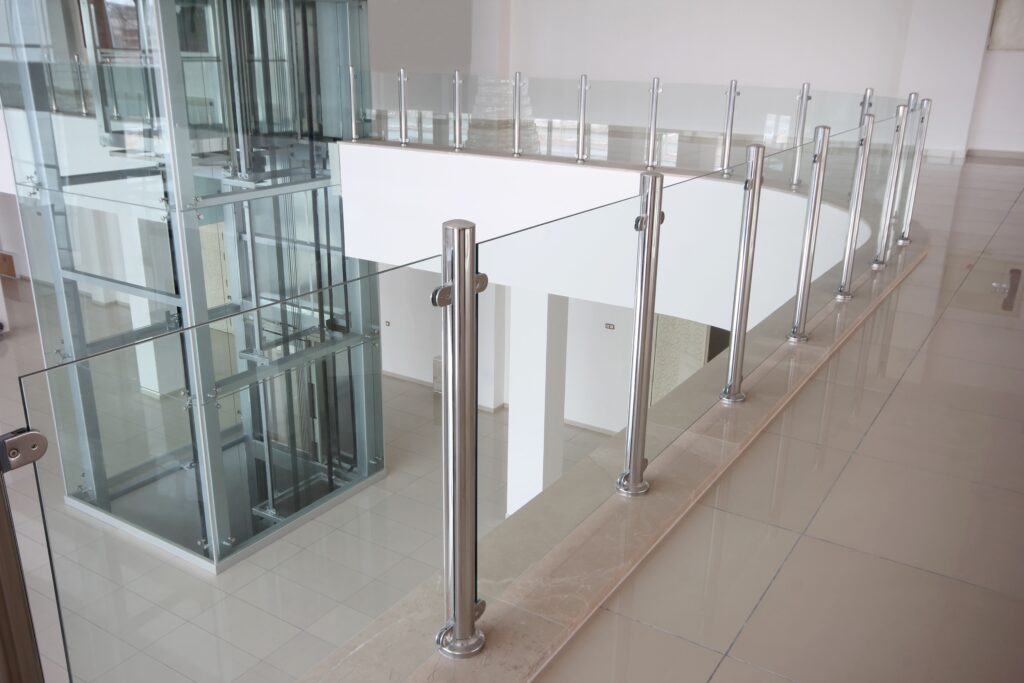
Seattle has some of the strictest building codes in the country. The city follows the Washington State Building Code, which has specific requirements for glass railings.
In Seattle, guardrails for residential decks must be at least 36 inches high when positioned more than 30 inches above the ground. However, Washington State often requires 42-inch railings for most applications, making it stricter than the basic IRC standards.
Commercial and multi-family buildings in Seattle must have guardrails that are at least 42 inches high. This matches the IBC standard and provides extra protection in high-traffic areas.
Seattle’s marine climate and seismic activity create additional safety concerns. Wet, slippery deck surfaces increase fall risk, which is why the city enforces these height requirements strictly. Any deck over 18 inches high requires a building permit through the Seattle Department of Construction and Inspections (SDCI).
Is Railing Height 36 or 42 Inches?
This is one of the most common questions homeowners ask. The answer depends on your building type.
36 inches is the minimum height for single-family homes and duplexes under the IRC. This works for most residential deck projects.
42 inches is required for commercial buildings, apartment complexes, and multi-family residential projects under the IBC. It’s also the OSHA standard for workplace safety.
Many homeowners choose 42-inch railings even when 36 inches is allowed. The extra height provides more security, especially for families with children. It also makes your home more versatile if you ever want to rent out the space or use it commercially.
Do Glass Railings Need a Top Rail?
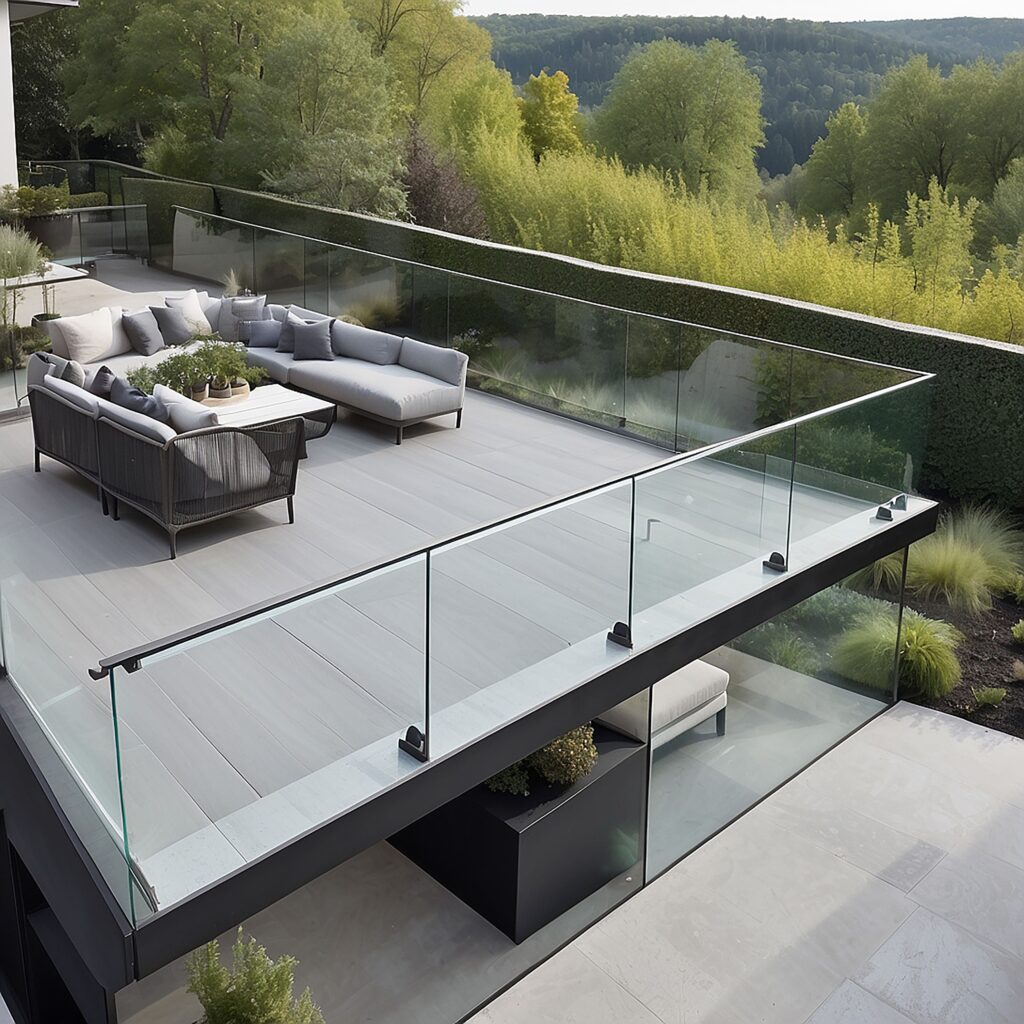
This depends on the type of glass you use.
Standard tempered glass panels require a top rail. According to the International Code Council, glass baluster panels must have an attached top rail or handrail. The top rail must be supported by at least three glass panels or be independently supported so it stays in place if one panel fails.
Laminated glass panels may be exempt from the top rail requirement. When glass panels are made of laminated glass with two or more plies of equal thickness and the same glass type, a top rail might not be required. The laminated construction holds together even if cracked, providing fail-safe protection.
However, always check with your local building department. Many inspectors prefer to see a top rail regardless of glass type. It adds an extra layer of safety and makes the railing more visible, which helps prevent people from walking into the glass.
Outdoor Glass Railing Height Requirements
Outdoor glass railings follow the same height requirements as other railing types. The key factors are building type and height above grade.
For residential decks, balconies, and patios more than 30 inches above the ground, you need at least a 36-inch railing. Commercial outdoor spaces require 42 inches.
Outdoor railings face additional requirements beyond height. The glass must withstand wind loads, which vary by location and building height. In Seattle, wind resistance is especially important due to the region’s weather patterns.
Glass panels for outdoor use should be at least 10mm to 12mm thick for residential applications. Commercial and high-rise projects often require 12mm to 15mm thickness. Thicker glass handles wind pressure better and feels more sturdy.
Glass Railing Specifications You Need to Know
Beyond height, glass railings must meet several other code requirements.
Load capacity: All railings must withstand at least 200 pounds of concentrated force applied at any point along the top rail. They must also handle 50 pounds per linear foot of uniform horizontal load.
Opening restrictions: The 4-inch sphere rule applies to all railings. No opening in the railing should allow a 4-inch diameter ball to pass through. Glass panels automatically meet this requirement since they have no gaps.
Glass type: Fully tempered or heat-strengthened laminated glass is required. The 2021 IBC mandates laminated glass for all guard applications, which is stricter than previous codes.
Minimum thickness: Glass panels must be at least 1/4 inch (6mm) thick for basic applications. Most quality installations use 10mm to 12mm glass for better durability and strength.
Final Thoughts
Understanding glass railing height requirements is essential for any deck or balcony project. Whether you need 36 inches or 42 inches depends on your building type and local codes.
In Seattle, the rules tend to be stricter than national standards. The city’s marine climate and safety-conscious approach mean you’ll need to pay close attention to code requirements. Always get a permit and work with your local building department to ensure compliance.
At Glass Railing Seattle, we specialize in code-compliant glass railing installations for homes and businesses throughout the Seattle area. Our team understands local requirements and ensures every project meets or exceeds building codes. Contact us today for a free consultation.