
Property managers and building owners often ask if glass railing for commercial buildings can handle the demands of year-round use.Yes, modern commercial glass railings deliver exceptional performance through every season when specified and installed correctly.
From high-rise office towers to boutique retail spaces, commercial glass railings have proven themselves in demanding environments worldwide. Understanding the materials, hardware, and design options helps you make informed decisions for your commercial property.
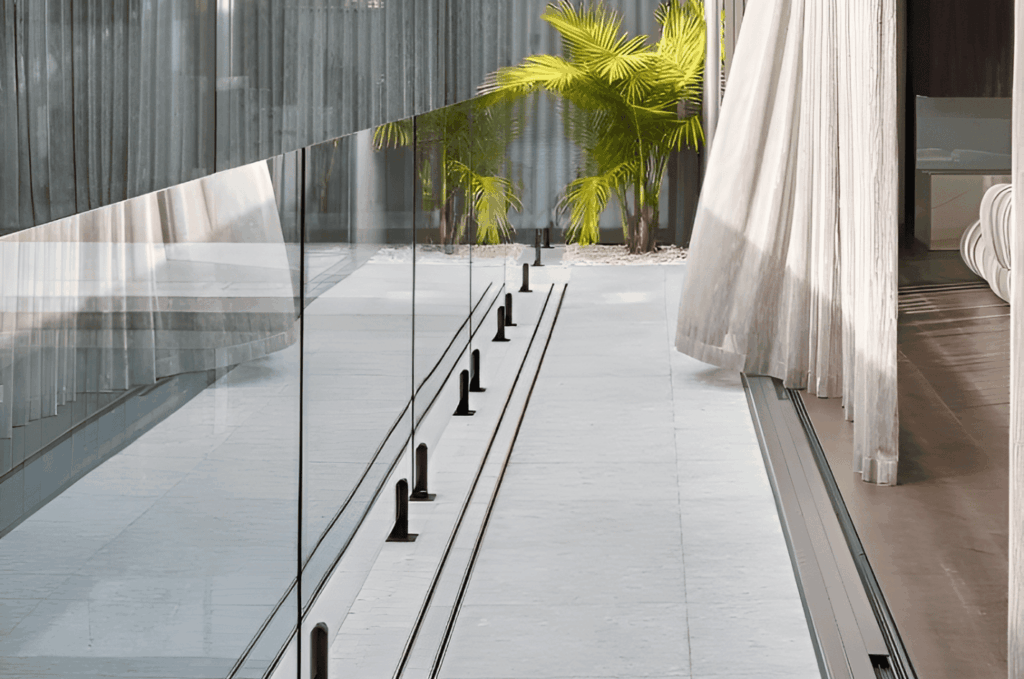
Glass Railing for Commercial Buildings Material Options
The glass railing for commercial buildings material choice directly impacts long-term performance. Commercial applications demand stronger, more durable materials than typical residential glass railing systems. Two primary glass types dominate commercial installations.
Tempered Safety Glass
Tempered glass undergoes heat treatment that makes it four to five times stronger than standard glass. This commercial glass railing material withstands impact, thermal stress, and daily wear without compromising structural integrity. If tempered glass ever breaks, it crumbles into small, dull pieces rather than dangerous shards.
Laminated Safety Glass
Laminated glass bonds multiple layers with a plastic interlayer. This construction holds the glass together even when damaged, providing an additional safety barrier. Many glass railing manufacturers recommend laminated glass for outdoor glass railing for commercial buildings applications and high-traffic interior spaces.
Both glass types resist UV degradation, maintaining clarity and strength even after years of sun exposure. They handle temperature fluctuations without expanding, contracting, or cracking. Commercial properties in Bellevue benefit from this durability regardless of climate zone.
Hardware That Performs Year-Round
Quality hardware determines whether glass railing for commercial buildings performs reliably through all seasons. The exterior glass railing system components must resist corrosion, maintain structural integrity, and look professional year after year.
Stainless Steel Components
Marine-grade 316 stainless steel offers the best corrosion resistance for commercial glass railings. This material handles humidity, rain, salt spray, and chemical exposure without rusting or weakening. Coastal commercial properties and those in harsh climates particularly benefit from stainless steel hardware.
Aluminum Options
Aircraft-grade 6063-T6 aluminum provides lightweight strength with excellent weather resistance. Powder-coated aluminum components resist fading, chipping, and corrosion while offering diverse color options. This material suits many frameless glass railing system installations where weight considerations matter.
Both materials require minimal maintenance and maintain their appearance through temperature extremes, precipitation, and UV exposure. The choice between them often depends on aesthetic preferences and specific environmental factors at your commercial property in Mercer Island.
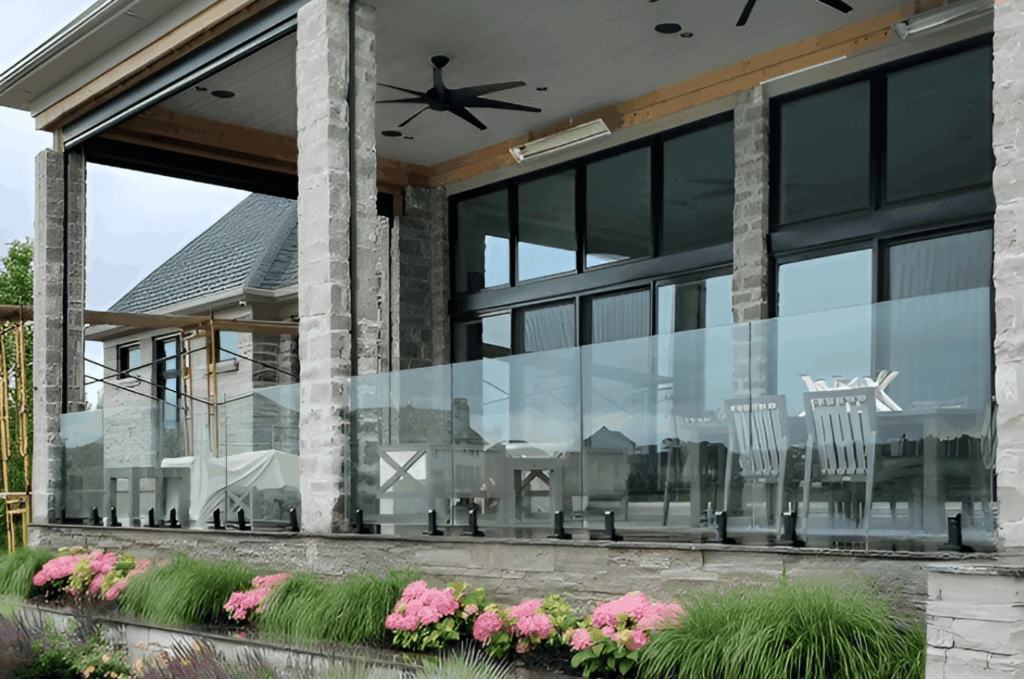
Outdoor Glass Railing for Commercial Buildings
Exterior applications demand special consideration. Outdoor glass railing for commercial buildings faces wind loads, temperature swings, moisture, and UV exposure daily. Properly specified systems handle these challenges without compromising safety or appearance.
Glass thickness matters for exterior installations. Commercial exterior glass railing system applications typically use half-inch or thicker panels. Wind-prone locations may require even thicker glass or laminated construction for additional strength.
Mounting systems for outdoor commercial glass railings include wet glaze and dry glaze options. Wet glaze systems use sealants for permanent exterior installations requiring additional weather resistance. Dry glaze systems allow easier adjustments and panel replacement when needed.
Frameless Glass Railing System Benefits
Many commercial properties choose frameless glass railing system installations for their minimal visual impact. These designs use specialized mounting hardware that virtually disappears, leaving unobstructed glass panels that maximize views and light flow.
Base shoe systems secure glass panels in continuous metal channels at floor level. Standoff mounts use cylindrical spacers that create a floating appearance. Both frameless glass railing system approaches suit commercial spaces where aesthetics matter as much as function.
Frameless designs particularly benefit commercial lobbies, rooftop terraces, restaurant patios, and retail environments. The transparency creates open, welcoming atmospheres that enhance customer and tenant experiences.
Glass Railing for Commercial Buildings Cost
Understanding glass railing for commercial buildings cost helps with project planning. Commercial installations typically range from $200 to $500 per linear foot installed. Large projects may achieve economies of scale that reduce per-foot costs.
Material costs account for 40 to 50 percent of total project expense. Glass panels represent the largest single material cost, followed by posts and mounting hardware. Labor typically adds 30 to 35 percent to the overall investment.
The glass railing for commercial buildings cost reflects long-term value. Unlike wood that requires regular refinishing or metal that may corrode, commercial glass railings maintain their appearance with minimal maintenance for decades. This durability delivers excellent return on investment over the building lifecycle.
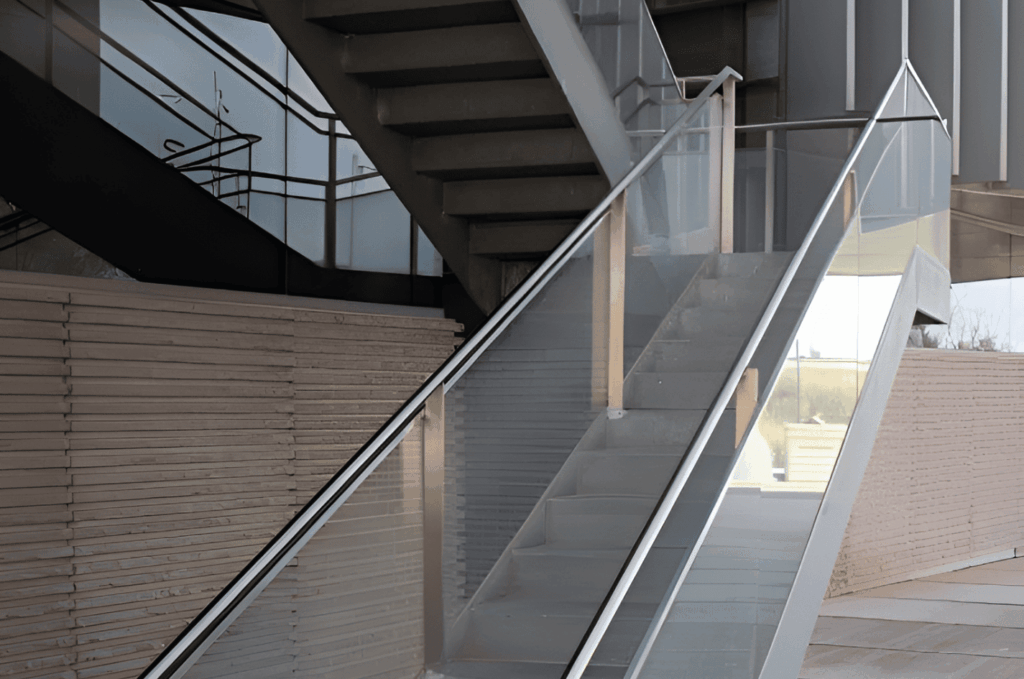
Year-Round Maintenance Requirements
Commercial glass railings require surprisingly little ongoing care. Regular cleaning with standard glass cleaner removes fingerprints, dust, and environmental deposits. High-traffic areas may need weekly cleaning, while less-used spaces can go longer between cleanings.
Hardware inspections should occur annually or after severe weather events. Technicians check for loose fittings, corrosion signs, and mounting integrity. Properly installed commercial glass railings rarely require repairs, but periodic inspection ensures continued safe performance.
Seasonal considerations include checking drainage in base shoe systems to prevent water accumulation. Coastal properties benefit from more frequent hardware inspections due to salt exposure. These minimal maintenance requirements make commercial glass railings practical for property managers seeking low-upkeep solutions.
Commercial Applications That Benefit
Commercial glass railings enhance diverse property types. Office buildings use them for interior staircases, and rooftop terraces. Retail stores choose glass for storefront barriers and multi-level shopping environments. Hotels and restaurants create stunning outdoor dining areas with outdoor glass railing for commercial buildings installations.
Public buildings, transit stations, and entertainment venues rely on commercial glass railings to move crowds safely while maintaining open sightlines. Healthcare facilities appreciate the easy-clean surfaces that support sanitation requirements. Each application demonstrates how glass railing for commercial buildings adapts to varied operational demands.
Practical Performance Across Seasons
Commercial glass railings prove their practicality through every season. Summer heat and UV exposure don’t degrade properly specified glass or hardware. Winter cold and moisture don’t cause warping, rotting, or structural weakening.
High-rise buildings rely on commercial glass railings to withstand elevation winds without blocking skyline views. Coastal properties depend on them to resist salt spray and humidity. Mountain lodges trust them through freeze-thaw cycles. The consistent year-round performance makes glass railing for commercial buildings a practical choice across climate zones.
Glass Railing Seattle professional consultation helps match the right materials, hardware, and design to your specific commercial application and environmental conditions. The investment pays dividends through decades of reliable, beautiful performance.