
Understanding glass railing safety requirements protects your family and ensures your installation passes inspection the first time. Washington State enforces some of the strictest building codes in the nation for outdoor glass railing systems.
Whether you are installing a glass deck railing in Kent or a glass balcony railing in Seattle, knowing these standards helps you plan a successful project that meets all glass railing safety requirements from the start.
Table of Contents
Why Glass Railing Safety Standards Matter
Glass railings serve as critical fall protection on elevated surfaces like decks, balconies, and stairs. Building codes exist to ensure these barriers perform reliably under real-world conditions, from someone leaning against the railing to crowd pressure during gatherings. The International Building Code and International Residential Code establish baseline safety requirements that Washington State has adopted with additional local amendments.
Failing to meet glass railing safety requirements can result in failed inspections, costly corrections, and potential liability issues. More importantly, non-compliant railings may not protect your family when protection matters most. Working with professionals who understand glass railing Redmond requirements ensures your installation meets all applicable standards.
Height Requirements for Outdoor Glass Railing
Railing height requirements vary based on application type and location. Understanding these distinctions helps you plan your outdoor glass railing project correctly.
Washington State Residential Requirements
Washington State requires a minimum 42-inch guardrail height for residential applications, which exceeds the standard 36-inch requirement in many other states. This stricter standard reflects regional safety priorities given the popularity of elevated decks throughout the Pacific Northwest. All walking surfaces more than 30 inches above grade require protective guardrails at this height.
Commercial and Multi-Family Requirements
Commercial buildings in Kirkland, multi-family residences, and public spaces follow International Building Code requirements mandating 42-inch minimum guardrail heights. This applies to apartment balconies, restaurant patios, office building terraces, and similar applications. The consistency between residential and commercial requirements in Washington simplifies compliance planning.
Stair Railing Height Standards
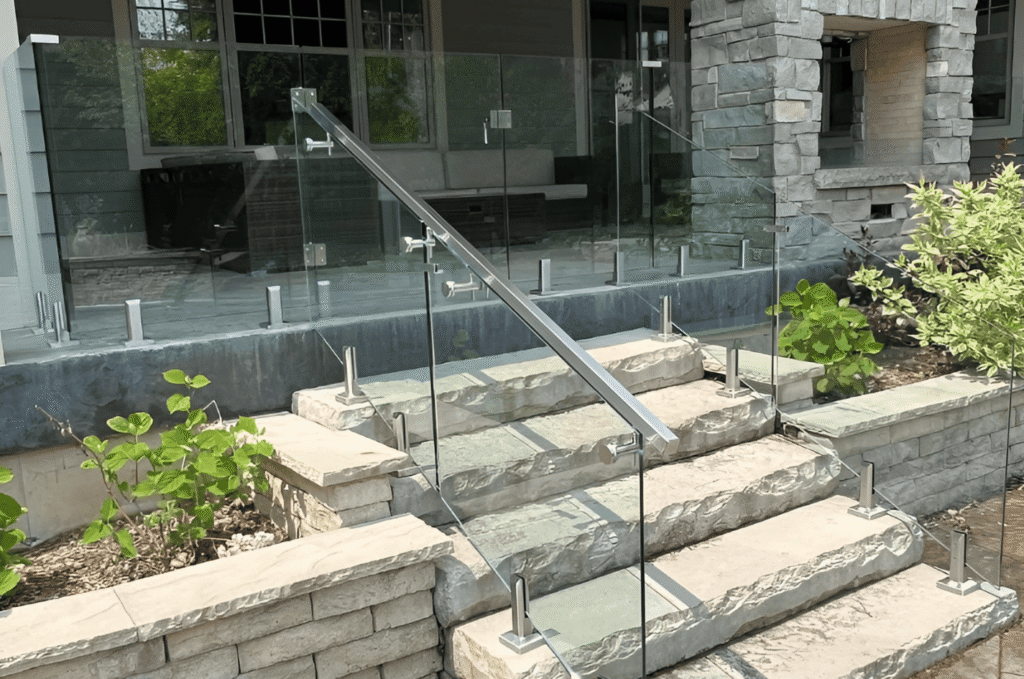
Stair handrails follow different height requirements than level guardrails. Handrails must measure between 34 and 38 inches high, measured vertically from the stair tread nosing to the top of the rail. This lower range allows comfortable hand positioning while ascending or descending stairs. When stairs require both guards and handrails, both requirements must be satisfied simultaneously.
Structural Load Requirements
Glass railing safety depends heavily on structural performance under stress. Building codes specify load requirements that ensure railings withstand real-world forces without failure.
Concentrated Load Requirement
All guardrails must resist a minimum concentrated load of 200 pounds applied at any point along the top rail, in any direction. This requirement simulates someone falling against the railing or sudden impact forces during normal use or emergency situations. The 200-pound standard applies to both residential and commercial glass deck railing and glass balcony railing installations in Woodinville throughout Washington State and is tested during structural engineering evaluations.
Uniform Load Requirement
Guards must also withstand a uniform load of 50 pounds per linear foot applied horizontally along the top rail. On a 10-foot balcony, this translates to 500 pounds of total force pushing against the railing. This requirement ensures railings can handle distributed crowd pressure during gatherings or emergency situations.
Infill Panel Requirements
Glass infill panels must withstand 50 pounds per square foot applied to the panel surface. This requirement ensures glass panels resist pressure from people leaning against them or wind loads in exposed locations. Proper glass thickness and mounting hardware work together to meet these structural demands.
Glass Type and Safety Standards
Building codes specify strict requirements for glass used in railing applications. These standards ensure glass performs safely both during normal use and in the event of breakage.
Safety Glass Requirements
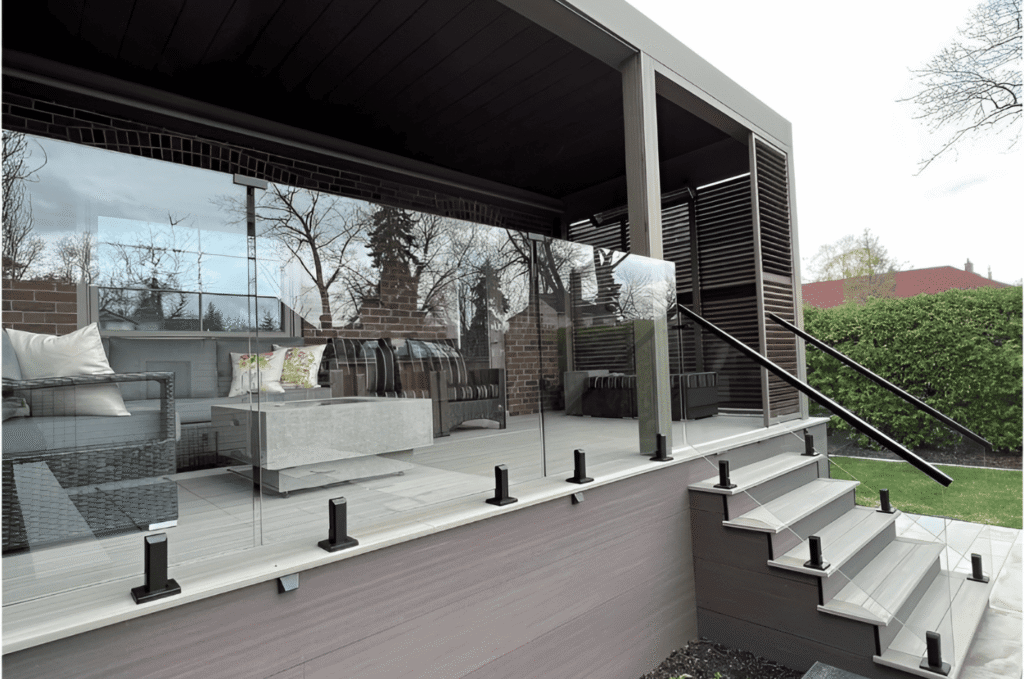
All glass used in outdoor glass railing must be safety glass meeting ANSI Z97.1 Class A standards or CPSC 16 CFR Part 1201 Category II requirements. These certifications ensure glass breaks safely without creating dangerous shards. Tempered glass shatters into small, relatively harmless pieces, while laminated glass holds together even when cracked.
Laminated vs Tempered Glass
Current IBC requirements mandate laminated glass for most guard applications where people walk below the railing. Laminated glass consists of two or more glass layers bonded with a plastic interlayer that holds fragments together if broken. This construction provides continued fall protection even after panel failure and prevents glass shards from falling onto people below. Single-layer tempered glass is permitted only where no walking surface exists below the railing or where permanent protection from falling glass is provided.
Minimum Glass Thickness
Washington State building code requires glass panels minimum half-inch thickness for railing applications. Thicker glass may be required for larger panels, high-wind locations, or commercial installations. The glass thickness must be appropriate for the panel span and anticipated loads based on engineering calculations.
Opening and Spacing Requirements
The four-inch sphere rule is the most frequently cited railing code requirement and applies to all outdoor glass railing installations in Kent, and throughout Washington State. No opening in the guard system may allow passage of a four-inch diameter sphere. This includes gaps between glass panels, between panels and posts, and between the bottom of panels and the deck surface. The four-inch dimension derives from child safety research establishing minimum head entrapment risk for young children, preventing dangerous situations where a child’s head could become trapped.
Top Rail and Handrail Requirements
Current building codes require top rails on most glass baluster installations for added safety. The top rail must attach to at least three glass panels and remain in place even if one panel fails. This redundancy ensures continued fall protection during panel failure. Laminated glass panels that pass specific impact testing may qualify for exceptions to top rail requirements in some jurisdictions.
Handrails serving stairs must be graspable, with circular cross-sections between 1.25 and 2 inches in diameter. Non-circular handrails must meet specific perimeter and cross-section dimensions. Continuous handrails without interruptions at posts or glass joints ensure users never lose grip support while navigating stairs.
Ensuring Code Compliance in Seattle and Kent
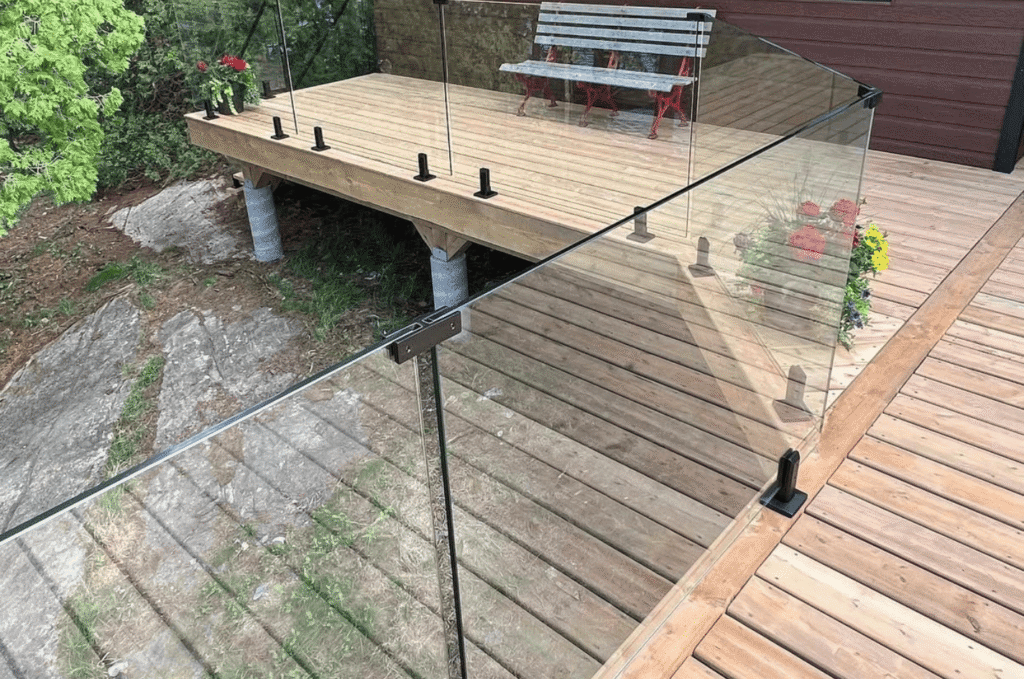
Meeting all glass railing safety requirements demands expertise in both building codes and proper installation techniques. Glass railing Seattle and glass railing Kent projects must comply with Washington State amendments plus any local variations that may apply to specific jurisdictions. Professional installers understand these layered requirements and ensure your outdoor glass railing meets all applicable standards for height, load capacity, and glass specifications.
Most glass railing installations require building permits, especially for elevated surfaces more than 30 inches above grade. Permit applications typically require detailed installation drawings, structural calculations, and material specifications showing compliance with all applicable codes. Working with experienced professionals streamlines the permitting process and ensures your glass deck railing or glass balcony railing passes inspection the first time.
Contact Glass Railing Seattle to discuss your project requirements.