
Glass railing systems use transparent glass panels instead of wood or metal balusters, and they come in three main types: frameless, semi-frameless, and framed. Each one balances openness, structure, and durability differently, so the right choice depends on the view you want, the setting, and how exposed the railing is. Understanding how the three compare, in both look and performance, makes it far easier to pick the one that fits your space and budget. Here is how frameless, semi-frameless, and framed glass railing systems differ in look, structure, and setting, and where each works best.
Table of Contents
What Glass Railing Systems Are
Before comparing types, it helps to see what these systems share. These systems replace solid balusters with glass panels to create a safety barrier you can see through. Here is what sets them apart from traditional railings.
Glass Instead of Balusters
Rather than wood pickets or metal rods, a glass deck railing uses tempered or laminated panels as the barrier. The glass does the guarding while keeping the view open, which is the whole appeal of going glass in the first place. This is the core idea behind every system, whether the glass stands alone or sits inside a frame.
What Separates the Three Types
The three types of glass railing systems differ mainly in how the glass is supported: by nothing visible, by slim posts, or by a full frame. That support method shapes the look, the cost, and the performance of the railing in wind and weather. It is the single biggest design decision, shaping everything from the view to the upkeep.
Why the System Matters
Choosing among glass railing systems affects the view, the maintenance, and how the railing handles wind and exposure. The right system suits its setting rather than fighting it. Matching the system to the space is what makes it work, rather than forcing one look everywhere.
Frameless Glass Railings
Frameless is the most open and dramatic of the glass railing systems. A frameless glass railing uses thick tempered glass with no visible posts or top frame. Here is how it works and where it shines.
How Frameless Systems Work
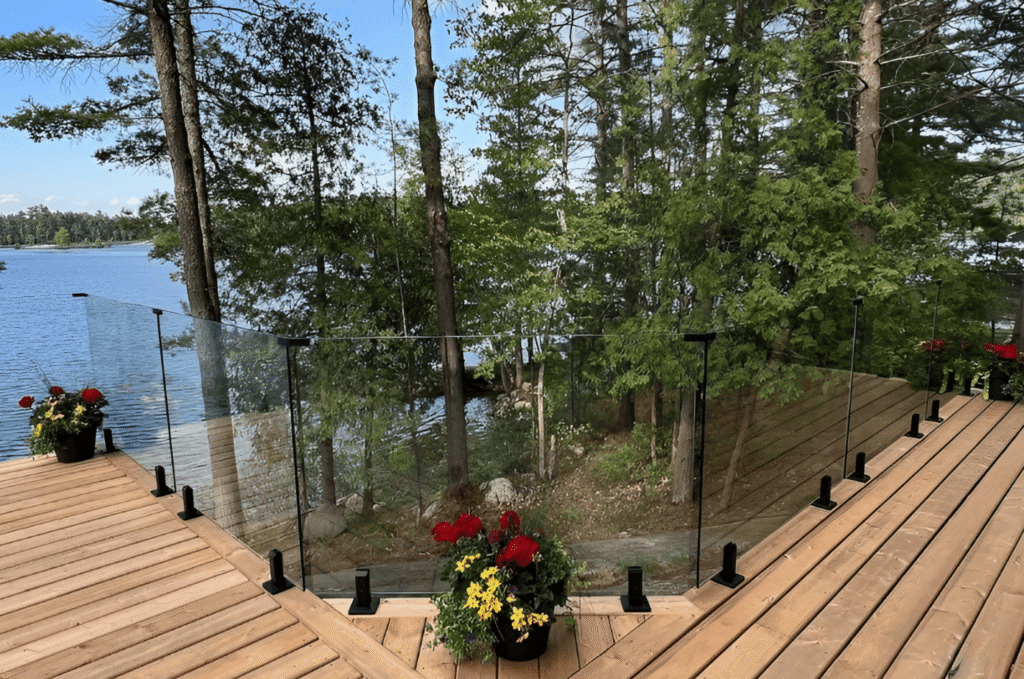
Frameless designs anchor thick tempered glass, often in the range of 12 to 19 millimeters, at the bottom using base shoes, standoffs, or spigots, with no vertical posts. The glass itself is the structure, so the panels have to be thick and carefully anchored. Our mounting hardware guide explains how these anchors work.
The Seamless Look
With no posts or frames, a frameless system creates a floating, uninterrupted panoramic view, which is why owners of decks in Bellevue favor it for scenic, view-facing lots. The glass nearly disappears. Nothing interrupts the sightline, which is exactly why it suits a scenic lot.
Where Frameless Fits Best
Frameless suits luxury residential balconies, rooftop terraces, and scenic decks where the open view is the whole point of the design. The clean look, popular on decks on Mercer Island, demands thicker glass and careful engineering. It is the premium choice, trading a higher cost for an almost invisible barrier.
Semi-Frameless Glass Railings
Semi-frameless sits between the other two in both look and structure. A semi frameless glass railing supports panels with slim posts or clamps instead of a full frame. Here is what that balance offers.
How Semi-Frameless Systems Work
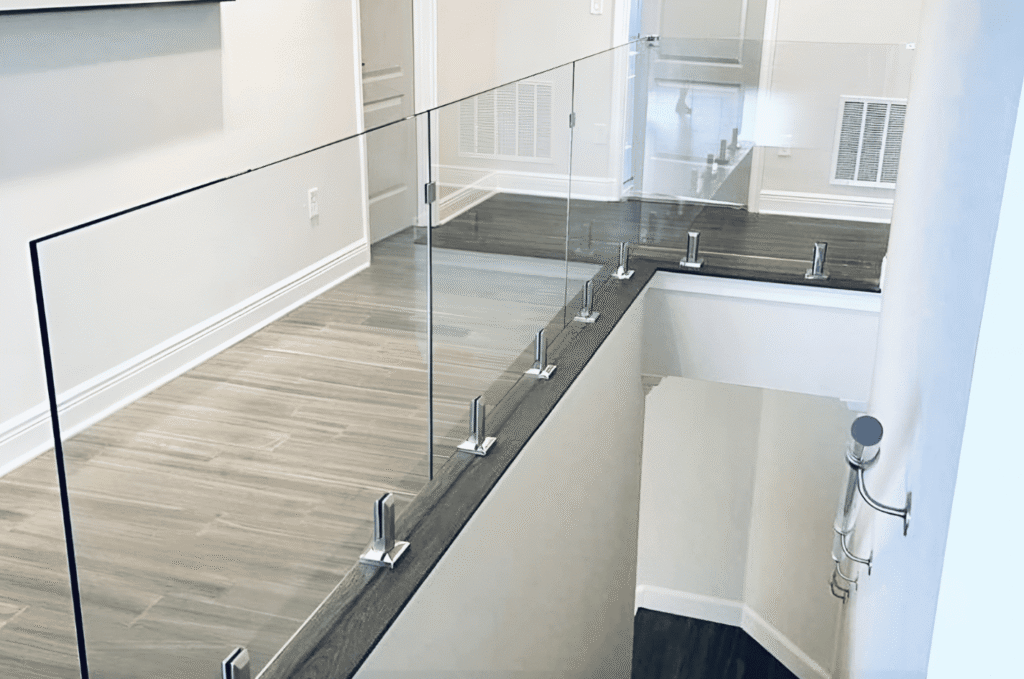
Semi-frameless designs hold glass panels with slim vertical posts or clamps, often spaced up to around 42 inches apart. The base shoe vs spigot comparison shows how these supports differ. The posts carry the load the frame otherwise would, spaced close enough to hold the glass firmly.
A Balanced Look
This system balances modern transparency with a defined structural rhythm from the posts, which owners of balconies in Sammamish often prefer. It keeps much of the open feel while adding visible support that reassures some homeowners. The posts give the eye a rhythm while still letting plenty of light and view through.
Where Semi-Frameless Fits Best
Semi-frameless works well on commercial staircases, pool surrounds, and modern residential decks that want openness with visible structure. It offers a mid-range cost between frameless and framed. For many homes it is the practical middle ground, offering openness without the cost of frameless.
Framed Glass Railings
Framed is the most structured and budget-friendly of the glass railing systems. A framed glass railing encloses each panel in a continuous metal frame. Here is how it performs and where it belongs.
How Framed Systems Work
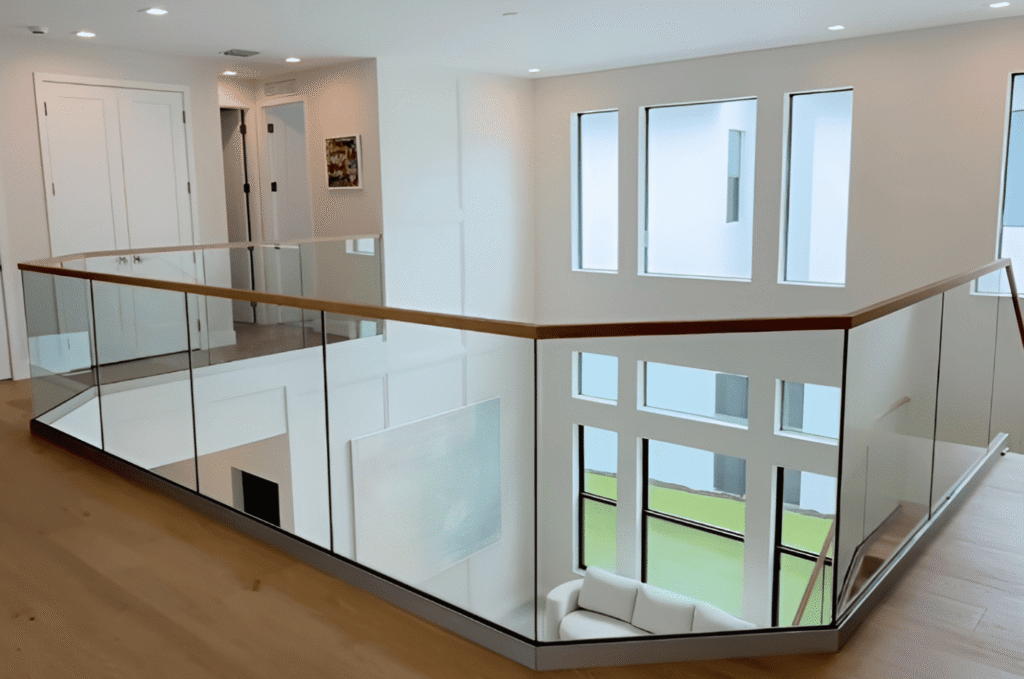
Framed designs fully enclose glass within a continuous aluminum or stainless frame at the top and bottom, which lets the system carry thinner glass. The glass railing clips guide covers the hardware that secures framed panels. The frame does the structural work, which is why the glass inside it can be thinner and cheaper.
A Bold, Robust Look
A framed system has a bold, traditional, robust look with clear structural definition, popular on an outdoor glass railing in demanding settings. The frame is a visible design element rather than something to hide, and it can match other metalwork. It reads as solid and defined, which can suit traditional or industrial settings well.
Where Framed Fits Best
Framed railings suit high-traffic public areas, industrial walkways, and high-wind or coastal zones where durability matters more than an invisible look. They are among the easiest systems to install and repair, which owners of Newcastle glass railings value on exposed sites. Exposure is where framed systems earn their place, standing up to wind and salt that stress other designs.
Choosing the Right Glass Railing System
With the three types clear, the choice comes down to view, setting, and exposure. The best glass railing system is the one matched to your space, not the most expensive. Here is how to weigh the three and decide.
Matching the System to Your Space
A scenic, sheltered balcony leans frameless, a busy modern deck leans semi-frameless, and an exposed or coastal site leans framed for its toughness. Among modern glass railing systems, the setting usually points to the answer. The view and the weather together narrow the choice before any hardware is even picked, which keeps the decision simple.
Why Homeowners Trust Glass Railing Seattle
From a glass railing system comparison to final install, homeowners rely on the specialists at Glass Railing Seattle to match the right system to each space. Focusing only on glass means every system is chosen for its exact setting.
Start Your Glass Railing Project
Not sure which system fits your space? Contact our team for a consultation, and we’ll help you compare glass railing systems and build the right one to code.