
Every home has a unique personality, and your railing should reflect that. Custom glass railing gives you the freedom to build exactly what you envision, not a catalog compromise, not a one-size-fits-all solution. From the type of glass to the frame finish and mounting style, every detail is yours to define. Whether you are upgrading a deck, staircase, or balcony, the right custom glass railing design turns a functional safety feature into a defining element of your home. Seattle homeowners are choosing these systems because they combine clean aesthetics with lasting durability.
Table of Contents
What Goes Into a Custom Glass Railing Design
Designing a custom glass railing is not just about picking a style. It is a layered process that involves glass type, hardware, mounting method, and how all of those elements work together in your specific space.
Every project starts with the dimensions, the substrate material, the exposure to weather, and the desired visual outcome. These factors guide every decision that follows.
Choosing the Right Glass Type
Tempered glass is the industry standard for safety railings. It is roughly four times stronger than standard glass and shatters into small rounded pieces rather than sharp shards when broken. For most residential applications, 3/4-inch tempered glass deck railing panels offer the ideal balance of strength and clarity.
Frosted panels add privacy without sacrificing light. Low-iron glass eliminates the faint green tint found in standard tempered glass. If you want to go further, colored glass panels open up a whole new layer of personalization, with tinted, patterned, or etched finishes that make the railing itself a design feature.
Frameless vs. Semi-Frameless Systems
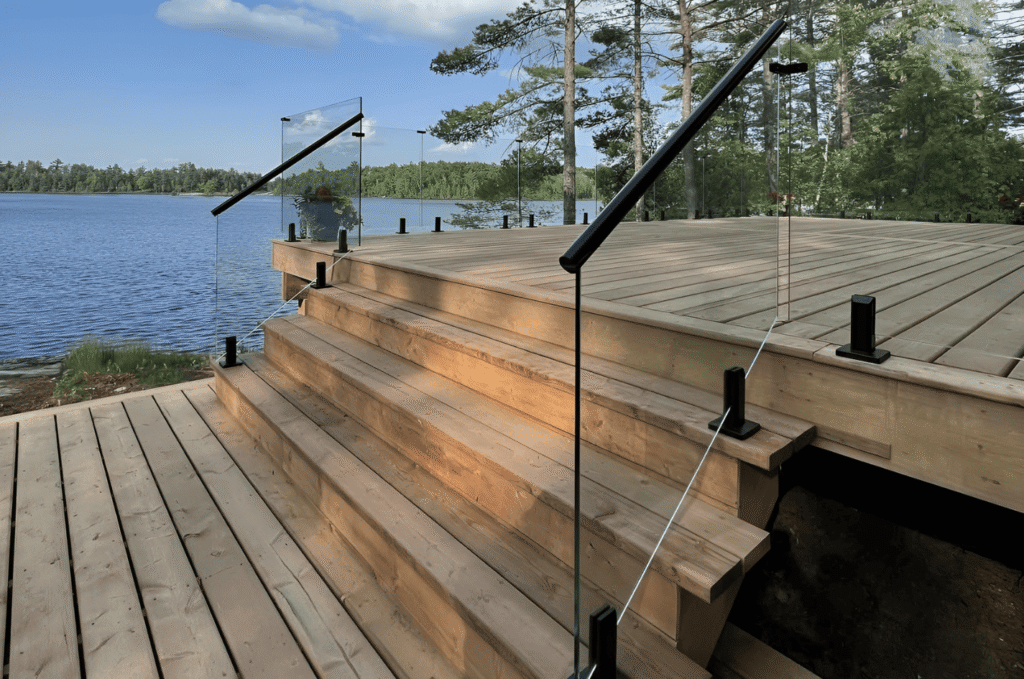
The mounting style shapes the entire visual tone of the installation. Frameless glass railing Seattle homeowners prefer uses base shoe channels or standoff clamps mounted directly into the structure, with no top rail interrupting the sightline. It works beautifully on elevated decks and balconies where the view is the point.
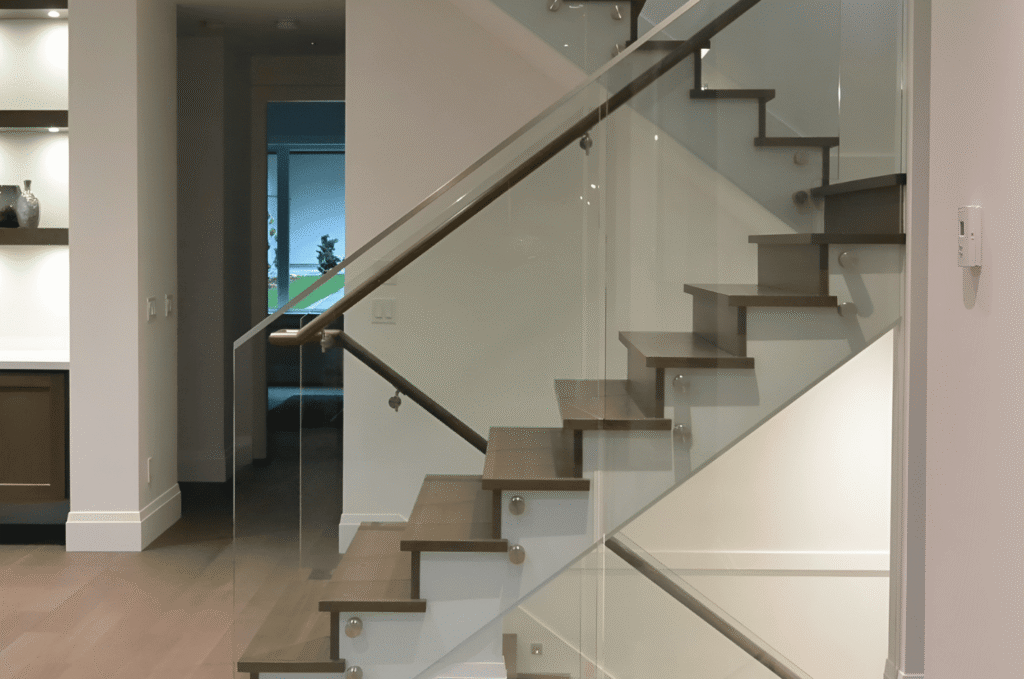
Semi-frameless systems add a top rail that provides a graspable handrail without adding visual bulk. This option works well for glass stair railing applications where a continuous rail is both a code requirement and a practical necessity.
How Custom Glass Railing Design Adapts to Every Space
No two properties are the same, and a well-executed custom glass railing design accounts for the unique demands of each location. Slope, elevation, sun exposure, and structural material all influence how the system is built.
What works on a flat deck will not necessarily translate to a sloped staircase or a cantilevered balcony. Professional measurement and on-site consultation matter just as much as the design itself.
Deck and Outdoor Applications
Outdoor spaces demand materials that hold up to weather without losing appearance over time. Frameless glass deck railing systems are engineered for exactly this. The panels are sealed against moisture, the hardware is marine-grade stainless steel or powder-coated aluminum, and the glass is UV-stable so it will not yellow or haze with age.
Mounting method also matters in outdoor settings. Surface-mounted base shoes sit on top of the deck framing, while fascia-mounted systems attach to the rim joist for a cleaner edge. Discussing these options with our Seattle glass railing team helps you understand which approach fits your specific structure.
Balcony and Elevated Applications
Balconies present unique wind load and structural requirements. A glass balcony railing Seattle installation must meet specific engineering standards, especially on upper floors or exposed coastal-facing elevations. Panels are typically thicker, often 3/8 to 1/2 inch, and hardware anchoring must be rated for lateral load forces.
A well-installed glass balcony railing creates an almost invisible barrier between you and the view, which is exactly the effect most homeowners are after.
Hardware Finishes and How They Complete the Look
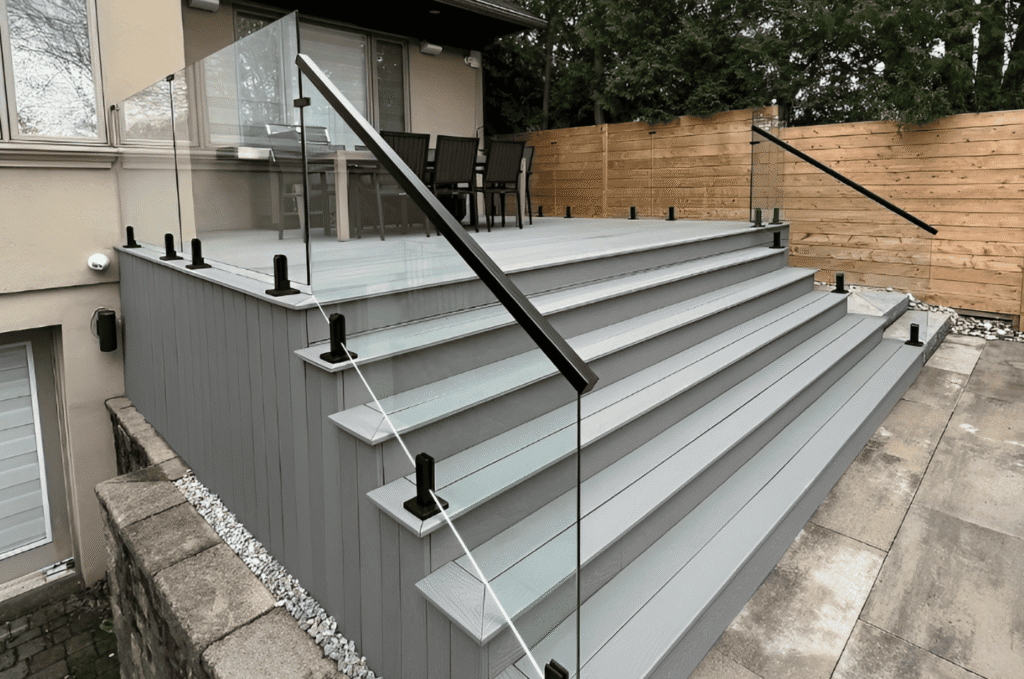
The glass panels get most of the attention, but hardware is what ties a custom glass railing together. Clips, posts, base shoes, and top rails are available in several finishes, and the right choice depends on your home’s existing materials and aesthetic direction.
Choosing hardware is simpler when you match to what is already present throughout the home, door handles, window frames, and exterior trim.
Popular Finish Options
Brushed stainless steel is the most versatile option. It is neutral, durable, and works with both warm and cool color palettes. Matte black has become increasingly popular in modern glass railing design because it creates strong visual contrast against clear glass and suits contemporary architecture well.
Satin chrome offers a softer shine and pairs naturally with transitional home styles. For a deeper look at how finish choices interact with your home’s material palette, the guide on matching hardware finishes walks through the full decision process in detail.
Matching Hardware to Your Home’s Style
Residential glass railing Seattle projects vary widely in architectural style, from mid-century bungalows to new construction craftsman homes. The hardware finish you choose should feel like it belongs to the building rather than something added as an afterthought.
The most successful installations are ones where hardware reads as intentional. When the finish echoes details found elsewhere on the property, the railing feels designed rather than simply installed. Visiting the Kent showroom lets you compare finishes side by side before making any final commitment.
Designing for Indoor-Outdoor Continuity
One of the most rewarding aspects of a custom glass railing is its ability to create visual flow between interior and exterior spaces. When the same system runs from your indoor staircase through to an outdoor deck, the home feels larger and more cohesive in a way that other railing materials rarely achieve.
Glass thickness, panel height, mounting style, and hardware finish all need to be consistent across both environments from the very start of planning.
Indoor Stair and Balcony Integration
Interior glass railings on staircases and loft balconies open up vertical space dramatically. Light travels further through the home and sightlines extend across floors. For homes with a strong indoor-outdoor design intent, indoor glass railing systems serve as the connective tissue that links living areas across levels.
Treating the railing as part of the architecture rather than a separate finish element is the key. When panels align with window heights and hardware matches interior fixtures, the result feels completely seamless.
Extending the Design Across Your Entire Home
Achieving true continuity across floors and spaces takes more than matching finishes. It requires thinking about how a person moves through the home and what they see at every point. The guide on indoor to outdoor flow covers how to plan glass railing systems that carry a consistent design language from your front entry all the way through to your back deck.
Homeowners across the region can explore full system layouts in person and see how different panel and hardware combinations work together before committing to a direction.
Working With a Specialist to Execute Your Vision
A custom glass railing is only as good as the team that designs and installs it. Precise measurement, structural assessment, and fabrication to exact specifications are all non-negotiable. Small errors translate to panels that do not fit, hardware that does not align, or structural issues that compromise safety.
Working with a dedicated specialist means every decision is made by someone who understands glass railing systems specifically, not one of many railing types on a general contractor’s list.
The Design and Consultation Process
The process starts with an on-site visit. A specialist measures the space, assesses the substrate and structural condition, discusses your preferences, and provides a detailed proposal covering glass type, panel layout, hardware finish, and mounting method. You can also get a feel for options in advance by stopping by one of our Seattle area showrooms to see hardware and glass samples in person.
Panels are then fabricated to the exact measurements of your space. No trimming on-site, no filler pieces, no visible gaps. The result is a system that looks and feels like it was always meant to be there, tailored to your home’s exact proportions and style.
Why Glass Railing Seattle Is the Right Choice
Glass Railing Seattle focuses exclusively on glass railing systems. No wood, no cable, no metal balusters. That specialization means the team brings deep expertise to every custom glass railing project, from initial design consultation through to final installation. The result is not just a railing that meets code; it is one that genuinely enhances the architecture. If you are ready to explore what is possible, visit Glass Railing Seattle to see the full range of residential options.
Start Your Custom Railing Project Today
Whether you are drawn to a fully frameless look, a bold matte black hardware finish, or a system that flows seamlessly from your living room to your deck, custom glass railing gives you the tools to build it exactly right. Every detail of your home deserves intentional design, and your railing is no different. Contact our team to start your design consultation and take the first step toward a railing built for your exact vision.