
Glass itself does not rust, but the hardware holding it in place can, and glass railing rust is almost always a hardware problem rather than a glass one. Posts, clamps, standoffs, base shoes, and fasteners are all susceptible to corrosion if the wrong materials are used or maintenance is neglected. Understanding where rust comes from and how to prevent it is the most effective way to protect your investment and keep your railing system performing safely over time.
This guide covers the causes of glass railing hardware rust, the materials that resist it, and the maintenance practices that extend the service life of your system, whether it’s installed indoors, on a deck, or in a waterfront setting.
Table of Contents
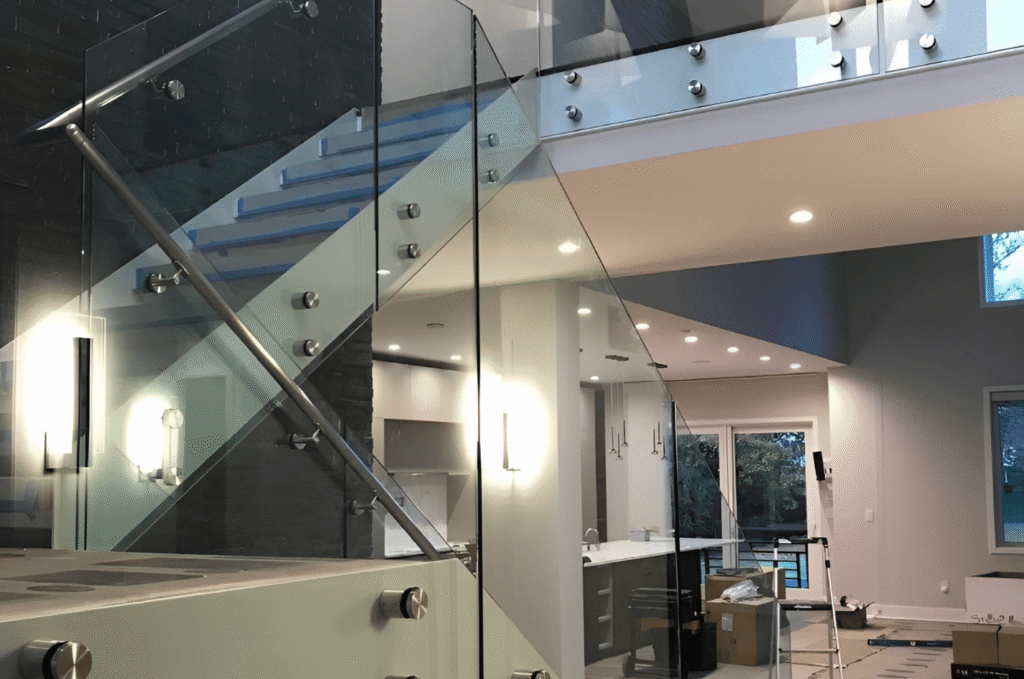
Why glass railing hardware rusts
Rust on glass railing hardware develops when metal components are exposed to moisture and oxygen without adequate protection. In Seattle’s wet climate, rain, humidity, and salt air in coastal neighborhoods create consistently corrosive conditions for any metal that isn’t properly specified or maintained.
Environmental exposure
Outdoor installations face the highest corrosion risk. Hardware on glass deck railings is exposed to rain, temperature swings, and in waterfront areas, salt-laden air that aggressively attacks iron-containing metals. Even powder-coated finishes can develop micro-cracks over time, allowing moisture to reach the base metal and begin the oxidation process.
In neighborhoods like glass railing in Magnolia and Montlake, where properties sit close to the water, hardware corrosion develops faster than in sheltered inland locations. Specifying marine-grade materials from the outset is the baseline requirement for a system that will perform over a decade or more.
Subpar materials and chemical damage
One of the most common causes of premature glass railing hardware rust is the use of standard 304 stainless steel or mild steel hardware in outdoor applications. These grades fail much faster when exposed to chlorides from salt air or pool chemicals, resulting in surface rust that progresses to pitting, a form of corrosion that weakens hardware structurally, not just cosmetically.
Chemical damage also occurs from cleaning products. Bleach-based and ammonia-based cleaners strip protective finishes and accelerate oxidation. For glass railing in Queen Anne and other exposed hillside properties, using the wrong cleaner regularly can shorten hardware lifespan significantly.
Neglected cleaning and trapped moisture
Hardware that is never cleaned accumulates dirt and salt deposits that hold moisture against the metal surface. Over time, this creates ideal conditions for rust on glass railings, particularly in threaded fasteners and recessed connections where water pools and dries repeatedly. By the time rust is visible, corrosion may already be progressing below the surface.
Gaps between hardware and the mounting substrate allow water to wick into joints and remain trapped. Proper installation with sealed joints prevents this, a point covered in the guide to why glass railings crack and how installation quality affects long-term performance.
Stainless steel railing hardware and material selection
The single most important decision in preventing glass railing rust is hardware material selection. Not all stainless steel performs equally, and the difference between grades is significant in wet or coastal environments. Choosing the right material at specification stage eliminates the majority of corrosion risk before installation begins.
316 vs 304 stainless steel
Grade 316 stainless steel contains molybdenum, which significantly improves its resistance to chloride corrosion compared to the more common 304 grade. For outdoor and coastal applications, 316 is the industry standard for rust proof glass railing hardware, maintaining its appearance and structural integrity in conditions that cause 304 to pit and stain within a few years.
For waterfront Seattle locations, specifying 316 marine grade hardware is non-negotiable. The additional cost over 304 is modest compared to the cost of premature replacement. The full scope of hardware options for outdoor systems is covered on the outdoor glass railing service page.
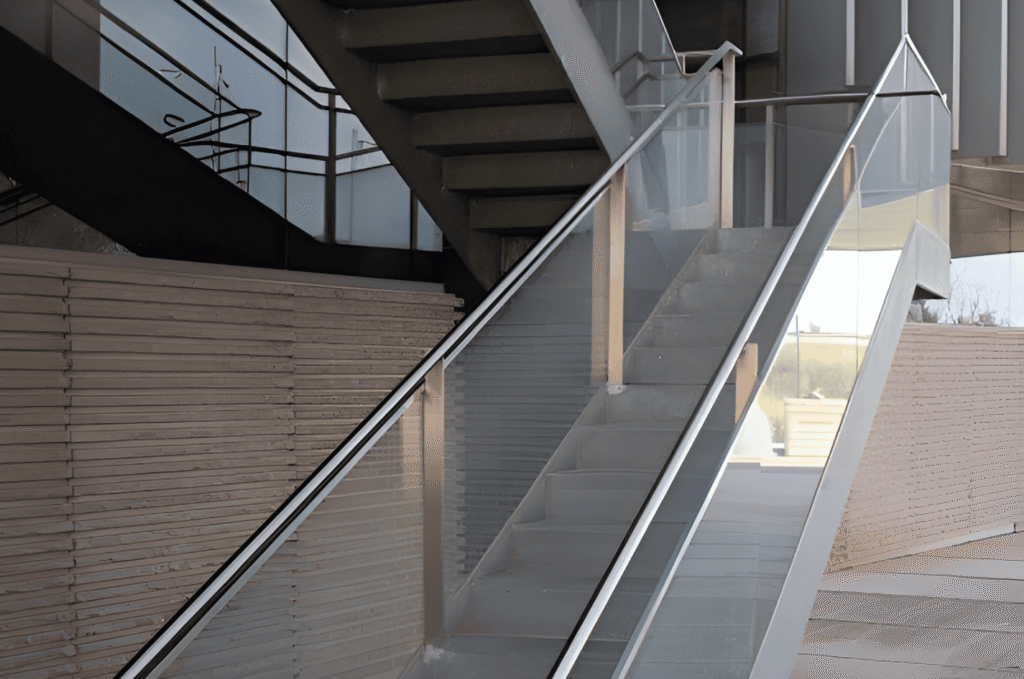
Powder-coated and aluminum hardware
Powder-coated hardware provides a protective layer over the base metal that resists moisture penetration when intact. Once chipped or worn, the exposed base metal is vulnerable. Powder coat should be inspected annually and touched up wherever the finish has been compromised, particularly on systems in high-traffic or exposed locations.
Aluminum hardware does not rust in the traditional sense, it oxidizes to form a stable protective layer. However, aluminum can suffer galvanic corrosion when in contact with dissimilar metals in a wet environment. Ensuring hardware compatibility across a system is part of correct specification practice.
Hardware for indoor vs outdoor systems
Interior installations operate in a fundamentally different corrosion environment, lower humidity, no salt exposure, minimal temperature swings. For indoor glass railing systems, brushed aluminum or standard 304 stainless steel hardware typically provides adequate long-term performance without marine-grade specification.
Specifying marine-grade hardware throughout an indoor installation is unnecessary cost, while using standard hardware outdoors is a false economy. A qualified contractor will match hardware specification to the actual conditions of each installation.
Glass railing rust treatment
When rust appears on glass railing hardware, early treatment prevents it from progressing to structural damage. The approach depends on how far corrosion has advanced, surface rust responds well to cleaning and protective coating, while pitting typically requires hardware replacement.
Removing surface rust
Light surface rust on stainless steel hardware can often be removed with a non-abrasive stainless steel cleaner and a soft cloth or nylon brush. Abrasive pads should be avoided, they create microscopic scratches that accelerate future corrosion. After cleaning, applying a stainless steel polish restores the passive oxide layer that gives stainless steel its corrosion resistance.
For powder-coated hardware with rust appearing through chipped areas, the affected section should be cleaned, rust removed, and the area recoated before moisture penetration worsens. Rust that has progressed through the coating into the base metal typically indicates the hardware should be replaced. The guide to glass railing damage covers how corrosion and installation stress interact over time.
When to replace hardware
Pitting corrosion cannot be reversed through cleaning or coating. Pitted fasteners, clamps, or standoffs have reduced cross-sectional area and may no longer meet the load requirements of the railing system. For glass railing in Laurelhurst and other elevated applications, compromised hardware is a safety issue that warrants replacement rather than surface treatment.
Replacing individual corroded fasteners or clamps early is far less disruptive and costly than discovering widespread hardware failure during a routine inspection years later.
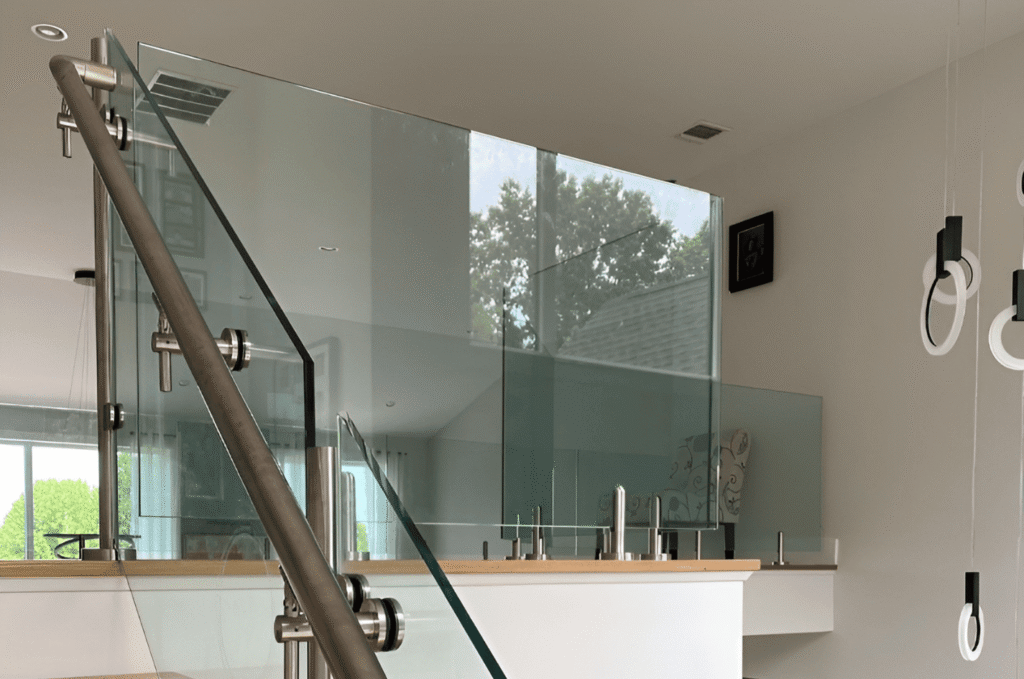
How to prevent glass railing rust long-term
Prevention is significantly more cost-effective than treatment. A consistent maintenance routine, combined with correct material specification at installation, eliminates the majority of glass railing rust risk over the full service life of the system.
Regular cleaning routine
Cleaning glass railing hardware every three to six months removes the salt, dirt, and organic deposits that hold moisture against metal surfaces. Use a microfiber cloth and a pH-neutral cleaner, avoid anything containing bleach, ammonia, or abrasive particles. After cleaning, apply a stainless steel polish to repel moisture and restore the passive oxide layer.
Protective coatings and waterproofing
Applying a clear protective coating to exposed hardware surfaces adds a barrier between the metal and the environment. Marine-grade wax products designed for stainless steel require reapplication once or twice a year. For base plate connections where hardware meets the deck surface, sealed joints prevent water ingress at the most vulnerable point in the system.
Waterproofing at base connections is particularly important for glass balcony railing systems where hardware penetrates through a waterproofing membrane. Any compromised seal allows water to track along the fastener into the structure below, causing both hardware corrosion and substrate damage simultaneously.
Twice-yearly inspections
A systematic inspection twice a year catches early corrosion before it progresses. Check all visible hardware for surface discoloration, examine powder-coated finishes for chips or wear, and test fasteners for tightness. Any hardware showing early rust should be cleaned and treated immediately rather than left until the next scheduled inspection.
Sealant condition at base connections should also be checked during each inspection. Sealant that has cracked or pulled away from the substrate should be refreshed before the next wet season. For a comprehensive look at how installation quality affects long-term hardware performance, the guide to glass railing installation problems covers the most common failure points in detail.
Glass railing hardware lifespan and when to replace
Hardware lifespan varies considerably depending on material grade, installation environment, and maintenance consistency. Understanding realistic service life expectations helps homeowners plan for replacement before hardware failure becomes a safety issue.
Expected service life by material
Marine-grade 316 stainless steel hardware in outdoor Seattle environments typically performs for 15 to 25 years with consistent maintenance. Standard 304 stainless in the same conditions may show significant pitting within 8 to 12 years. Powder-coated hardware lifespan depends on coating integrity, a well-maintained finish can last 10 to 15 years, but neglected finishes may deteriorate in 5 to 7 years in exposed conditions.
Rubber gaskets and seals typically last 3 to 7 years depending on UV exposure and temperature cycling. Replacing gaskets on schedule prevents panel movement and avoids secondary hardware stress. The glass stair railing service page outlines hardware options available for replacement or upgrade.
Planning for hardware replacement
Proactive hardware replacement, scheduled based on material lifespan rather than waiting for visible failure, keeps the railing system within its original safety specification. A railing system with failing hardware may still appear intact while no longer meeting the load ratings it was designed for. For elevated residential and commercial applications, this has direct safety and liability implications.
Glass Railing Seattle installs, maintains, and inspects residential and commercial glass railing systems across Seattle, with hardware specifications matched to each installation environment, from sheltered interior staircases to exposed waterfront decks.
Concerned about rust on your glass railing hardware?
Book a free on-site inspection with Glass Railing Seattle to get expert eyes on your hardware before corrosion becomes a safety issue. We’ll assess your materials, identify rust risk, and recommend the right treatment or replacement approach for your system.