
Glass railing systems have transformed modern architecture, offering elegant safety barriers that maximize views and natural light. Whether you are planning a residential renovation or commercial project, understanding the complete landscape of glass railing options helps you make informed decisions.
This comprehensive guide covers everything from frame types and hardware to installation considerations for both indoor and outdoor applications.
Table of Contents
What Are Glass Railing Systems?
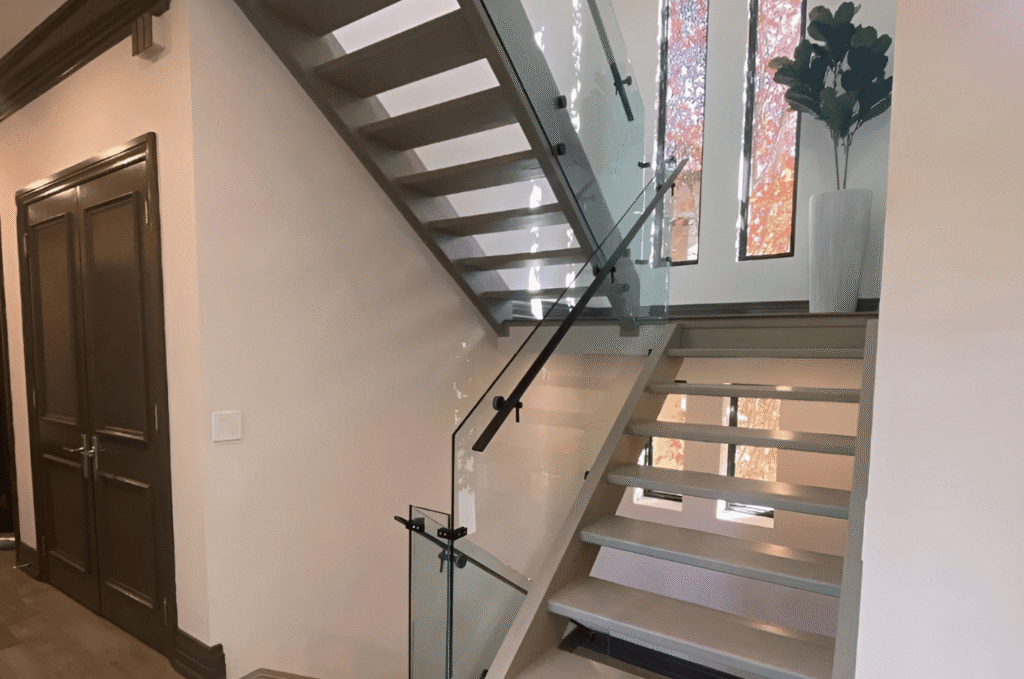
A glass railing system consists of tempered or laminated glass panels secured by specialized hardware to create protective barriers along stairs, balconies, decks, and elevated surfaces. Unlike traditional wood or metal balusters, glass provides a continuous transparent surface that enhances visual openness while meeting all required safety standards and building codes.
Glass railing works beautifully in virtually any setting. Modern residential buildings use glass stair railing to create stunning interior focal points. Waterfront properties install outdoor glass railing to preserve scenic views. Commercial buildings specify glass systems for atriums, mezzanines, and public spaces where transparency and light flow matter.
Glass Railing Frame Types
Glass railing systems fall into three primary categories based on their structural design. Each frame type offers distinct aesthetic and functional characteristics.
Frameless Glass Railing
Frameless systems represent the pinnacle of minimalist design. Thick glass panels, typically half-inch or more, provide structural support without visible frames or posts. The glass appears to float, secured only by discreet base channels, spigots, or standoffs. This style delivers maximum transparency and suits modern architectural aesthetics perfectly. Frameless glass railing commands premium pricing but delivers unmatched visual impact.
Framed Glass Railing
Framed glass railing systems enclose glass panels within visible metal frameworks, typically aluminum or stainless steel. Posts, top rails, and bottom rails surround each panel, providing robust structural support. This traditional approach allows thinner glass while offering excellent durability.
Framed systems work well in both residential and commercial applications where budget considerations and structural requirements take priority. Hardware finish options include matte black, brushed nickel, and satin bronze.
Semi-Frameless Glass Railing
Semi-frameless designs bridge the gap between fully framed and frameless options. These systems use vertical posts with clamps to support glass panels but eliminate top or bottom rails. The result offers more openness than framed systems while providing additional structural support compared to frameless installations. Semi-frameless represents an excellent middle-ground choice for many residential and commercial projects in Bellevue seeking balance between aesthetics and practicality.
Essential Hardware Types
The hardware supporting your glass panels determines both appearance and performance. Understanding these components helps you select the right system for your specific application.
Base Shoe Systems
Base shoes are continuous U-shaped aluminum channels that hold glass panels along their bottom edge. Mounted to floors or structural surfaces, base shoes create clean lines with minimal visible mounting hardware. This system remains popular for frameless glass railing installation where sleek aesthetics matter most. Cladding covers the channel for a polished finished appearance.
Spigots
Spigots are individual mounting points that grip glass panels at specific locations along their base. These compact hardware pieces bolt directly to mounting surfaces, allowing glass to appear nearly floating. Spigot systems work well for pool fencing, balcony railings, and stair applications requiring unobstructed views.
Standoffs
Standoffs are cylindrical spacers that mount glass panels to walls or fascia surfaces. They hold glass away from the mounting surface, creating a floating effect while securing panels firmly. Standoff systems suit side-mounted applications in Issaquah where top or floor mounting is impractical.
Posts and Clamps
Post systems use vertical supports with attached clamps to secure glass panels. Available in stainless steel or aluminum, posts provide structural frameworks for semi-frameless and framed installations. Clamp styles include square, round, and D-shaped options that complement various design aesthetics. Posts install as inline supports, corner elements, or end terminations depending on your railing configuration.
Indoor Glass Railing Applications
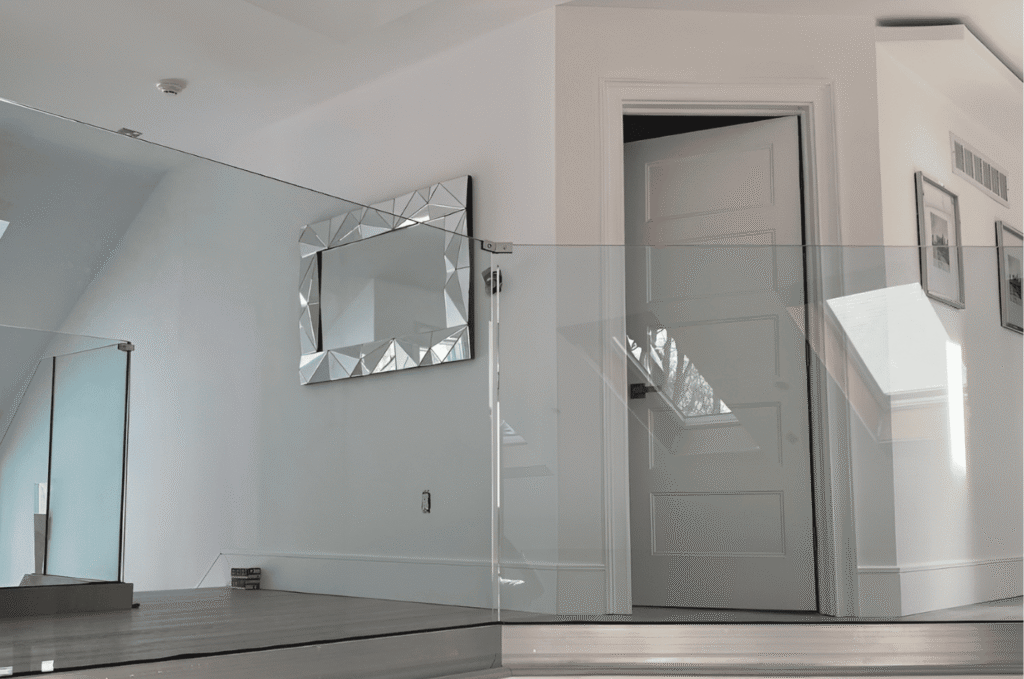
Indoor glass railing transforms interior spaces by enhancing light flow and visual connectivity. Common applications include staircases, loft edges, interior balconies, and mezzanine levels. Interior installations benefit from broader hardware finish options since they face less environmental stress than outdoor systems. The design flexibility allows coordination with existing architectural elements and interior design themes.
Glass stair railing has become particularly popular for its ability to make stairwells feel open and bright. The transparency allows natural light to travel between floors, brightening areas that traditional railings would shadow.
Outdoor Glass Railing Applications
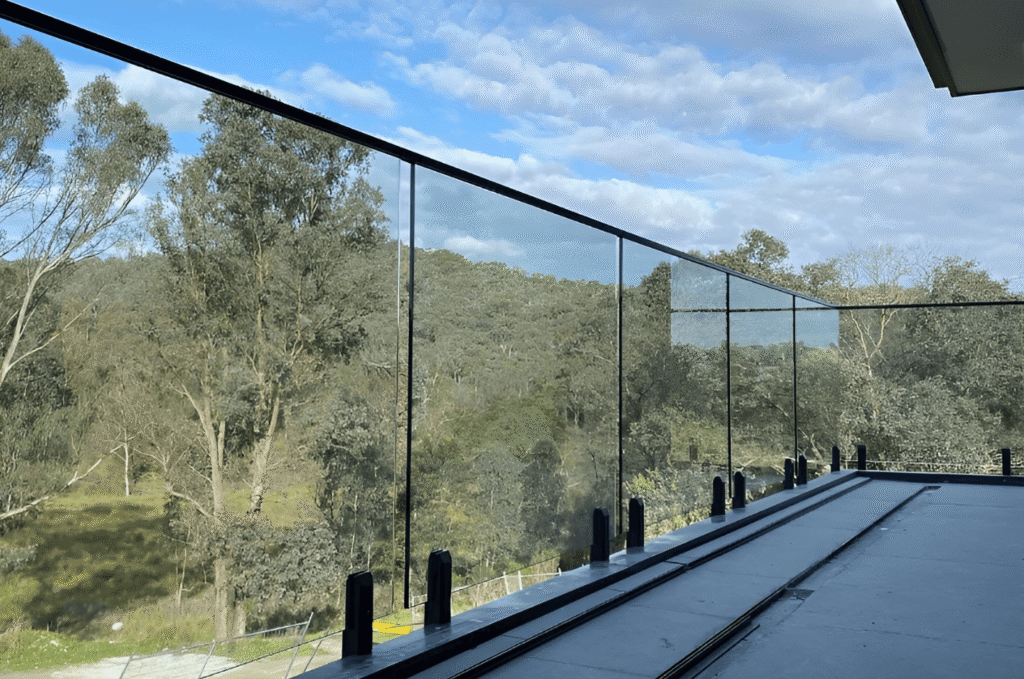
Outdoor glass railing serves balconies, deck railing, patios, pool enclosures, and waterfront properties. These outdoor installations require marine-grade hardware, typically 316 stainless steel, to resist corrosion from weather exposure. Proper drainage details prevent water accumulation that could damage hardware or mounting systems over time. Powder-coated aluminum provides another durable option for outdoor frames and posts.
Wind load considerations become important for exterior applications, particularly at elevated locations. Thicker glass panels and enhanced mounting specifications ensure outdoor systems withstand environmental forces safely.
Glass Types and Safety Standards
All glass railing systems in Kirkland must use safety glass meeting ANSI Z97.1 standards. Tempered glass, heat-treated to be four to five times stronger than regular glass, remains the most common choice. Laminated glass, consisting of two glass layers bonded with an interlayer, stays intact if broken and provides additional safety for specific applications. Low-iron glass eliminates greenish tint for maximum clarity. Frosted and tinted options provide privacy while maintaining the modern glass aesthetic.
Professional Glass Railing Installation
Proper glass railing installation requires precision measurement, appropriate hardware selection, and knowledge of building codes. Professional installers in Fremont ensure systems meet height requirements, load specifications, and local regulations. They coordinate with other trades to verify mounting surfaces are structurally adequate before installation begins.
The installation process includes site assessment, precise measurement, custom panel fabrication, hardware mounting, glass panel placement, and final alignment verification. Working with experienced professionals ensures your glass railing systems perform safely and beautifully for years to come.
Maintenance and Care
Glass railing systems require minimal maintenance compared to traditional materials. Regular cleaning with standard glass cleaner keeps panels clear and sparkling. Inspect hardware connections annually for tightness and signs of corrosion. Address any issues promptly to maintain safe performance throughout the system’s lifespan.
Choosing the Right Glass Railing System
Selecting the ideal glass railing in Seattle depends on your aesthetic preferences, budget, application environment, and structural requirements. Frameless systems suit modern designs seeking maximum transparency. Framed options work well where budget matters or additional structural support is needed. Semi-frameless provides excellent compromise between appearance and practicality. Consider whether your installation will be indoor or outdoor, as this affects hardware material requirements.
Evaluate mounting surface conditions and consult with Glass Railing Seattle professionals who can assess your specific situation. With proper planning and expert installation, glass railing systems enhance any property with lasting elegance and reliable safety. Explore Glass Railing Seattle guide on each topic to learn more about specific applications and installation requirements for your project.
Contact us to get your glass railing systems installed by expert constructors.