
Glass railing hardware forms the foundation of every successful installation. The components you select determine how your system looks, how long it lasts, and how much maintenance it requires over time.
Choosing the right glass railing hardware for indoor glass railing versus outdoor glass railing applications requires understanding the differences in environmental exposure and material requirements. This guide explains the key factors that influence hardware selection for lasting performance and beauty.
Table of Contents
Why Glass Railing Hardware Selection Matters
Glass railing hardware does more than hold panels in place. It provides structural integrity, defines aesthetic appearance, and determines long-term durability. Poor hardware choices lead to premature corrosion, loose connections, and safety concerns. Smart selections result in systems that perform beautifully for decades with minimal hardware maintenance.
The primary consideration when selecting glass railing hardware is the installation environment. Indoor glass railing applications face controlled conditions with stable temperatures and no weather exposure. Outdoor installations encounter rain, humidity, temperature swings, and potentially salt air depending on location. These environmental differences require different material grades and protective finishes.
Understanding Glass Mounting Types
Several glass mounting types exist, each offering distinct advantages for specific applications. Your choice affects both appearance and installation requirements.
Base Shoe Systems
Base shoe systems use continuous U-shaped channels to hold glass panels along their bottom edge. Manufactured from aluminum or stainless steel, these channels create clean, uninterrupted lines with minimal visible hardware.
Glass railing mounting with base shoes works excellently for frameless designs where seamless aesthetics matter most. The channel conceals the glass edge while providing firm support across the entire panel width. Many base shoe systems include drainage provisions to prevent water accumulation in outdoor installations in Woodinville.
Spigot Systems
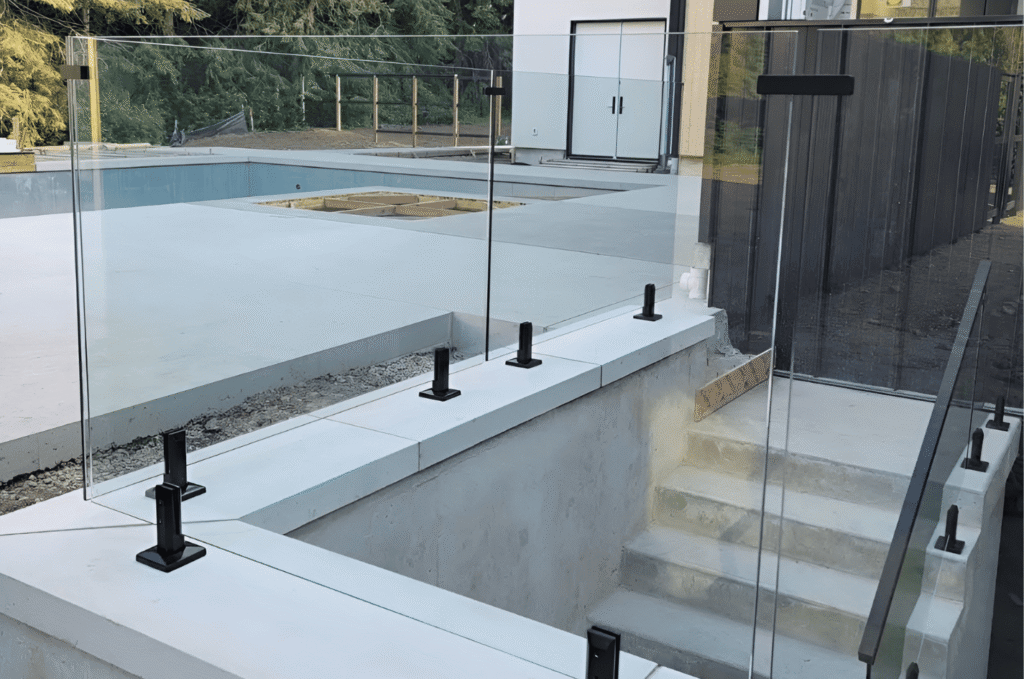
Spigots are individual floor-mounted clamps that grip glass panels at specific points along their base. These compact hardware pieces create a floating appearance since only small metal elements remain visible beneath the glass. Spigot glass railing mounting suits pool fences, balconies, and staircases where unobstructed views take priority. Spigots offer easy adjustment during installation and accommodate slight variations in mounting surfaces.
Standoff Systems
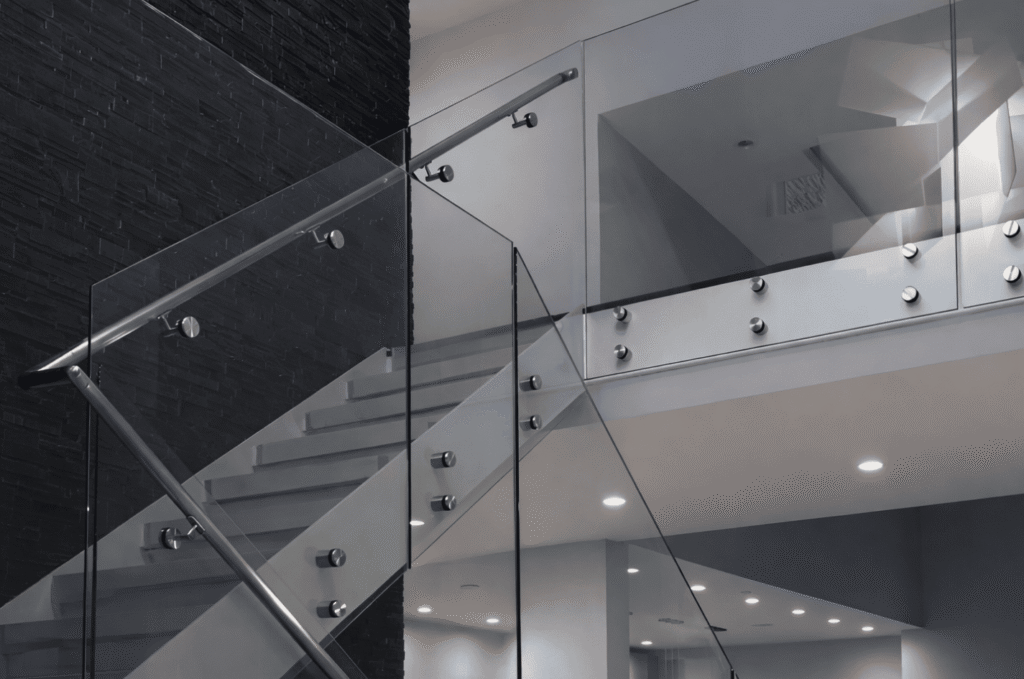
Standoffs are cylindrical spacers that attach glass panels to walls or fascia surfaces. The glass mounts away from the structure, creating a cantilevered effect that looks modern and sophisticated. Standoff glass railing mounting maximizes floor space since hardware attaches to vertical surfaces rather than the walking surface. This approach works well for narrow balcony railing and compact staircases.
Post and Clamp Systems
Post systems use vertical supports with attached clamps to secure glass panels. Clamps come in square, round, and D-shaped configurations to match different design preferences. This glass railing mounting approach provides excellent structural support and accommodates thinner glass panels than frameless alternatives. Posts can be surface-mounted to floors or fascia-mounted to structure sides in commercial glass railing projects.
Gaskets and Protective Elements
Rubber gaskets and silicone materials cushion glass panels within hardware components. These protective elements prevent metal-to-glass contact that could damage panels over time. Quality gaskets also reduce vibration and help maintain tight connections. For outdoor applications, UV-resistant gaskets prevent degradation from sun exposure.
Hardware for Indoor Glass Railing Applications
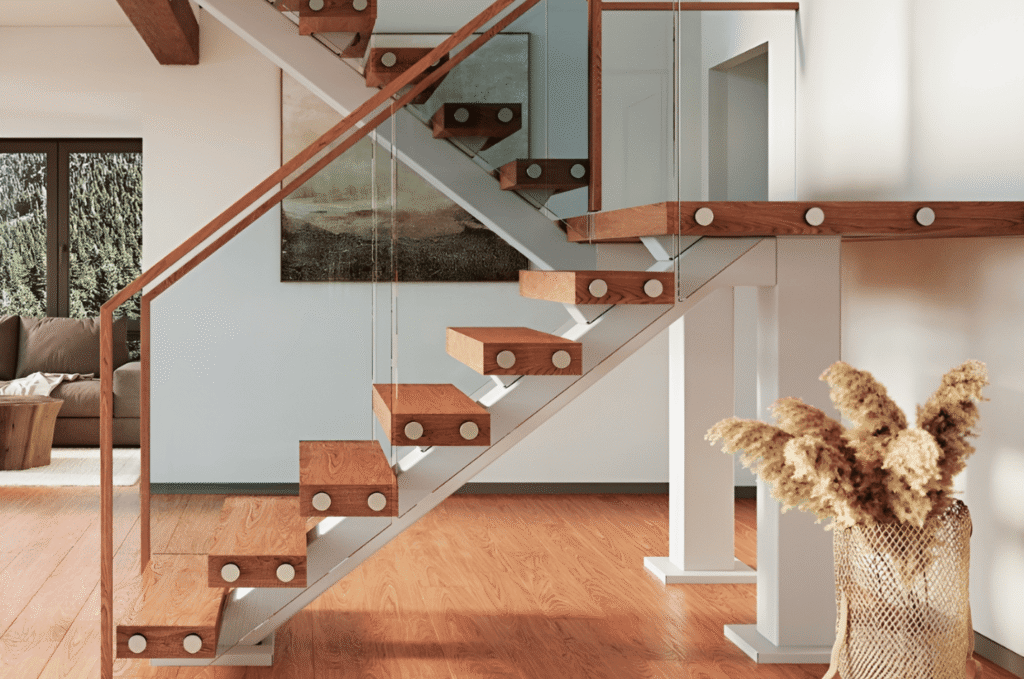
Indoor residential glass railing benefits from controlled environmental conditions. Without weather exposure, hardware faces fewer corrosion challenges. This allows broader material and finish options while still delivering long-lasting performance.
Standard 304 stainless steel performs well for most indoor applications. This grade offers good corrosion resistance at a reasonable cost. Powder-coated aluminum provides another excellent choice for interior projects, combining durability with extensive color options. Popular finishes for indoor glass railing include brushed nickel, satin black, polished chrome, and architectural bronze.
Interior environments in Houghton allow decorative hardware choices that might not survive outdoor conditions. Wood handrails pair beautifully with glass panels for warm, inviting staircases. Designer finish options like champagne gold or antique brass add distinctive character without corrosion concerns.
Hardware for Outdoor Glass Railing Applications
Outdoor glass railing demands weather-resistant materials throughout the system. Pacific Northwest conditions include abundant rainfall, humidity, and occasional salt exposure from Puget Sound. These factors accelerate corrosion on lower-grade materials, making proper hardware selection critical for glass railing installation success.
Marine-grade 316 stainless steel is the preferred choice for outdoor glass railing hardware. This alloy contains molybdenum, which dramatically improves resistance to chloride corrosion from salt air and pool chemicals. Studies show 316 stainless steel resists chloride concentrations up to five times higher than 304 before pitting begins. While 316 stainless steel costs more than 304 grade, it provides superior long-term value by resisting the pitting and surface rust that plague lesser materials in harsh environments.
All outdoor hardware components should match the same material grade for optimal performance. Mixing stainless steel grades or using dissimilar metals creates galvanic corrosion at connection points. Fasteners, bolts, and washers need the same corrosion resistance as primary hardware components. Powder-coated aluminum works well for posts and frames when combined with stainless steel fasteners and proper isolation between dissimilar metals.
Hardware Maintenance for Long-Term Performance
Proper hardware maintenance in Redmond extends the lifespan of your glass railing system and keeps it looking beautiful. Indoor and outdoor applications require different maintenance approaches based on their environmental exposure.
Indoor Hardware Care
Indoor hardware typically needs only occasional cleaning to maintain its appearance. Wipe stainless steel and aluminum components with a soft cloth and mild soap solution every few months. Check connection points annually to verify all fasteners remain tight. Indoor glass railing hardware rarely develops corrosion issues when cleaned periodically.
Outdoor Hardware Care
Outdoor hardware maintenance for glass railing in Montlake requires more attention due to weather exposure. Rinse hardware with fresh water after storms or salt spray exposure. Clean posts, clamps, and spigots quarterly using pH-neutral soap, then rinse and dry thoroughly with a soft cloth. Inspect hardware connections every six months and tighten any loose fasteners promptly to prevent further loosening.
Watch for early signs of surface discoloration called tea staining on stainless steel. If caught early, this surface issue cleans easily with mild abrasive cleaners applied gently in the direction of the metal grain. Applying protective wax or corrosion inhibitor after cleaning helps shield hardware from salt air between maintenance sessions.
Professional Hardware Selection and Installation
Selecting appropriate glass railing hardware involves matching components to your specific environment, design preferences, and budget. Professional installers evaluate mounting surfaces, environmental conditions, and code requirements to recommend optimal hardware configurations. They ensure all components work together as a system while meeting safety standards.
Proper glass railing installation in Bellevue positions hardware correctly, tightens connections appropriately, and verifies alignment throughout the system. Whether you choose base shoes for seamless aesthetics or post systems for structural versatility, professional installation ensures your hardware performs as intended for years to come. The investment in quality glass railing hardware pays dividends through reduced maintenance needs and extended system lifespan.
Contact Glass Railing Seattle & discuss the best hardware options for your indoor or outdoor project.