
Glass railings crack for specific, identifiable reasons, impact damage, edge chips, improper installation, thermal stress, and in rare cases, manufacturing defects. Understanding why glass railings crack is the first step toward preventing it, because most cracking is not random. It follows predictable patterns that a qualified installer can identify and eliminate before they become a problem.
Tempered and laminated safety glass used in modern railing systems is four to five times stronger than standard glass, but it still has vulnerabilities. This guide covers every major cause of glass railing cracking and the concrete steps that prevent each one.
Table of Contents
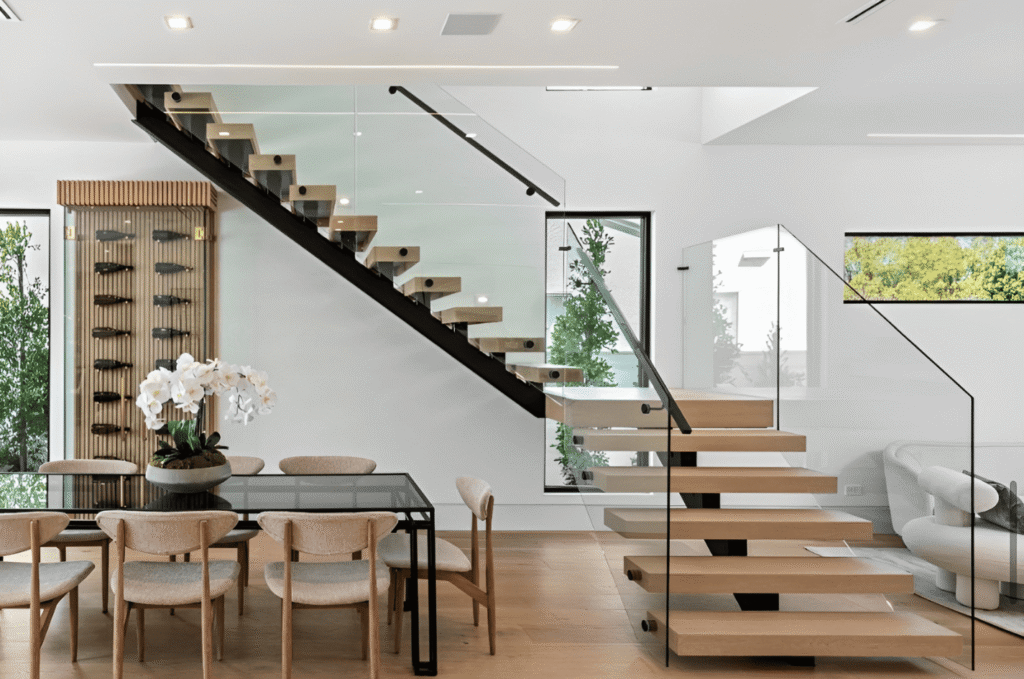
Why glass railings crack: common causes
Several reasons can impact glass railings when they crack:
Glass railing impact damage
High-impact contact is the most common cause of cracked glass railing panels. A heavy object striking the panel, furniture being moved on a deck, sports equipment, or a significant force applied at a single point, can crack or shatter even properly installed tempered glass. The breakage pattern from impact damage is typically a starburst originating from the point of contact, which distinguishes it from thermal or stress-related cracking.
Impact damage is most frequent on outdoor glass railing systems where the panel is more exposed to activity and the elements. Positioning furniture and planters a safe distance from railing panels, and being deliberate when moving heavy items near glass, significantly reduces this risk over the lifetime of the system. Even minor repeated contact from objects resting against the panel can weaken the glass surface over time.
Glass railing edge damage
The edges of tempered glass are its most vulnerable point. A minor nick, scratch, or chip on the edge, often caused during transport or installation, acts as a stress concentrator. Under normal load, the panel distributes force evenly across its face. But a compromised edge redirects that stress to the damaged point, eventually causing the panel to crack or shatter without any visible impact. This type of damage is particularly difficult to detect visually once the panel is installed in its channel.
Edge protection during delivery, careful setting of panels into base channels, and avoiding metal-to-glass contact at the edges are all standard requirements for professional installation. The guide to glass railing hardware covers how correct component selection prevents edge contact issues at the mounting points.
Glass railing thermal stress cracks
Glass railing thermal stress occurs when different parts of the same panel heat and cool at different rates. A panel partially shaded by a post or wall can have one section significantly warmer than another, causing uneven expansion that stresses the glass internally. In Seattle’s climate, where temperatures shift quickly between sun and cloud cover, this differential heating effect is a consistent concern for south- and west-facing outdoor installations.
Thermal stress cracks typically originate at the edge and run perpendicular to it in a relatively straight line, distinguishable from impact damage by the absence of a starburst pattern. For glass railing in Magnolia where waterfront panels face direct sun and wind exposure, thermal performance should be factored into the glass specification from the outset. Using heat-strengthened or low-iron glass reduces thermal stress risk considerably in these conditions.

Glass railing installation stress
When glass panels are fitted too tightly into metal channels or clamped with excessive force, the mounting hardware creates stress points directly on the glass. As the building settles, as temperatures cycle, and as load is applied to the railing, those stress points concentrate force at the same location repeatedly. Over time, this leads to cracking that appears structural but originates entirely from how the panel was mounted, a preventable outcome with correct installation practice.
Installation stress is eliminated with correct torque specifications, properly sized setting blocks, and gaskets that buffer the glass from direct metal contact. The overview of railing safety standards explains the load and mounting requirements that professional installers work to, which directly govern how hardware is torqued and how panels are seated to avoid creating stress concentrations.
Nickel sulfide inclusions and spontaneous glass breakage
Spontaneous glass breakage, where a panel shatters without any visible cause, is rare but real. It is caused by nickel sulfide inclusions: microscopic impurities trapped in the glass during manufacturing. These inclusions expand slowly over time and can eventually cause the panel to shatter, sometimes years after installation. The breakage pattern is typically a butterfly or figure-eight shape originating from a small dark spot at the center, which distinguishes it from all other failure modes.
This risk is specific to tempered glass and cannot be detected through visual inspection after installation. For glass railing in Queen Anne and other elevated installations where spontaneous breakage poses a greater fall risk, specifying heat-soaked tempered glass, covered in the prevention section below, is the most effective mitigation available.
Glass railing crack prevention: what actually works
There are list of real prevention tips for glass railing cracks:
Laminated vs tempered glass railing: choosing the right specification
The choice between laminated and tempered glass is the most fundamental decision in crack prevention. Tempered glass is significantly stronger than standard glass and breaks into small, relatively safe fragments, but once it breaks, it fails completely. Laminated glass consists of two glass layers bonded with an interlayer that holds the panel together even if it cracks. A laminated panel that sustains damage remains in place as a barrier rather than collapsing, which is a meaningful safety distinction for elevated applications above grade.
For glass balcony railing systems, laminated glass is increasingly specified as the higher-safety option. For ground-level deck applications where complete panel failure poses less immediate risk, tempered glass remains the standard. The right specification depends on installation height, location, and exposure, all of which a professional installer will assess during the design consultation.
Heat-soaked tempered glass
Heat soaking is a secondary manufacturing process that significantly reduces the risk of spontaneous breakage from nickel sulfide inclusions. Panels are placed in a furnace at elevated temperature for several hours, causing any high-risk inclusions to expand and break the panel in a controlled factory environment rather than after installation. Panels that survive the process have a substantially lower probability of spontaneous failure in service, making it the only reliable preventive measure against this specific failure mode.
Heat soaking must be specifically requested and is not standard on all tempered glass orders. For Laurelhurst glass railing projects and other elevated residential installations, specifying heat-soaked glass adds a meaningful layer of protection against the one failure mode that installation quality alone cannot address.
Professional installation to prevent stress cracks
The majority of glass railing cracks that are not caused by impact or manufacturing defects trace directly back to installation. Panels seated without proper setting blocks, hardware torqued beyond specification, edges in direct contact with metal channels, and misaligned base shoes all create the stress concentrations that lead to cracking under normal use. A professional installer who works exclusively with glass railing systems understands these tolerances and builds them into every stage of the process, from measurement through final torque verification.
This is especially relevant for complex installations involving sloped decks, multi-level staircases, or custom panel geometries. The glass railing installation problems guide outlines how system selection, hardware specification, and installation methodology work together to produce a crack-resistant installation over the long term.
Regular inspections to catch damage early
Small edge chips, minor scratches near mounting hardware, and early-stage stress marks are all detectable through visual inspection before they progress to full cracking. A twice-yearly inspection, at the start and end of Seattle’s wet season, gives homeowners the opportunity to identify and address these early indicators. Catching a small edge chip early means a panel can be monitored or proactively replaced before it fails under load, avoiding the cost and disruption of emergency replacement.

During each inspection, check for gaps forming between the glass and its channel or hardware, any visible discoloration near mounting points, and surface scratches deep enough to catch a fingernail. For glass railing in Fremont and other Seattle neighborhoods with older housing stock, consistent seasonal checks are the most cost-effective way to extend panel service life and maintain the structural integrity of the system.
Glass Railing Seattle installs tempered and laminated glass railing systems for residential and commercial properties across Seattle, with material specifications, hardware selection, and installation processes designed to prevent the failure modes covered in this guide.
Concerned about your glass railing panels?
Book a free inspection with Glass Railing Seattle. We’ll assess your panels, hardware, and mounting conditions, and give you an honest assessment of what needs attention before a small issue becomes a costly repair.