
A custom glass railing uses colored glass panels to add safety, privacy, light control, and style without closing off a home. Instead of using only clear glass, homeowners can choose soft gray, bronze, smoked, or lightly tinted glass for stairs, decks, balconies, and indoor areas.
These panels help shape how a space feels in daily use. A light tint can soften glare, add privacy, and make the railing feel more connected to the home’s flooring, walls, windows, and hardware finishes. When planned correctly, colored glass keeps the open feel of glass while giving the railing a more custom and polished look.
Table of Contents
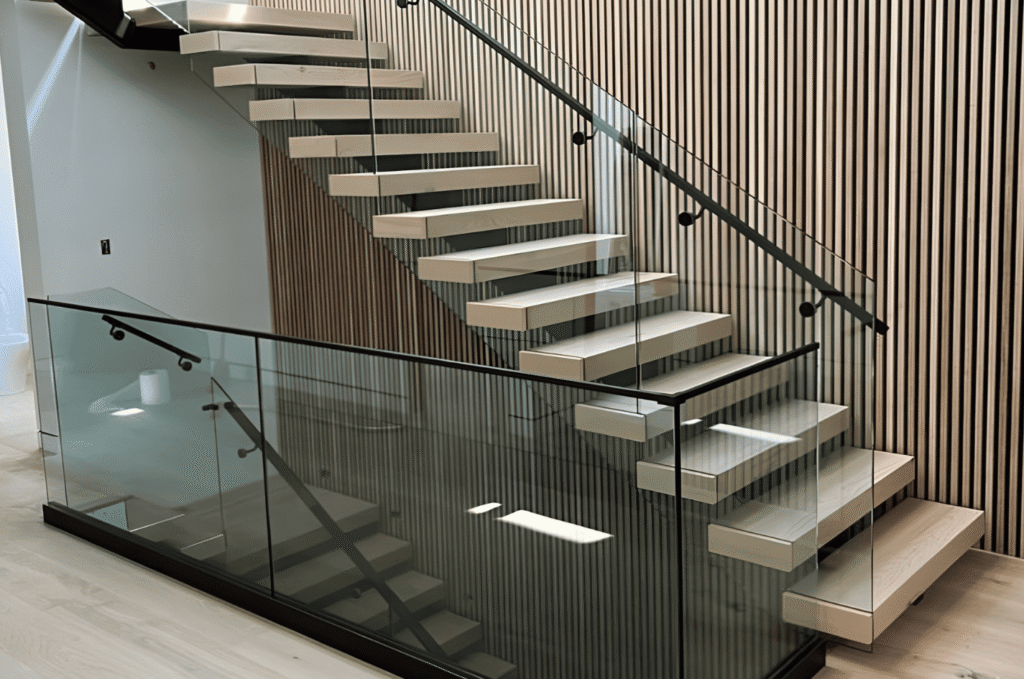
Why Colored Glass Panels Matter in Custom Glass Railing
Colored glass panels help a custom glass railing feel more intentional. A light tint can look subtle, while a deeper tone can create more contrast and privacy.
For local homes, color can look different in shade, rain, and direct sunlight. Homeowners planning Seattle glass railings should choose color as part of the full railing design.
Colored Glass Panels Add Privacy
Clear glass gives the most open view, but colored glass panels can soften visibility where privacy matters. This helps on balconies, patios, stair landings, and homes close to neighboring windows.
A custom glass railing with light tint can reduce direct sightlines while still letting daylight pass through. That makes colored glass panels for railings useful when a home needs openness without feeling exposed.
Color Supports the Design
Glass color should work with wood floors, stone, black hardware, white walls, or large windows. Bronze tones can feel warm, while gray tinted glass railing panels often feel clean and modern.
How Colored Glass Panels for Railings Work
Colored glass panels for railings combine safety with visual style. The color may come from tinting, interlayers, coatings, or decorative glass treatments.
Before choosing a tone, think about privacy, light, views, and nearby materials. A good plan keeps the railing custom without making the space too dark or busy.
Tinted Glass Railing Panels Filter Light
Tinted glass railing panels usually keep some transparency while adding controlled color. They are not the same as painted or fully opaque panels.
This makes them helpful in areas with glare, strong sun, or close outdoor exposure. A custom glass railing with tinted panels can soften brightness while keeping the open look of glass.
Custom Glass Panels Match the Layout
Custom glass panels can be planned around the exact home layout. Panel size, thickness, edge finish, tint, and mounting style all affect the final result.
For wider design planning, the guide to custom glass railing design helps connect glass color with layout, hardware, and placement.
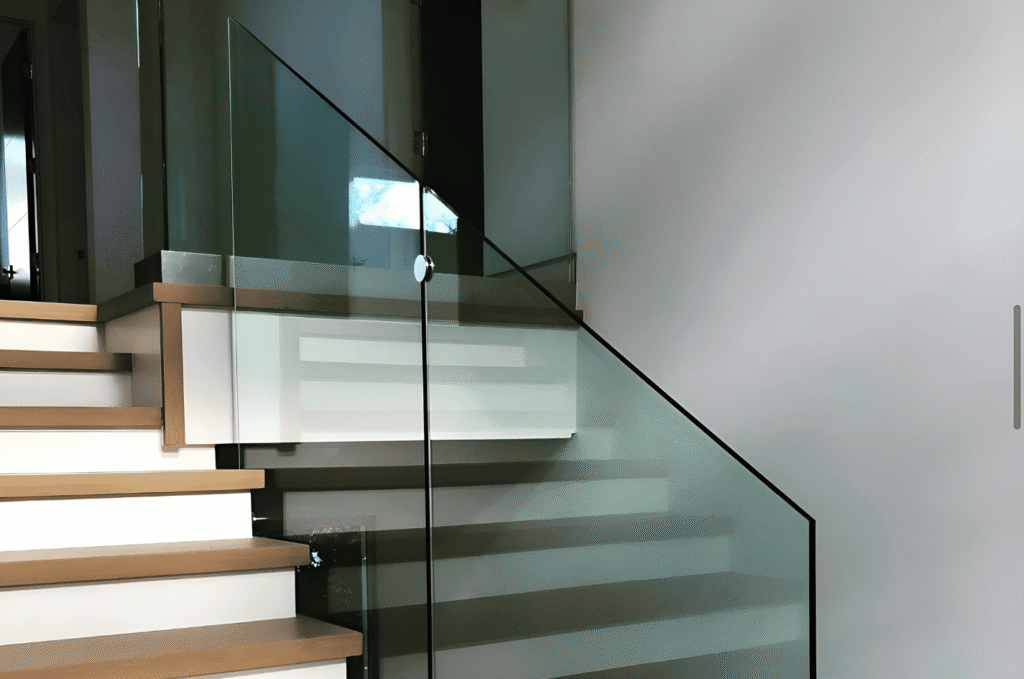
Choosing Custom Glass Panels for Interior Spaces
Inside the home, custom glass panels can make stairs, lofts, hallways, and open rooms feel brighter. Colored glass should add style without making the interior feel smaller.
Custom Stair Railing With Colored Glass
A custom stair railing is a good place for colored glass because stairs are often highly visible. The railing may be seen from the entry, living room, hallway, or upper floor.
Soft tinted glass can make a staircase feel more finished while allowing light to move between levels. For stair layouts, glass stair railing options can help match panel style with stair shape and movement.
Connecting Indoor and Outdoor Looks
Some homes use glass railings in several areas. A staircase may connect visually to a deck, balcony, or rooftop space.
Using a similar glass tone across these areas makes the home feel more consistent. A future guide on indoor outdoor glass design can be added once that blog is published.
Glass Railing Design Seattle Homes Can Use Outdoors
Outdoor spaces need careful planning because light changes throughout the day. A custom glass railing may look different in morning light, evening shade, rainy weather, or direct sun.
For decks, balconies, and patios, colored glass should protect the view instead of fighting it. The right tone can make outdoor areas feel polished without making the railing too noticeable.
Match Panels With Hardware Finishes
Colored glass panels should work with the hardware finish. Matte black can make tinted glass feel bold, while stainless steel can keep the railing lighter.
For finish planning, the guide to glass railing hardware explains how base shoes, posts, clamps, and standoffs affect the final look. Hardware and glass color should feel like one design decision.
Custom Glass Railing for Decks and Balconies
Decks and balconies often benefit from colored glass when privacy, glare, or strong contrast is a concern. The panel color can make outdoor areas feel finished while keeping them open.
Homeowners reviewing residential glass railings can compare systems for decks, patios, balconies, and stairs. A custom glass railing looks stronger when glass, hardware, and setting support the same goal.
Planning Glass Railing Installation Seattle Projects
Glass railing installation Seattle projects should begin with design clarity. Panel color, measurements, mounting surface, hardware finish, and layout all affect the finished railing.
Measure Before Choosing Color
The same colored glass panels can look different depending on opening size, light direction, and nearby materials. A small sample may look subtle, while a full railing run can feel stronger.
For nearby homes with modern layouts, Kirkland glass railings may need color planning around outdoor views and interior finishes. Site measurements help the final custom glass railing fit the real space.
Balance Privacy, Light, and View
Privacy, light, and view should be planned together. Darker tinted glass railing panels may improve privacy, but they can also reduce openness if used in the wrong area.
Homes with wooded lots, lake views, or open outdoor spaces may need a different approach from compact city homes. Redmond glass railings can use subtle tinting to soften exposure while keeping spaces bright.
Keep the Design Consistent
A custom glass railing should look consistent from one angle to another. This includes panel height, hardware spacing, glass color, and connections to stairs, decks, balconies, or landings.
For larger properties, Sammamish glass railings often work best when several areas share one coordinated design. Consistency helps colored glass panels feel architectural instead of random.
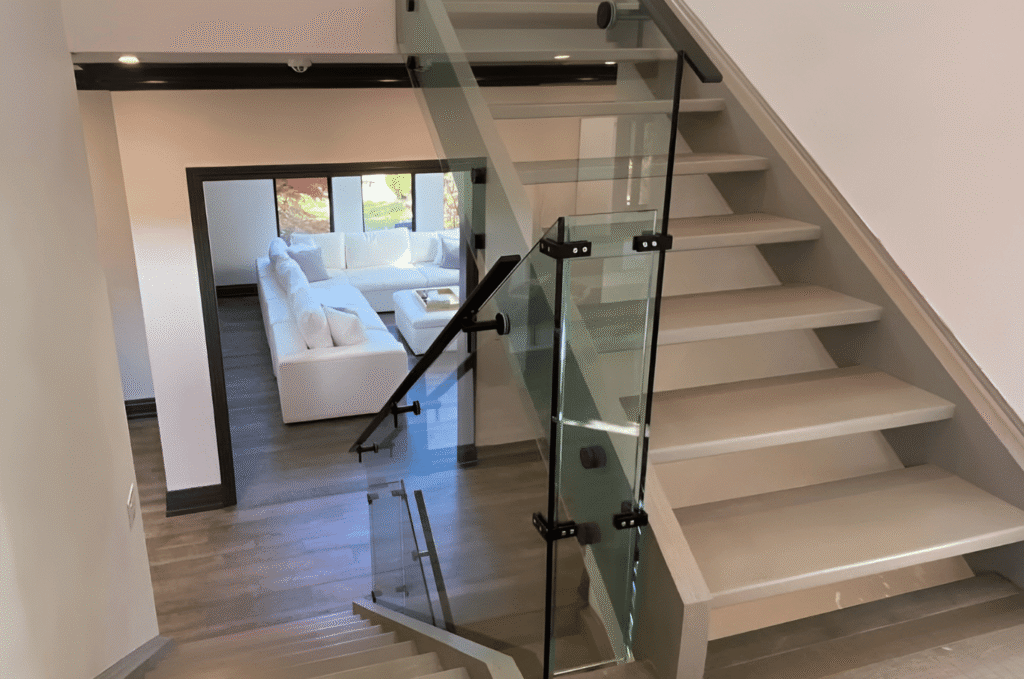
When Colored Glass Panels Are the Right Choice
Colored glass panels are a good choice when a home needs more than a clear safety barrier. They can support privacy, reduce glare, add contrast, and help the railing match the design style.
A custom glass railing with colored panels works best when the tone is chosen carefully. The color should match the home’s light, finishes, view goals, and daily use.
Why Expert Design Support Matters
Because colored glass changes the whole railing, expert design support can make the decision easier. A professional can explain how the same color may appear in shade, rain, sun, or indoor lighting.
At Glass Railing Seattle, homeowners can plan a custom glass railing that fits the home’s style, safety needs, and long-term design goals. The right guidance helps colored glass panels feel natural, not forced.
Start With a Clear Design Goal
Before choosing a color, decide what the railing needs to do. Some homes need privacy, some need light control, and others need a more custom design finish.
A custom glass railing should make the home feel safer, cleaner, and more complete. To explore colored glass panels, custom glass panels, and installation options, contact us and start with a simple design conversation.