
Glass railing pricing in Seattle varies widely depending on the system, materials, and site conditions involved. This guide breaks down each cost factor so you can plan your budget accurately, whether you’re upgrading a deck, staircase, or balcony.
From glass thickness and hardware finish to permit requirements and installation complexity, understanding what drives price helps you ask better questions, compare quotes with confidence, and avoid surprises once the project is underway.
Table of Contents
Why glass railing pricing varies so much
Unlike off-the-shelf products with a fixed retail price, glass railing is a custom-fabricated system. Every project involves a unique combination of glass size, thickness, hardware finish, mounting configuration, and site conditions — and each of those variables carries its own cost.
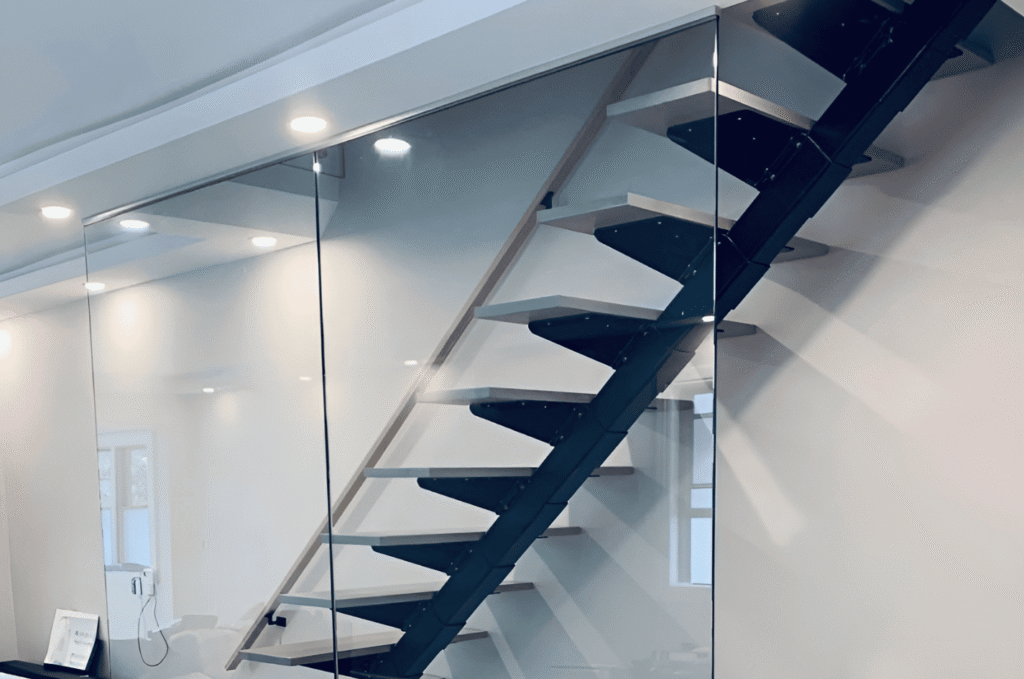
A straightforward framed deck railing on a flat lot will price out very differently from a frameless interior staircase with custom-cut panels and matte black hardware. There is no single number that applies to all projects, which is why understanding each factor individually puts you in a much stronger position when it comes to planning your budget and evaluating quotes.
What goes into the cost of a glass railing system
Glass type and thickness
The glass panel is typically the largest single cost component in any project. Thicker glass, 1/2″ versus the standard 3/8″, adds to material and fabrication cost but provides greater rigidity and a more premium feel. For most residential deck and balcony installations, standard thickness tempered glass performs well and meets code requirements. The upgrade to thicker glass makes the most sense for frameless systems where the panel carries more structural load without the support of a surrounding frame.
Glass type matters just as much as thickness. Low-iron glass, which eliminates the faint green tint of standard tempered glass, carries a noticeable price premium and is a popular upgrade for Seattle homes with water or mountain views. The difference is subtle in photos but immediately visible in person, particularly on larger panels. Frosted and acid-etched finishes add privacy without sacrificing light and come at an additional cost above the base glass price. Tinted glass is another option for west-facing installations where afternoon glare is a concern.
Frameless vs. framed systems: how railing type affects cost
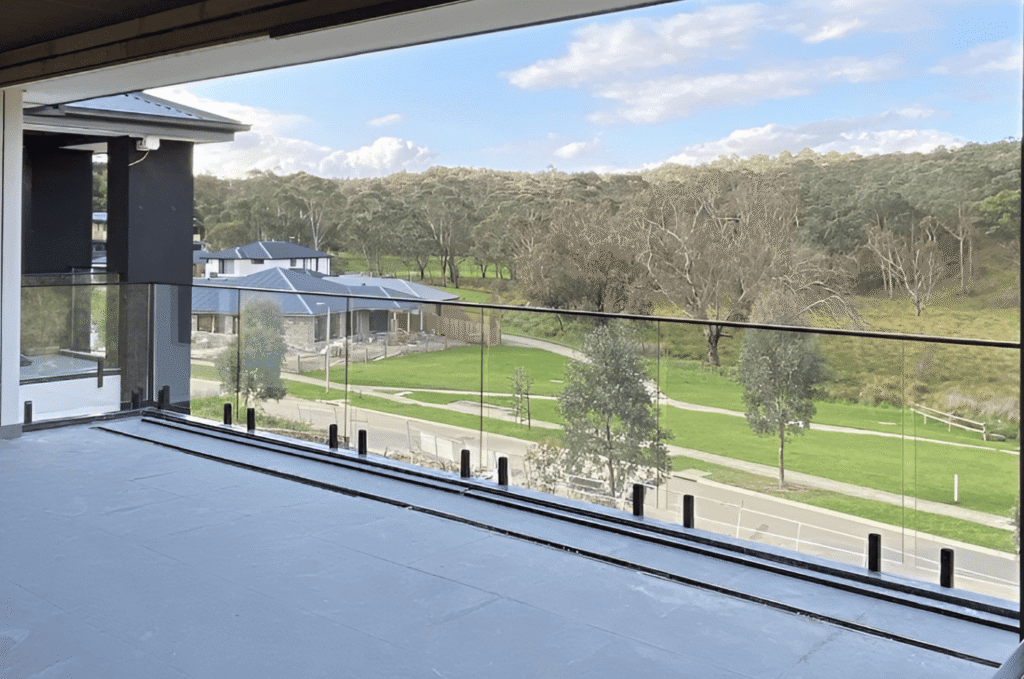
Frameless glass railing systems require thicker glass and more precise fabrication to compensate for the absence of a supporting frame, making them the higher-cost option. The result is a clean, uninterrupted sightline that many Seattle homeowners consider worth the investment, particularly on decks and balconies where the view is a primary asset. Base shoe channel systems, where the glass is secured directly into a metal channel at the base, are the most common frameless configuration.
Framed systems, which use aluminum posts and a top rail with thinner glass panels, are generally more budget-friendly and faster to install. They offer a structured, defined look that suits a wider range of architectural styles. Post-and-clamp systems sit between the two in both price and appearance, using visible hardware to hold the glass without a full frame. For a detailed side-by-side comparison of how these systems differ in practice, the guide on frameless vs. framed balcony railing systems covers the tradeoffs in depth.
Hardware finish and quality
Posts, base shoes, standoffs, and top rails vary considerably in quality and price. Standard brushed aluminum is the most economical finish and holds up well in most residential applications. Matte black glass railing hardware has become one of the most requested finishes in Seattle over the past few years, offering a clean contrast against clear glass that suits both modern and transitional home styles. It carries a moderate premium over brushed aluminum due to the powder-coating process involved.
Marine-grade 316 stainless steel is the most durable and most expensive hardware option. It is the right choice for exposed waterfront or high-moisture installations where long-term corrosion resistance is a priority. Beyond finish, the gauge and weight of the hardware itself affects both cost and performance.
Heavier-gauge components cost more upfront but hold tolerances better over time, particularly outdoors where Seattle’s persistent moisture and seasonal temperature changes put consistent stress on hardware connections. A full breakdown of what to evaluate when choosing components is covered in the post on choosing the right glass railing hardware.
Linear footage and project scale
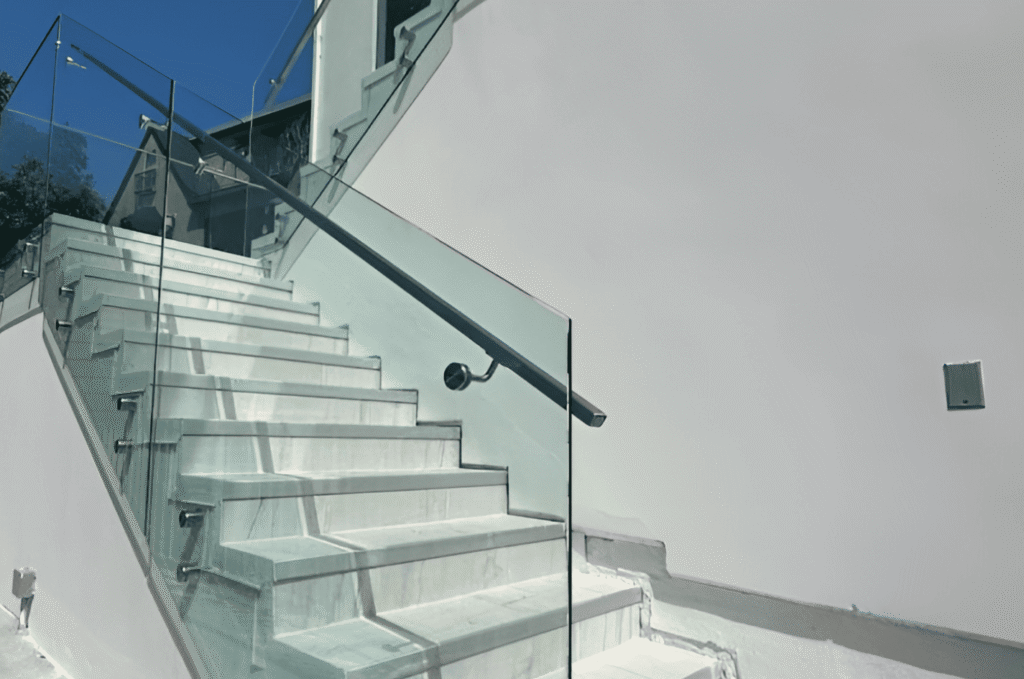
Glass railing is typically quoted per linear foot, so total project length is one of the most straightforward cost drivers. A short run of 15 to 20 feet on a side deck will price out very differently from a full wraparound deck or a multi-level interior staircase. Larger projects often benefit from economies of scale, since fabrication setup costs and contractor mobilization fees are spread across more footage, which can reduce the effective per-foot rate.
When comparing quotes from different contractors, confirm whether each per-foot price includes glass, hardware, and installation labor, or whether those are broken out as separate line items. Mismatched quote structures are the most common source of confusion when homeowners try to compare bids side by side. An all-in price per foot is easier to evaluate but makes it harder to understand where the money is going if you want to value-engineer specific components.
Site conditions and access
Installation complexity is one of the most underestimated pricing factors. A ground-level deck with straightforward truck access installs faster and at lower cost than a rooftop terrace, a second-floor balcony, or a narrow interior staircase in an older home. Any situation that limits how materials can be brought to the installation point, tight gates, steep driveways, interior-only access, adds time and labor cost.
Sloped lots, structural reinforcement requirements, or the removal and disposal of an existing railing system also add to the overall scope. In hillside Seattle neighborhoods like Queen Anne glass railing projects, tiered decks and steep grades often require custom-cut panels at specific angles. Custom cuts increase fabrication time and generate more material waste, both of which factor into the final price. The more accurately you can describe your site conditions during a consultation, the more accurate your initial quote will be.
Permits and Seattle building code compliance
Depending on the scope of your project, a building permit may be required before installation can begin. Permit fees, potential engineering sign-offs, and the administrative time involved in preparing compliant drawings are all legitimate cost components that vary by project size and complexity. Seattle homeowners who work with a contractor that handles permitting as part of the scope typically pay more upfront, but often less overall when you account for the time, risk, and potential cost of managing it independently.
Seattle’s building code requires tempered or laminated safety glass for all railing applications, minimum guardrail heights based on deck elevation, and specific load ratings for the overall system. Working with an experienced installer who designs to code from the start avoids the cost of rework after a failed inspection. The full technical requirements are outlined in the guide to glass railing safety requirements and WA building codes.
Indoor vs. outdoor installation
Interior glass railing is generally less expensive than outdoor systems for several reasons. Indoor hardware does not require the same level of corrosion resistance, which reduces material cost. Indoor installations also avoid the structural complexity associated with decks and balconies, no flashing details, no drainage considerations, and generally more predictable substrate conditions that make installation faster and more straightforward.
Conclusion
Outdoor installations require marine-grade hardware, weatherproof sealants, and sometimes additional structural work on the deck framing to support the load transfer from glass panels. For properties in waterfront areas or neighborhoods with significant weather exposure, like glass railing in Magnolia, these requirements are non-negotiable for long-term performance. Cutting corners on outdoor hardware to reduce upfront cost typically leads to corrosion, hardware failure, and replacement costs within a few years, making it a false economy in Seattle’s climate.
Glass railing services are available across Seattle neighborhoods including Fremont, Montlake, and Laurelhurst, covering residential and commercial projects of all sizes, from single-run deck railings to full interior staircase installations.
Get an accurate quote for your project
Every project is different. Book a free on-site consultation to review your options and receive a no-obligation estimate tailored to your space.