
Frameless glass railing delivers stunning visual impact while providing essential safety for staircases, balconies, and outdoor spaces. Understanding the glass railing installation process helps homeowners appreciate the precision and expertise required for successful projects.
Whether you’re considering frameless glass railing for your Seattle area home or simply want to understand how glass railing systems work, this comprehensive guide covers everything you need to know.
Table of Contents
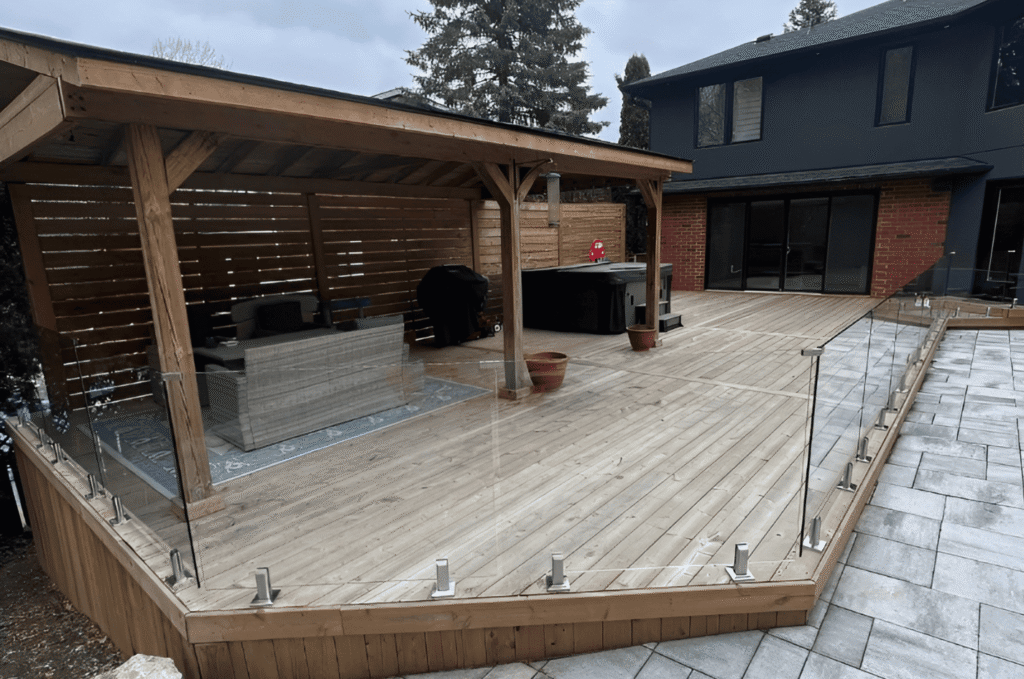
Frameless Glass Railing Systems
Frameless glass railing creates nearly invisible barriers using thick tempered glass panels secured by minimal hardware. Unlike framed systems with visible posts and rails, frameless glass railing installation relies on discrete mounting components that keep focus on the glass itself. This modern approach to glass railing systems appeals to homeowners throughout Bellevue, Kirkland, and Sammamish who value unobstructed views and contemporary design aesthetics.
Residential glass railing systems typically use 10mm to 12mm tempered safety glass. This specialized glass undergoes heat treatment that makes it four to five times stronger than standard glass. If tempered glass ever breaks, it shatters into small, rounded pieces rather than dangerous shards, ensuring safety throughout the frameless glass railing installation lifespan.
Types of Frameless Glass Railing Mounting Systems
Several mounting options exist for frameless glass railing installation in Kirkland. Each system offers distinct advantages depending on your application, structural conditions, and aesthetic preferences. Understanding these options helps you discuss project requirements with professional installers.
Spigot Systems
Spigot systems represent the most popular choice for frameless glass railing. These stainless steel clamps grip the bottom edge of glass panels, holding them securely in place. Quality spigots use marine-grade 2205 duplex stainless steel that resists corrosion in coastal environments. Exterior glass railing system installations throughout Mercer Island and Edmonds frequently use spigot mounting for waterfront applications.
Base Shoe Systems
Base shoe systems use aluminum channels that receive the bottom edge of glass panels. Rubber gaskets cushion the glass within the channel while wedges secure panels in position. This mounting method works well for both frameless glass railing stairs and level applications, providing clean lines that complement modern architecture.
Standoff Pin Systems
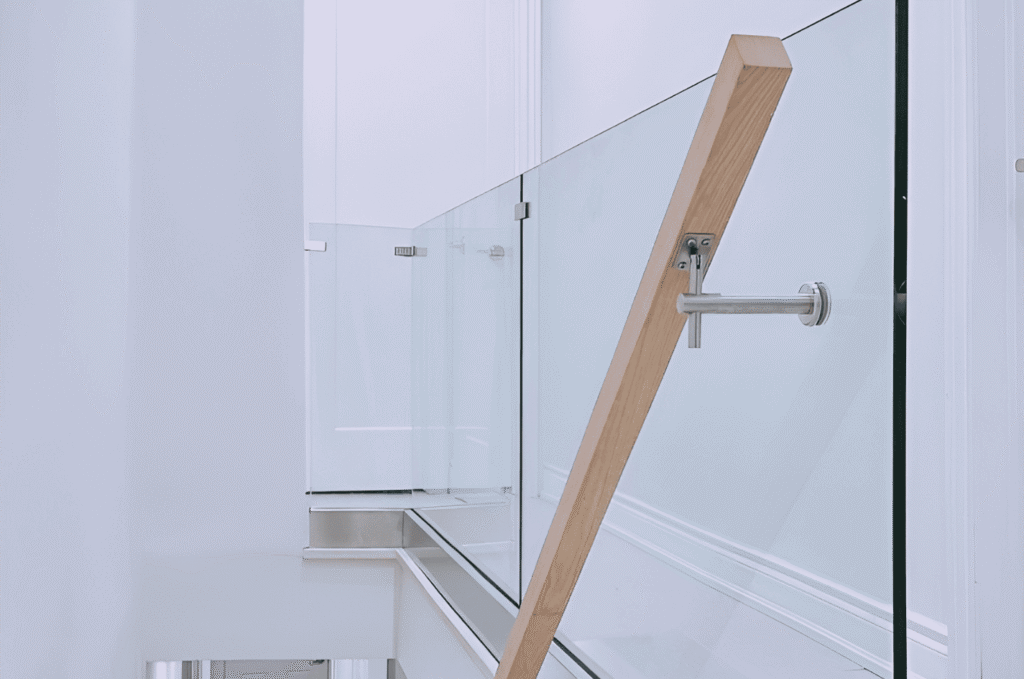
Standoff pins create a floating appearance by mounting glass panels away from the surface. Circular metal discs bolt through holes in the glass, anchoring panels to walls or structural supports. This glass railing installation method offers striking visual appeal for glass railing indoor applications and contemporary staircase designs in Bridle Trails.
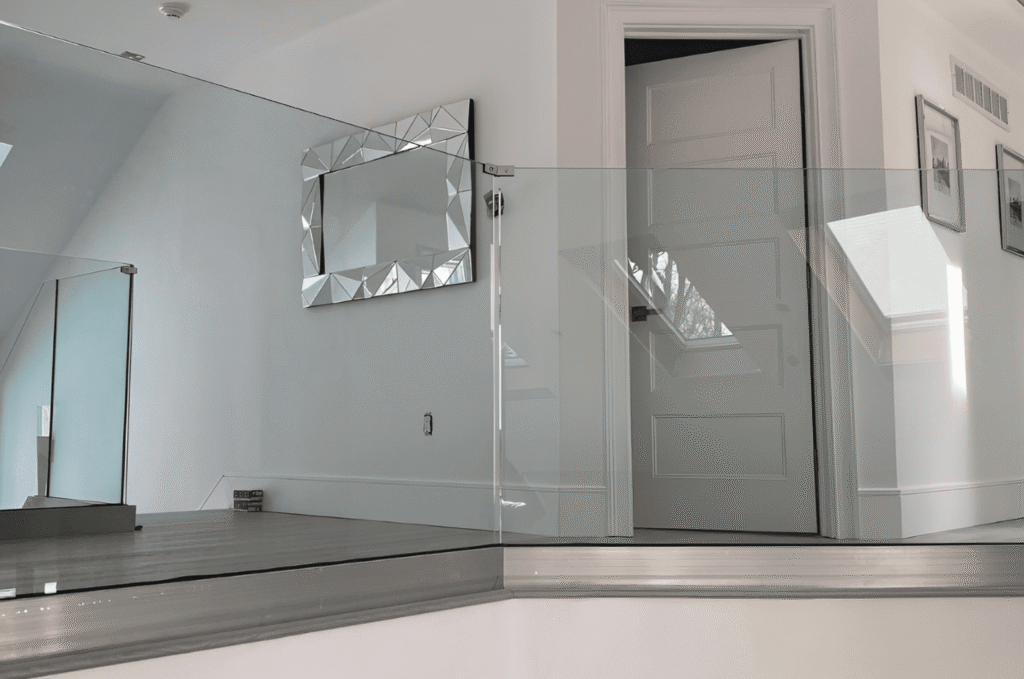
The Frameless Glass Railing Installation Process
Professional frameless glass railing installation follows systematic steps that ensure safety, code compliance, and lasting performance. Installers wear appropriate safety gear including safety glasses, work gloves, and steel-toed boots when handling tempered glass panels. Here’s what the complete process involves:
Step 1: Site Assessment and Planning
Every glass railing installation begins with careful measurement and planning. Installers assess structural conditions, verify that surfaces can support glass panel weight, and create detailed layouts. Accurate measurements ensure glass panels fit precisely within allocated spaces. Custom drawings help visualize how residential glass railing systems will look upon completion. This planning phase prevents costly errors during frameless glass railing installation.
Step 2: Marking and Layout
Installers mark chalk lines to define glass panel positions. These reference lines guide hardware placement throughout the frameless glass railing installation. Spigot or clamp locations are marked at approximately 25% from each panel edge for optimal support. Spacing between panels typically ranges from 3/4 inch to 2 inches to comply with building codes.
Step 3: Hardware Installation
Mounting hardware requires precise drilling and secure fastening. For spigot systems in NewCastle, installers mark four anchor points per spigot and pre-drill appropriate holes. Lag screws or expansion anchors secure spigots firmly to wood, concrete, or composite surfaces. Each spigot must be leveled using adjustment screws before proceeding with glass railing installation.
Step 4: Glass Panel Installation
Installing glass panels requires two people due to panel weight and delicate handling requirements. Workers carefully slide tempered glass into spigots or base shoes, ensuring rubber gaskets protect glass edges from metal contact. Suction cups help position heavy panels precisely and safely. Once seated, set screws secure glass within the mounting hardware for exterior glass railing system applications.
Step 5: Alignment and Final Adjustments
Glass-to-glass clamps may connect adjacent panels at their top edges for uniform alignment. Installers verify that all panels are level and properly spaced using precision instruments. Final tightening of all fasteners completes the frameless glass railing installation. Quality inspection ensures the finished system meets safety standards and aesthetic expectations for commercial buildings. Sealant application may be required for waterproofing in exterior glass railing system installations.
What is the 4 Ball Rule for Glass Railing?
The 4 ball rule, also known as the 4-inch sphere rule, represents a critical safety standard in modern building codes. This important regulation states that a 4-inch diameter sphere must not pass through any opening in a railing system. The rule primarily protects children from slipping through gaps and falling from elevated areas like balconies, staircases, and decks.
Frameless glass railing naturally complies with the 4 ball rule because solid glass panels create continuous barriers without gaps. This inherent safety advantage makes residential glass railing systems ideal for homes with young children and pets. Professional installers ensure spacing between adjacent glass panels remains well under 4 inches to maintain code compliance throughout Seattle area installations.
Frameless Glass Railing Price Considerations
In Montlake frameless glass railing price varies based on several factors including glass thickness, hardware quality, and installation complexity. Premium glass railing systems using marine-grade stainless steel and low-iron glass cost more than basic options but deliver superior durability, clarity, and corrosion resistance. Frameless glass railing stairs installations often require custom-cut panels and additional labor, affecting overall investment.
While frameless glass railing price exceeds traditional railing materials, the long-term value proves substantial. Minimal maintenance requirements, exceptional durability, and enhanced property appeal offset higher initial costs over time. Quality glass railing systems can last decades with proper care, making them smart investments for Redmond, Woodinville, and Newcastle homeowners.
Professional Installation
Although frameless glass railing installation appears straightforward, professional execution ensures optimal results. Certified installers understand structural requirements, building codes, and proper techniques that protect your investment. Glass railing indoor and outdoor applications both benefit from expert handling that prevents costly mistakes and ensures lasting performance. Improper installation can void warranties and compromise safety.
Contact Glass Railing Seattle specialists to discuss your frameless glass railing project requirements.