
Glass railing corrosion happens when constant moisture, salt air, and temperature swings slowly break down the metal posts, clamps, and anchors that hold a railing together. Seattle’s damp, rainy climate keeps those parts wet far longer than a dry region would, which speeds up rust and weakens the whole system over time. What looks like a solid railing on the surface can be quietly failing at its connections. The glass itself is fine; it is the metal behind it that pays the price, and often out of sight until damage is advanced. Here is how the local weather drives corrosion, which parts fail first, and how to protect your railing for the long run before rust ever takes hold.
Table of Contents
What Causes Glass Railing Corrosion
Corrosion is a chemical reaction, and it needs just a few ingredients to start. Understanding how railing metal corrosion begins makes it far easier to slow down. It all comes back to metal meeting moisture.
How Corrosion Starts
When water, oxygen, and metal stay in contact, the metal slowly oxidizes, and on an outdoor glass railing that contact is nearly constant. Add salt or pollutants to that mix and the reaction accelerates sharply, cutting a railing’s lifespan short. This is the root of nearly all outdoor railing corrosion, and it explains why exposed railings age faster than sheltered ones.
Moisture Is the Main Driver
The longer metal stays wet, the more it corrodes, so a climate that rarely fully dries out is the biggest factor. Trapped water in joints and channels is worse than open rain, because it sits against the metal and never fully evaporates. Standing moisture is corrosion’s best friend, which is why drainage and drying matter as much as the metal itself.
Why Metal Choice Matters
Low-grade or coated steel rusts quickly once exposed, while quality alloys resist it far longer. Owners of railings across Bellevue often see the difference within a season or two. The metal spec decides how well a railing ages, often more than any other single choice made during installation.
How Seattle Weather Attacks Railing Metal
Every element of the local climate works against exposed metal. Glass railing corrosion Seattle homeowners face comes from a specific mix of rain, air, and temperature. Together these forces are relentless, giving metal very little chance to dry out and recover between them.
Constant Rain and Damp
Frequent rain and high humidity keep railings wet for long stretches, giving corrosion time to take hold. Crews serving Seattle glass railings see rust appear fastest on shaded, slow-drying sections. Persistent damp is the region’s defining challenge, and it is why local railings need better hardware than a drier climate would. A fitting that lasts decades in Arizona may struggle here in only a few years.
Salt Air Near the Water
Homes facing Puget Sound get salt-laden air that eats into metal, while lakefront spots like waterfront Mercer Island stay damp enough to keep corrosion active year-round. Near saltwater the reaction is fastest, but constant lakeside humidity is nearly as hard on unprotected hardware. Either way, water near the railing is what shortens its life. Waterfront exposure of any kind demands the toughest hardware, since ordinary fittings simply cannot survive it for long.
Freeze-Thaw and Temperature Swings
Water that seeps into joints and freezes expands, cracking protective coatings and exposing bare metal. Each thaw lets moisture back in to start the cycle again, so the damage compounds through every cold, wet winter. These cycles quietly open the door to deeper rust, working away at coatings season after season until bare metal shows. Once that protective layer is broken, corrosion spreads far faster than before.
Which Parts Corrode First
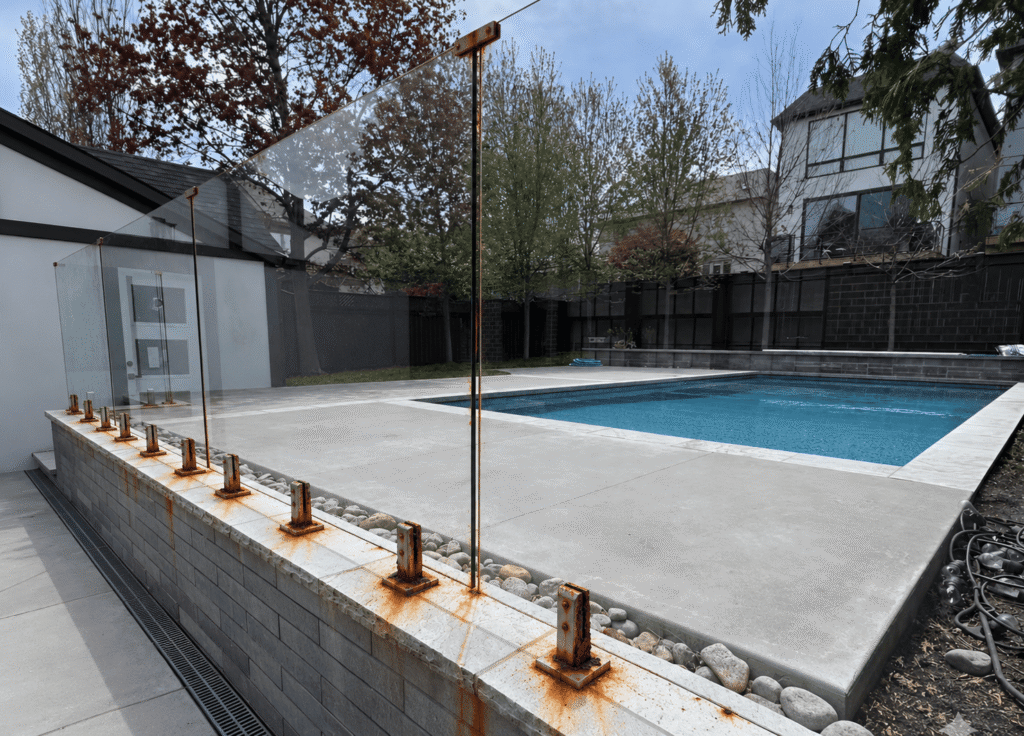
Not every part of a railing rusts at the same rate. Railing hardware corrosion usually shows up long before the larger structure, because small fittings are most exposed. Knowing where to look helps you catch it early.
Fasteners and Hardware
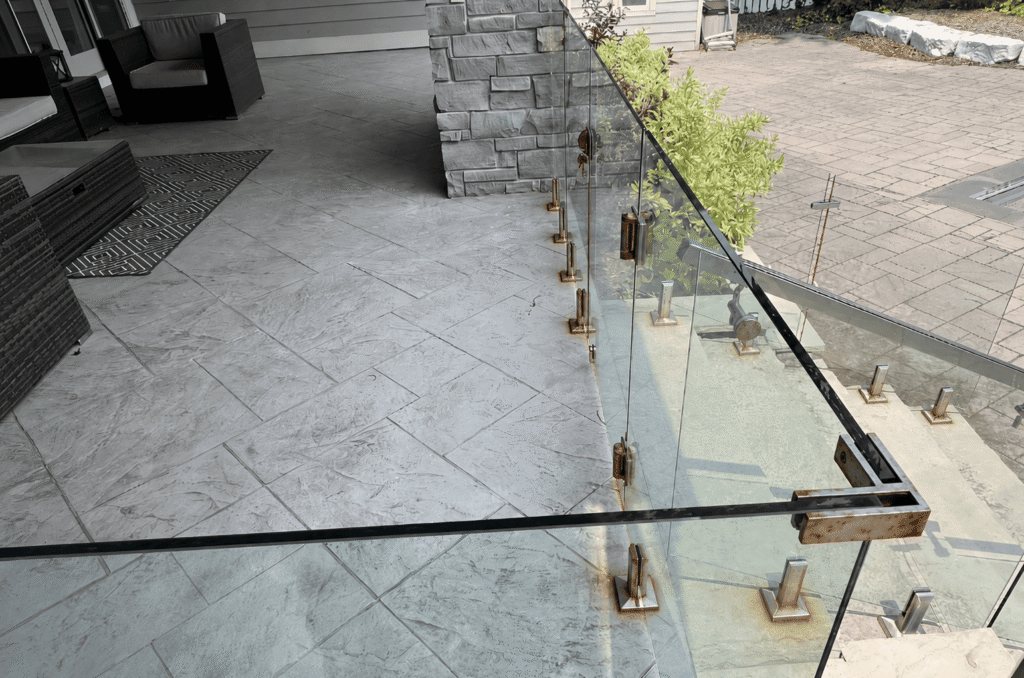
Clamps, screws, and spigots are the first to go, much like the moisture behind gasket wear attacks seals. Once a fastener weakens, the panel it holds is at risk of shifting or coming loose in wind. Small parts are where glass railing rust almost always begins, spreading outward once a single fitting gives way.
Hidden Anchors in the Base Shoe
Anchors buried in a channel corrode unseen, a problem tied closely to poor base shoe drainage that traps water against metal. Because they are hidden, this damage often goes unnoticed for years, until a loose or failing panel finally reveals it. Trapped water is what turns anchors fragile, weakening the very parts that keep the whole railing standing. Because they are set into concrete or framing, replacing them is a major job best avoided.
Even Stainless Steel Can Rust
Many assume stainless is immune, but stainless steel corrosion still occurs when salt and grime break down its protective layer. Lower grades of stainless pit and stain in coastal air, developing rust spots that many owners assume could never happen. Even good metal needs cleaning to stay corrosion-free, since the protective layer only works while the surface stays clean. A film of salt or grime is enough to start pitting on lower-grade stainless.
Preventing and Managing Corrosion
The good news is that glass railing corrosion is largely preventable with the right materials and care. Simple glass railing maintenance keeps metal protected and rust at bay. Prevention starts before a railing is even installed, with the choice of metal that will face the weather for decades.
Marine-Grade Materials
Choosing marine-grade stainless or powder-coated aluminum gives a glass balcony railing real staying power in wet, salty air. These metals resist what destroys cheaper fittings. Spending more on hardware upfront pays off for years, saving the cost and hassle of replacing corroded parts later.
Rinsing and Maintenance
Rinsing away salt and grime before it settles is one of the simplest defenses, and preparing the area, as our prepare your property guide covers, makes upkeep easier. Drying joints and clearing debris keeps moisture from lingering where it does the most damage. Routine care slows corrosion dramatically, and it costs a fraction of what a full hardware replacement would. A few minutes of rinsing is genuinely the best return on effort a railing owner can get.
Regular Inspections
Seasonal checks catch early rust on hardware before it spreads to anchors or glass mounts. Homeowners with decks in Kirkland inspect fittings after wet spells to stay ahead of it. Catching glass railing corrosion early is always the cheapest fix, since surface rust wipes away while deep corrosion means replacing parts.
Protecting Your Railing Long-Term
Good materials and routine care handle most glass railing corrosion, but advanced rust is best left to specialists. Catching it early keeps a small repair from becoming a full replacement.
When to Call a Professional
Deep rust, weakened anchors, and any loose hardware are signs to bring in a pro rather than wait. A specialist can assess hidden corrosion and replace failing parts before the glass is at risk. That protects both safety and your investment, keeping a minor repair from turning into a full replacement. A specialist can also spot patterns that point to a design or drainage flaw behind the rust.
Why Homeowners Trust Glass Railing Seattle
From material choice to ongoing care, homeowners rely on the specialists at Glass Railing Seattle to fight glass railing corrosion in the local climate. Focusing only on glass means every railing is built for the weather it will face.
Book a Corrosion Inspection
Seeing rust or stains on your railing hardware? Contact our team for an inspection, and we’ll assess the glass railing corrosion and recommend the right way to protect your railing.