
Glass railing water spots form when water dries on the glass and leaves behind dissolved minerals like calcium and magnesium, which build up into a cloudy, chalky film over time. Rain, sprinklers, and hard tap water all carry these minerals, and every drop that evaporates leaves a little more residue on the surface. Left alone, that residue bonds to the glass and grows harder to remove. Here is why mineral deposits build up on glass railings, where glass railing water spots show up most, and how to keep your panels clear for good.
Table of Contents
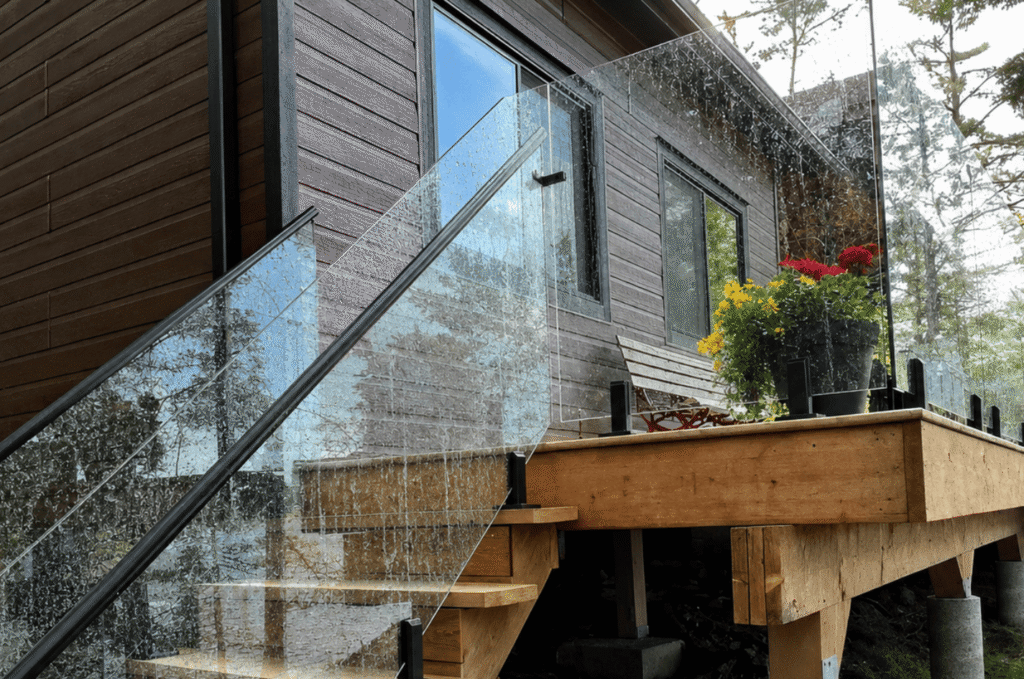
What Causes Glass Railing Water Spots
Water spots come down to one simple process: water lands on the glass, evaporates, and leaves its minerals behind. Understanding why glass railings get water spots makes them much easier to prevent. It starts with what is in the water itself, since not all water leaves the same amount of residue behind.
Minerals Left Behind by Evaporation
When a droplet dries on the surface, the water disappears but its dissolved minerals stay put as a visible spot. On an outdoor glass railing, this happens after every rain shower or sprinkler cycle. Each round of drying adds another faint layer, so glass railing water spots slowly build even when you never notice a single drop.
Hard Water and Its Content
Water high in calcium and magnesium, known as hard water, leaves far heavier deposits than soft water. The more mineral content the water carries, the faster spots appear. This is why some homes see buildup much sooner than others.
Why Glass Shows Every Spot
Glass is smooth and transparent, so even a thin film of minerals stands out in the light. That is why Seattle glass railings tend to show spots long before other surfaces in the same yard do. That visibility is part of what makes clear glass so striking, and so spot-prone, which is why regular care matters more than it would on wood or metal.
Why Mineral Deposits Form and Stick
Once minerals land on the glass, a few factors decide how stubbornly they stay. Knowing what causes hard water stains on glass explains why some spots wipe away and others don’t. Time and heat are the biggest culprits.
Hard Water Stains and Calcium Buildup
Repeated wetting and drying turns light spots into thick glass railing calcium buildup that feels rough to the touch. With the hard water common to railings across Bellevue, this buildup shows up worst near irrigation lines. The longer it sits, the more it bonds to the surface, until a quick wipe no longer lifts it away.
How Sun and Heat Bake Spots On
Sunlight speeds up evaporation and can bake mineral deposits onto the glass before they are ever cleaned. Baked-on spots etch lightly into the surface and resist normal washing. This is why spots on a sunny railing are the hardest to remove, and why shaded panels sometimes stay clearer despite equal exposure.
When Spots Become Permanent Etching
Left long enough, mineral deposits on glass railing can etch the surface so cleaning no longer restores full clarity. At that stage, a glass deck railing may need professional restoration. Catching buildup early is the only way to avoid permanent marks, since etched glass cannot simply be cleaned back to new.
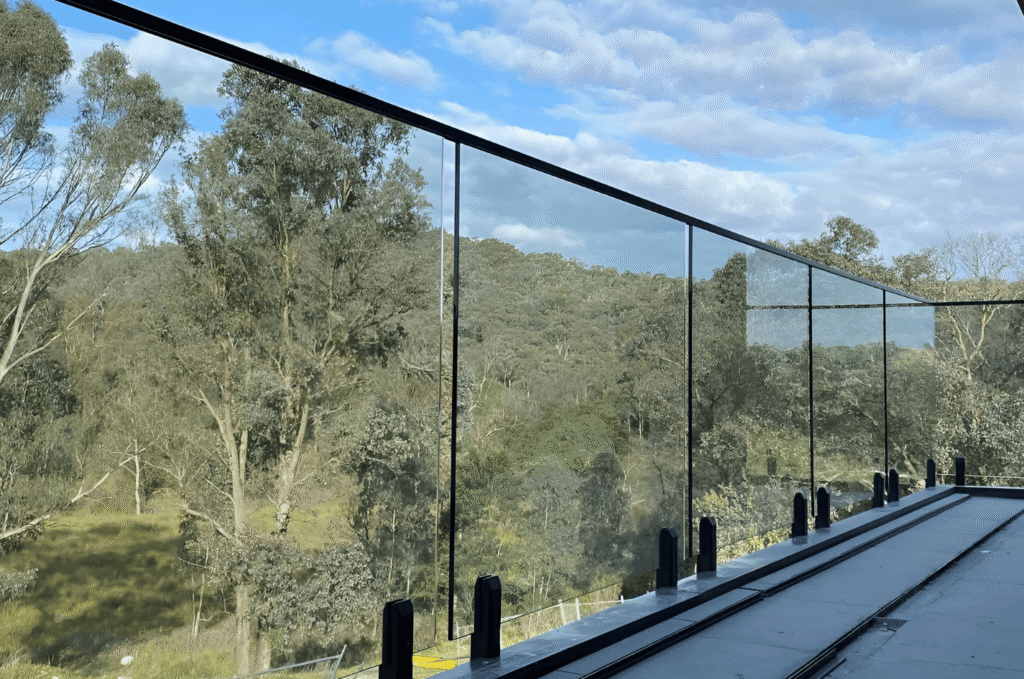
Where Water Spots Show Up Most
Not every panel collects glass railing water spots at the same rate. Water spots on glass panels cluster wherever water hits most often and dries slowest. A few spots on your property are almost guaranteed to be worse than others.
Near Sprinklers and Downspouts
Panels in the path of irrigation or roof runoff get soaked repeatedly, so they build spots fastest. The heaviest buildup on decks around Mercer Island usually sits closest to the sprinkler heads. Redirecting spray away from the glass helps a lot, and it is one of the easiest fixes for recurring glass railing water spots.
Exposed and Ground-Level Panels
Lower panels catch splashback from rain hitting the deck or patio, adding grit to the mineral mix. Preparing the area well, as our prepare your property guide covers, helps limit this from the start. Exposure is the single biggest factor in where spots form.
Shaded, Slow-Drying Spots
Areas that stay damp longer, like shaded corners, let minerals concentrate as water lingers. Slow drying means more time for the dissolved minerals to settle and harden onto the surface. These quiet spots are easy to miss until buildup is obvious, so they are worth checking whenever you clean the rest of the run.
Preventing and Removing Water Spots
The good news is that regular care keeps glass railing water spots from ever taking hold. Simple glass railing maintenance is far easier than restoring etched glass later, and professional glass railing cleaning in Seattle can reset panels that routine care no longer fixes. Prevention comes down to routine and the right products.
A Regular Cleaning Routine
Rinsing and drying panels on a schedule stops minerals before they bond, and our cleaning schedule lays out how often. A quick wipe after rain makes a big difference, and it takes far less effort than tackling weeks of built-up film at once. Consistency matters more than intensity, since steady care keeps deposits from ever bonding.
Gentle Products and Tools
Mild, glass-safe cleaners and a soft cloth lift fresh spots without scratching, and a diluted white-vinegar rinse can dissolve light mineral film before it hardens. Checking fittings during cleaning, like our tightening railing hardware guide suggests, keeps the whole system in shape. Avoid abrasive pads that dull the surface. Drying with a squeegee prevents new spots,.
Protective Sealants and Local Care
A glass sealant makes the surface shed water so minerals rinse away instead of sticking. Many Kirkland glass panels get a sealant to cut down on how often they need cleaning. Reapplying it periodically keeps the protection working, as sealants wear down with sun and repeated cleaning.
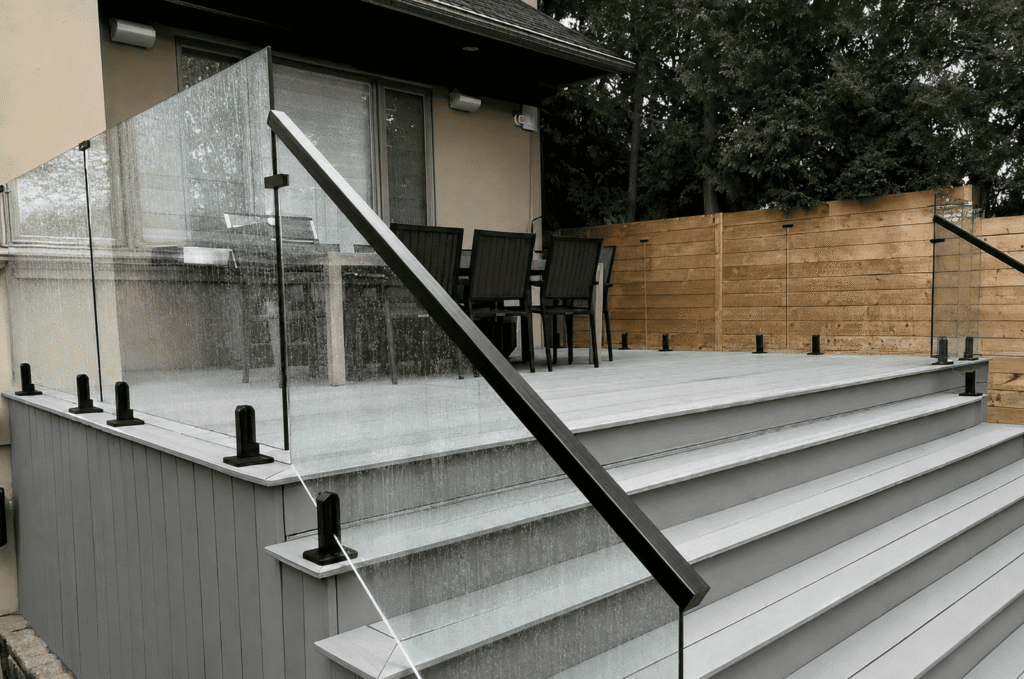
Keeping Your Glass Railing Clear
With a little routine care and the right help, your railing can stay clear of glass railing water spots for years. Professionals can also restore panels that everyday cleaning no longer fixes.
When to Call a Professional
Heavy calcium buildup and light etching are best handled by a specialist with the right restoration tools. A pro can bring back clarity that home cleaning can’t, often using a cerium-oxide polish and treatments made specifically for restoring glass. They can also advise on preventing the buildup from returning. That saves replacing panels that only look permanently damaged, when a proper restoration can often bring them back.
Why Homeowners Trust Glass Railing Seattle
From cleaning advice to full restoration, homeowners rely on the specialists at Glass Railing Seattle to keep glass clear and spot-free. Focusing only on glass means every recommendation is tailored to how your railing is exposed.
Keep Your Railing Spot-Free
Tired of fighting water spots on your railing? Contact our team for a consultation, and we’ll help you prevent, remove, and restore glass railing water spots for good.