
You can protect glass railings during renovation and painting by covering panels with thick plastic sheeting, taping around hardware edges, and keeping abrasive tools well clear of the glass. The right preparation takes under an hour and prevents damage that costs far more to fix.
Renovations expose glass to paint overspray, drywall dust, stucco splatter, and accidental impact. Once a tempered glass panel is scratched, replacement is usually the only real option. Taking time to protect glass railings before work begins is always the smarter investment.
Table of Contents
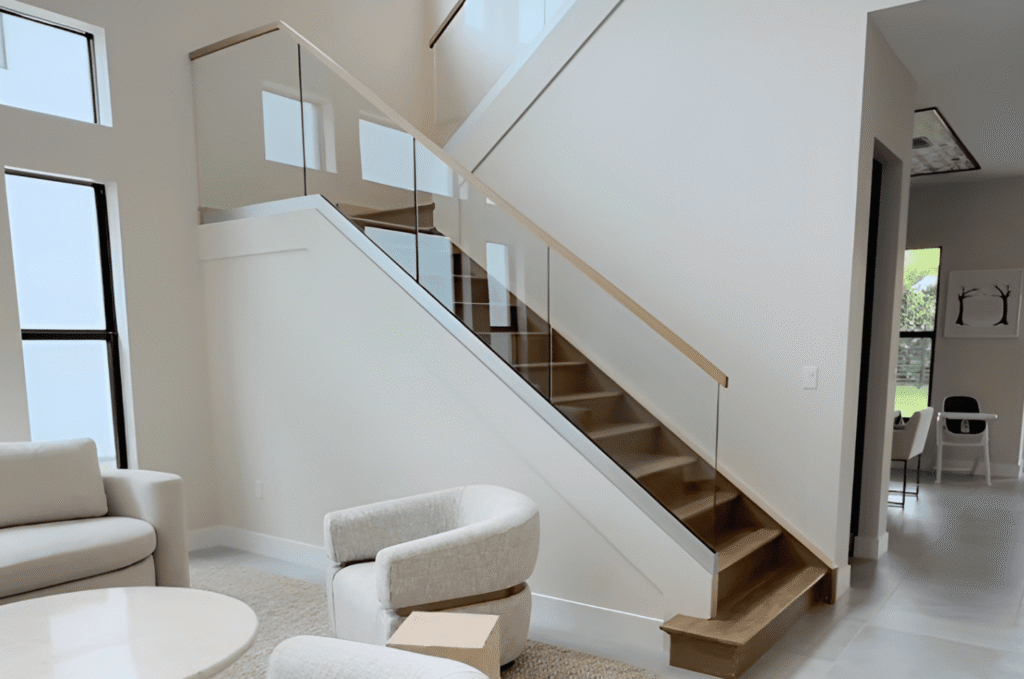
Why Glass Railings Need Special Protection During Renovations
Glass railing protection is not optional when renovation work is happening nearby. Unlike wood or metal, glass panels cannot be sanded or repainted if they get damaged. Even minor scratches catch light and become permanent visual defects.
Each hazard type interacts with glass differently, and some damage only becomes visible once the surface dries or the light hits it from a certain angle.
What Types of Damage Happen Most Often
Paint overspray and chemical etching are the most common issues. Oil-based paints can bond to glass within hours, and certain demo solvents permanently cloud a panel’s surface. Physical scratches from scaffolding or rough work gloves dragged across the panel are also frequent.
For indoor glass railing protection, drywall sanding dust is a consistent culprit. Fine particles settle on glass and get wiped off under abrasive pressure, leaving hairline scratches across the surface that are impossible to reverse.
Why Tempered Glass Is Harder to Repair Than It Looks
Tempered glass is strong under load but its surface is not scratch-resistant. The tempering process protects against breakage, not abrasion. Any scratch that penetrates the surface layer is permanent and polishing rarely helps.
If you want to understand what the full installation process involves before planning protection, reading about preparing for railing installation is a useful starting point.
How to Protect Glass Railings Before Painting Starts
Glass railing painting protection works best as a layered approach. The right combination depends on whether the glass is interior or exterior, how close the painting will happen, and what type of coating is being applied.
Always clean panels thoroughly before covering them. Dust or debris trapped under plastic sheeting will scratch the surface when the covering shifts.
Choosing the Right Covering Materials
Heavy-duty plastic sheeting, at least 4 mil thick, is the standard choice for deck glass railing protection during exterior painting. Thinner plastic tears easily around hardware and does not hold up to wind. Secure it with painter’s tape along the top rail and around each post, with no tape adhesive touching the glass directly.
For indoor glass railing protection near painting or plastering, foam padding under plastic sheeting adds impact protection where ladders or scaffolding will be close to the panels.
Taping Around Hardware Without Damaging Finishes
Standard blue painter’s tape is safe for most powder-coated and anodized hardware finishes, but test a small area first. Remove tape slowly at a low angle when the job is done to avoid pulling at the finish.
If you have noticed any loosening around clamps before the renovation, address it before covering everything. Our blog on glass railing hardware tightening walks through that process clearly.
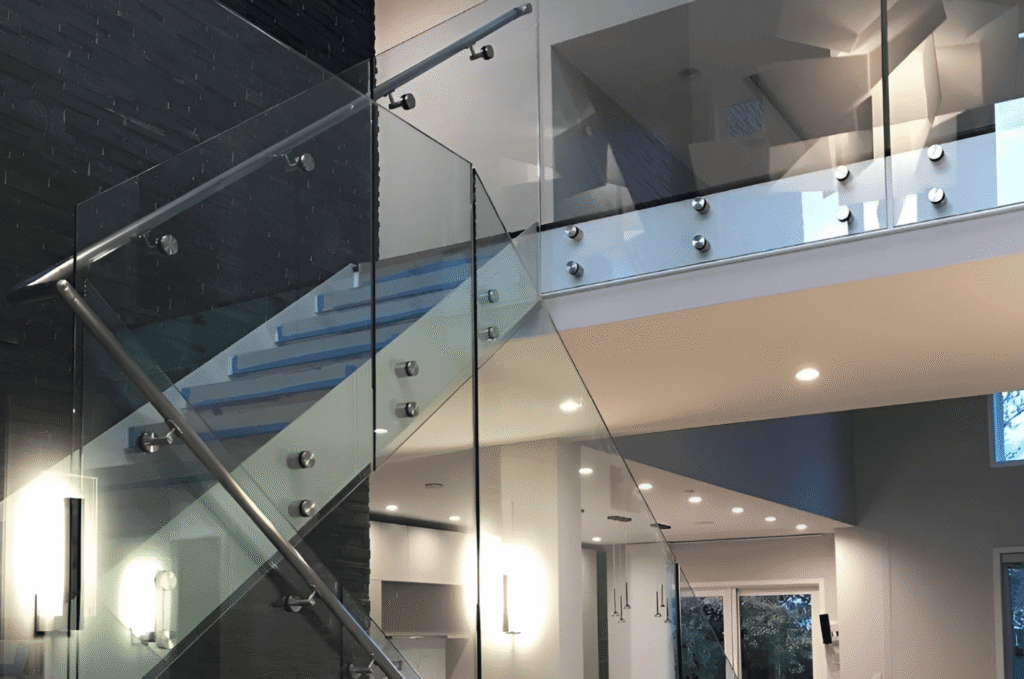
Protecting Outdoor Glass Railings During Exterior Work
Outdoor glass railing care during renovation requires planning around weather as well as the work. Paint overspray travels much farther outdoors on windy days, and dried paint on exterior glass is significantly harder to remove than fresh splatter.
Cover all panels completely before exterior painting begins and extend the sheeting at least six inches beyond each panel edge.
Managing Overspray Risk on Deck Railings
Masking for deck glass railing protection should go beyond the glass itself. Cover the base shoe hardware, the top rail if present, and any adjacent surfaces where overspray could bounce back onto the panels.
Make sure your contractor understands that glass cannot be cleaned with the same solvents used on siding or trim. For any outdoor glass railing system, a walk-through with the contractor before work begins prevents costly mistakes on the job.
Protecting Glass During Stucco and Masonry Work
Stucco and concrete splatter bond quickly to glass and require aggressive removal if left to cure. Wet stucco can usually be wiped away within the first hour, but dried stucco needs mechanical removal that risks scratching the panel.
Homeowners working with contractors often ask about timing for exterior glass protection. If you have questions before your project starts, our team serving the Bellevue glass railing area is happy to advise on the right protection approach for your specific exterior setup.
Protecting Indoor Glass Railings During Interior Renovation
Indoor glass railing protection presents different challenges than outdoor work. Interior spaces concentrate dust, fumes, and overspray in ways that outdoor air disperses naturally. Drywall sanding dust is fine enough to settle throughout a home and abrasive enough to scratch glass when wiped off carelessly.
Panels near stairwells and loft openings are especially vulnerable because workers move materials and set down tools around them all day.
Covering Staircase and Loft Glass Panels
For staircase panels, use foam pipe insulation slit lengthwise along exposed glass edges, then cover the full panel face with plastic sheeting secured at the top and sides. This protects against both impact and dust without requiring tape directly on the glass.
Our glass stair railing installations often include frameless panels running the full height of a stairwell. Full coverage on both faces of these panels is always worth the extra time during renovation.
Dealing with Paint Fumes and Chemical Exposure Indoors
Oil-based paints and solvents release vapors that can cloud certain glass coatings or affect hardware seals in enclosed spaces. Ventilation during interior painting near glass railing systems is a glass railing damage prevention priority, not just a health one.
Keep windows open and fans running during and after painting. Once work is complete, remove coverings only after paint has fully dried. For ongoing maintenance after the renovation, the seasonal railing cleaning guide covers what to inspect at each point in the year.
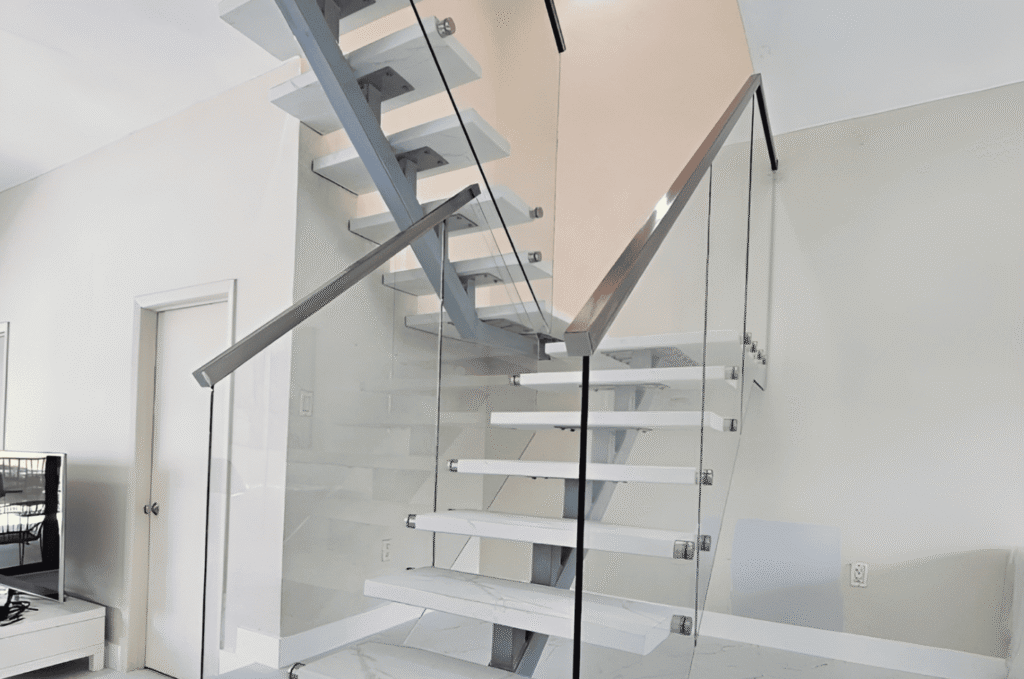
What to Do If Glass Gets Damaged During Renovation
Even with careful glass railing protection in place, accidents happen. Knowing how to respond quickly can be the difference between a minor cleanup and a full panel replacement.
Have the right cleaning supplies on-site before the renovation begins. Fresh paint, plaster, or stucco should be addressed the moment it is noticed.
Removing Fresh Paint and Splatter Safely
For fresh water-based paint, a damp microfiber cloth with light pressure removes most splatter without scratching. Never use abrasive pads or dry paper towels on glass railing panels. For oil-based paint, mineral spirits on a soft cloth work well if applied immediately and rinsed off with clean water.
If you need in-person guidance on the right cleaning approach for your panel type, stop by our Kent glass railing showroom before attempting removal yourself.
When to Call a Professional for Assessment
If the glass has visible scratches after the renovation, a professional assessment is the right next step. Most cosmetic scratches do not compromise structural integrity, but they are difficult to live with in a high-visibility location.
Reach out to us directly or stop by if you are in the Kirkland glass railing area, we are happy to give you a clear recommendation on whether repair or replacement makes sense for your panels.
Planning Ahead for Every Renovation
The best glass railing damage prevention strategy is one built into renovation planning from the start. Include glass protection in your contractor briefing and make sure all workers understand that glass panels are not wipeable surfaces.
Making protection part of your standard renovation process keeps your glass railing system looking its best season after season. You can explore our installed systems and get advice in person if you are in the Seattle glass railing service area.
Visit Our Showroom
Glass Railing Seattle works with homeowners across the region on both new installations and post-renovation assessments. Explore our full range of services at Glass Railing Seattle to see how we approach each project.
Protect Your Glass Railing Today
Have questions about protecting your glass railing system during an upcoming project? Our team is ready to walk through your specific situation and recommend the right approach.
Contact us today to schedule your consultation.