
A deck glass railing and a balcony glass railing do the same basic job, yet they solve very different structural problems. A deck railing wraps a ground-level or raised platform, while a balcony railing guards an elevated edge that hangs off the building. That single difference in location changes how each system is mounted, loaded, and engineered.
Both use tempered safety glass, both open up your view, and both suit the modern Seattle home. Choosing the right one means understanding where they split. Below, we break down the deck vs balcony glass railing decision into plain, practical differences so you can pick the system that fits your space, your budget, and your view.
Table of Contents
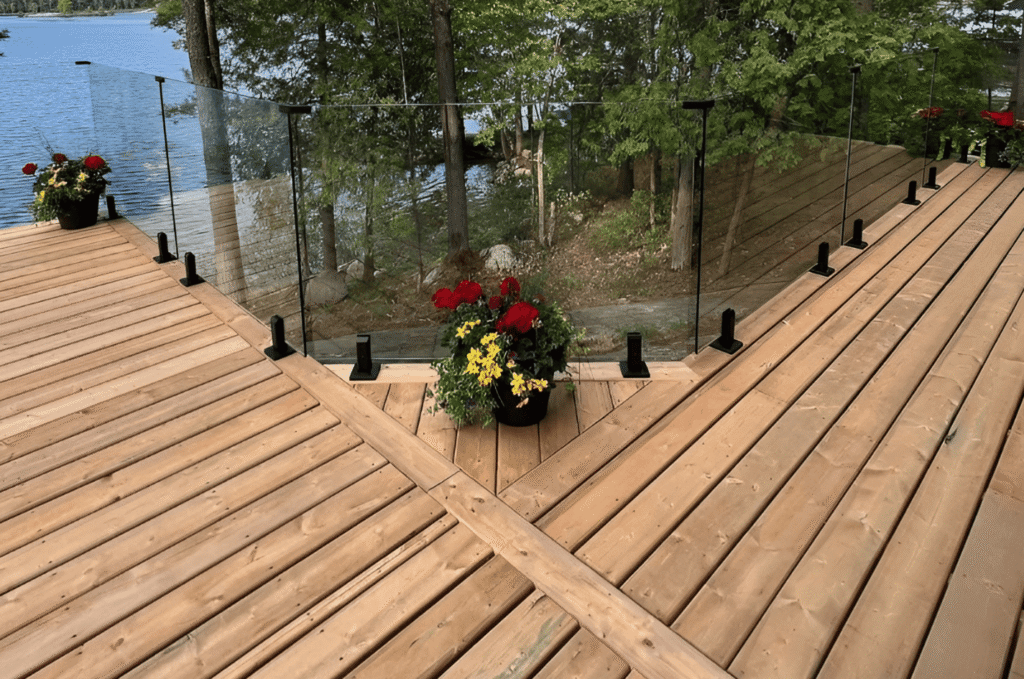
What Makes a Deck Glass Railing Different from a Balcony Railing
The clearest difference is what each railing attaches to and how much movement it has to control. A deck sits on posts and joists, while a balcony cantilevers from the building’s frame. In the deck vs balcony glass railing comparison, that split shapes the hardware, the panel size, and the way each system meets code.
Mounting and Structural Load
A deck glass railing usually mounts to the rim joist, surface, or fascia, giving installers several solid anchor points. Because the platform is built to carry weight, a well-planned glass deck railing handles wide panels and long runs with ease.
A balcony glass railing has fewer anchor options and leans on the slab edge, so panel spacing and post placement matter far more.
Where Each System Fits Best
Decks tend to be larger, so a deck glass railing often runs the full perimeter of an outdoor living space. Before you commit to frameless panels, confirm your deck’s structural strength can support the added glass and hardware weight.
Balconies are smaller and view-focused, which makes them ideal for short, clean spans that frame a single sightline.
Tempered Glass Deck Railing: Materials and Everyday Safety
Both railings rely on the same core material, but a tempered glass deck railing faces more foot traffic and impact than most balconies. That is why panel thickness, glass type, and hardware finish all deserve a closer look before you buy. Small material choices decide how a railing feels and lasts.
Why Tempered Glass Matters
Tempered glass is heat-treated to be far stronger than standard glass, and it breaks into blunt pieces instead of sharp shards. The same safety logic applies to a glass balcony railing, where a fall risk sits just beyond the panel.
For decks, thicker panels are common because they take more daily contact from people, pets, and furniture.
Hardware Built for Wet Weather
Seattle’s rain punishes cheap fittings, so stainless steel and powder-coated aluminum are the standard for lasting performance. Homeowners on Bellevue glass railings projects often choose marine-grade hardware to fight corrosion near water and heavy tree cover.
Good drainage in the base channel keeps water moving and protects both the deck surface and the glass mounts.
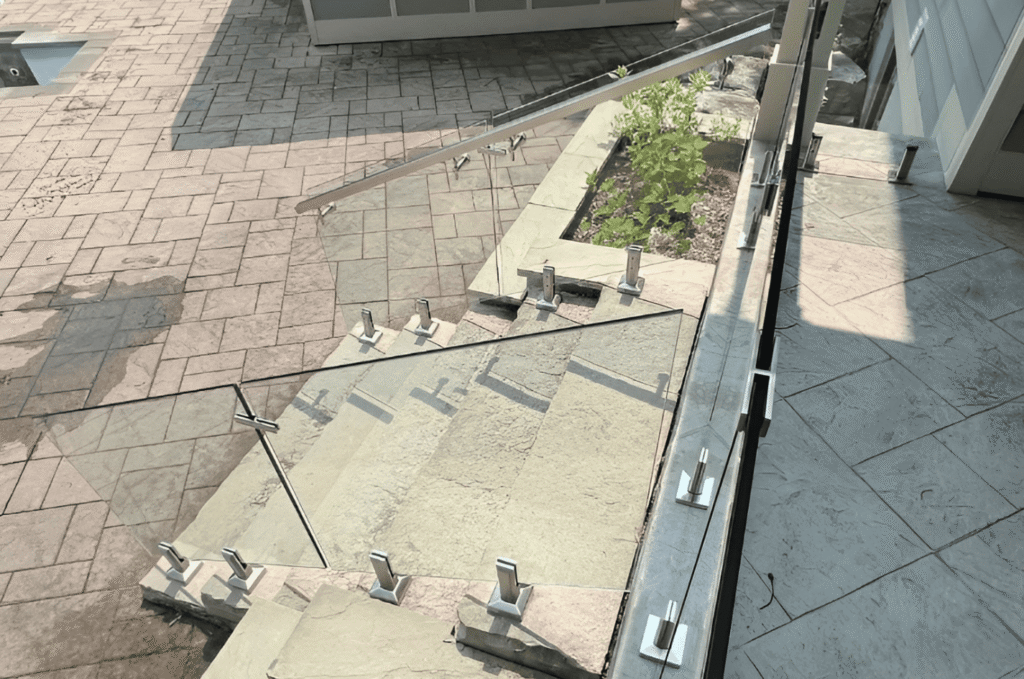
Frameless Glass Railing vs Framed Deck Options
Style is where the deck vs balcony glass railing choice gets personal. A frameless glass railing delivers a nearly invisible barrier, while framed systems add structure, contrast, and often a lower price. The right pick depends on your view, your budget, and how much upkeep you want.
The Frameless Advantage
A frameless glass railing uses a base channel or standoffs with no top rail, so nothing interrupts the view. This look shines on deck glass railing projects that face water, greenery, or skyline. Many Redmond glass railings homeowners choose frameless panels to keep sightlines wide and clean.
When Framed Makes Sense
Framed and post-and-clamp systems cost less and make panel replacement simple, which helps on busy decks. They also add a visual line that some homeowners prefer for balance.
For exposed edges, an outdoor glass railing with posts can simplify code compliance on taller drops.
Matching Style to Your Space
A deck glass railing can mix glass with aluminum on the side runs to save money while keeping the main view frameless. Homeowners on Kirkland glass railings projects often use this blend to balance cost with a clean, open sightline.
Balconies usually look best fully frameless because the span is short and the view is the whole point.
Choosing the Right Exterior Glass Railing System for Seattle
An exterior glass railing system has to survive rain, wind, and constant damp, no matter which surface it guards. Location, climate, and local code all shape what works. A deck glass railing and a balcony railing are planned a little differently here in the Pacific Northwest.
Weather and Local Climate
The region’s wet-dry cycles are hard on fasteners and seals, so material choice is everything. Homeowners exploring Seattle glass railings should prioritize corrosion-resistant hardware and properly drained base channels.
A deck glass railing near tree cover also needs easy-clean panels to handle sap, pollen, and moss.
Codes, Permits, and Height
Elevated decks and balconies usually need a permit, and guard-height rules are strict for a reason. If you want the full background first, this guide on glass railing basics covers what Seattle homeowners should know.
Balcony drops are often higher, so their railings face tighter load and spacing rules than a low deck.
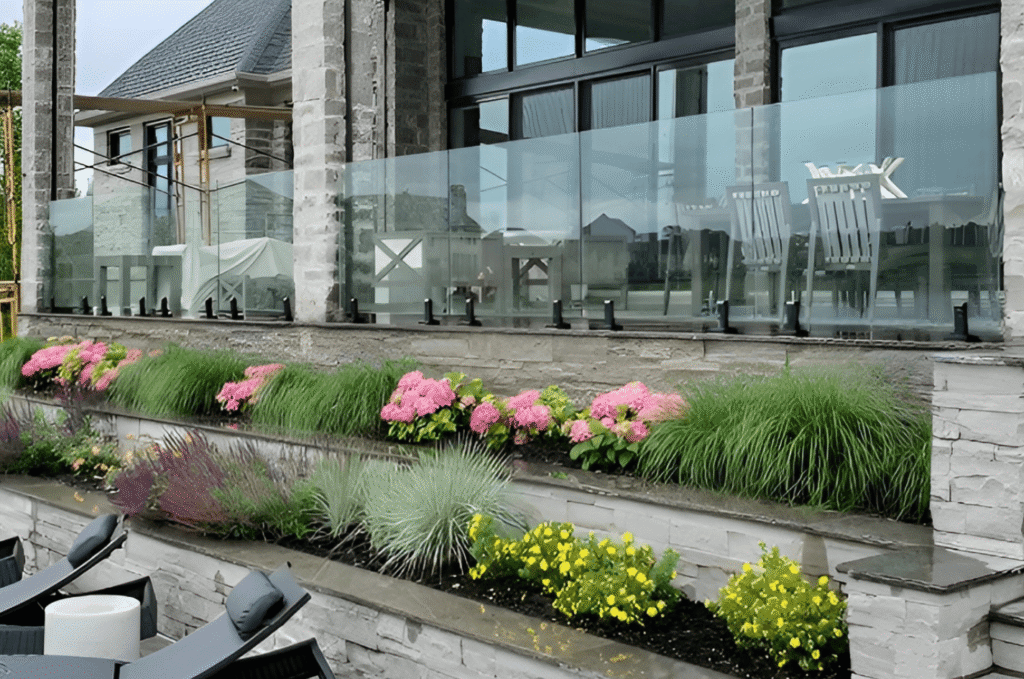
Cost, Installation, and Long-Term Value
Price and installation quality decide how well any railing holds up over the years. A deck glass railing often costs more than a small balcony run simply because it covers more length. Both reward careful planning and skilled work.
Why Professional Installation Wins
Glass is unforgiving, and a poor mount can crack panels or fail inspection. Choosing professional railing installation protects your investment and keeps a deck glass railing safe, level, and code-ready for years.
Skilled crews also handle the drainage and load details that any outdoor glass railing demands.
Built by Glass Railing Specialists
A deck glass railing lasts longest when one dedicated team designs, fabricates, and installs it as a single system. The specialists at Glass Railing Seattle focus only on glass, which means cleaner lines, safer mounts, and a finish built for the Northwest climate.
That single focus is the difference between a railing that just works and one that elevates your whole space.
Start Your Railing Project Today
Ready to compare a deck glass railing and a balcony system for your own home? Reach out through our contact our team page for a free consultation, and we will help you choose the right glass, hardware, and layout for your view.