
The difference between a guardrail vs handrail is simple: a guardrail blocks people from falling off an elevated edge, while a handrail gives a hand something to grip on stairs. They look similar but follow separate code rules on height, placement, and graspability, and many projects need both. Mixing up guardrail vs handrail rules is one of the most common reasons a railing fails inspection. Because codes are updated over time and local amendments apply, this guide covers the general rules, but you should always confirm current requirements with the Seattle Department of Construction and Inspections. Here is how the two differ, what the Seattle code says about each, and when a project needs both at once.
Table of Contents
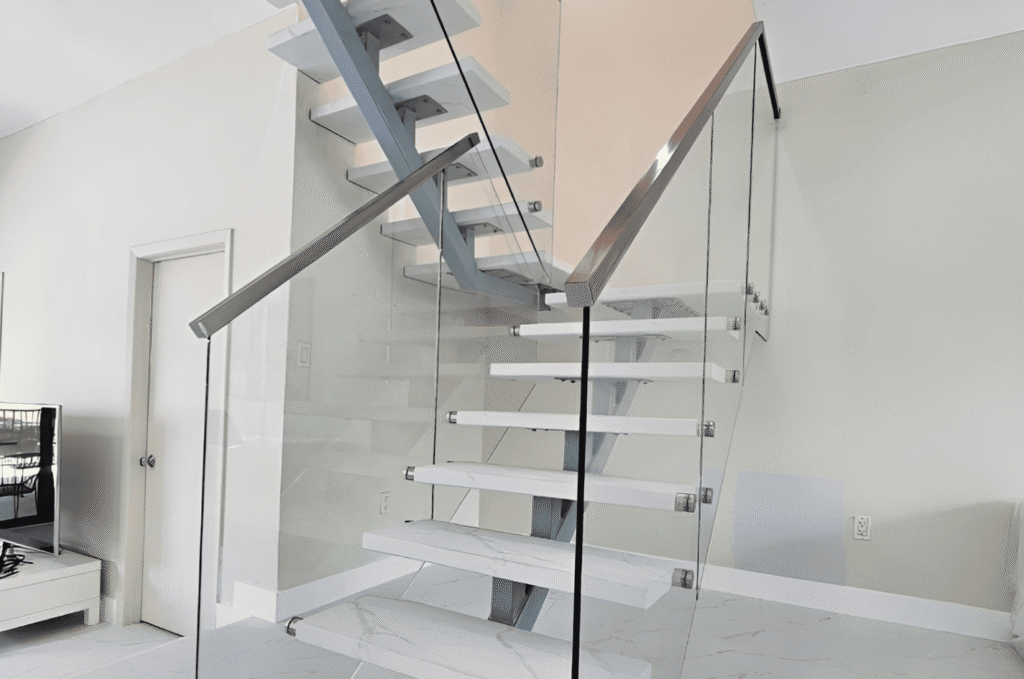
Guardrail vs Handrail: The Core Difference
Before the code rules make sense, it helps to see what each component actually does. The guardrail vs handrail distinction comes down to one protecting against falls and the other providing grip. Their jobs are different, so the guardrail vs handrail rules are too, right down to how high each one sits and how it is built.
What a Guardrail Does
A guardrail is a protective barrier along an open, elevated edge, which is why a frameless glass deck railing serves this role. It stops people and objects from falling off a raised surface. Its whole purpose is blocking the drop, so it has to be tall enough and tight enough to stop a fall.
What a Handrail Does
A handrail is a graspable rail you hold for support, most often along stairs. It gives steady grip while going up or down steps. Unlike a guardrail, it is built to be wrapped by a hand, with a size and shape made for a secure hold.
Why the Difference Matters
Understanding the difference between guardrail and handrail is what keeps a project compliant, since each has its own height and design rules. Getting the difference between guardrail and handrail wrong is a frequent, costly mistake. Knowing which you need shapes the whole design, and the guardrail vs handrail choice can send a finished railing back for rework if it is wrong.
Seattle Guardrail Code Requirements
Guardrails have their own set of rules focused on blocking falls. The Seattle guardrail code sets height and opening limits wherever there is a drop. These rules exist purely for fall protection, keeping anyone on a raised surface from going over the edge.
When Is a Guardrail Required
Knowing when a guardrail is required comes down to height: any surface more than 30 inches above the floor or grade below generally needs one. This covers most elevated decks, balconies, and landings, where the drop below is enough to cause real injury. The drop height is what sets the requirement, so a low step and a raised deck are treated very differently under the code.
Guardrail Height Rules
Guardrail height requirements generally call for at least 36 inches for homes and 42 inches for commercial or multi-family properties, as our deck railing height guide breaks down. The taller figure covers higher-traffic spaces. Height is the guardrail’s core rule, and the figure an inspector checks before anything else.
Opening and Spacing Limits
Guardrails must also follow the four-inch sphere rule, meaning no gap can let a four-inch sphere pass through. Owners of railings in Bothell watch this closely on stairs and infill. Spacing keeps children safe between the balusters, and it is checked as closely as the railing height itself.
Seattle Handrail Code Requirements
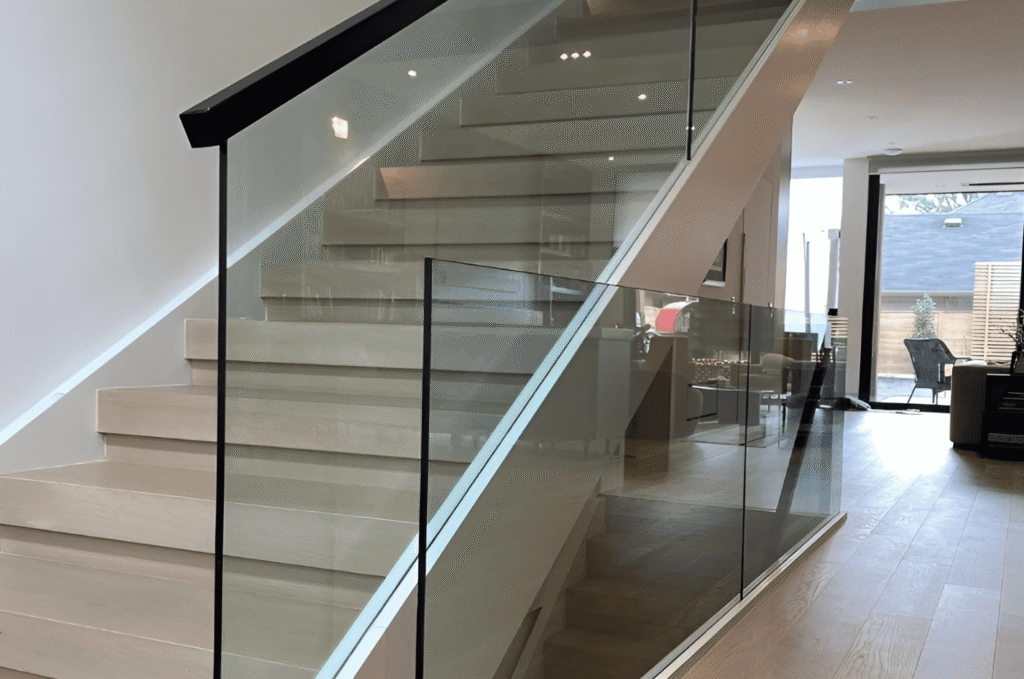
Handrails follow a different set of rules focused on grip and support. The Seattle handrail code covers height, graspability, and continuity on stairs. These rules make a rail easy to hold in a fall, which is the entire reason a handrail exists.
When Is a Handrail Required
A handrail is generally required on any stairway with four or more risers, which covers most glass stair railing projects. Shorter flights may not need one. The number of steps is what matters here, so even a short interior flight can fall under the handrail rule.
Handrail Height and Grip
Handrail height requirements generally place the rail between 34 and 38 inches above the stair nosing, with a graspable profile, as our stair railing height guide details. The grip must be easy to wrap a hand around. Both height and shape matter here, since a rail at the right height still fails if it is too thick to grip.
Continuity on Stairs
A handrail must run continuously the full length of the stairs, from the top step to the bottom. Homeowners with decks around Edmonds confirm there are no breaks in the rail. Unbroken support is the whole point, giving a hand something to hold from the first step to the last.
When You Need Both Guardrail and Handrail
Stairs and elevated decks often require both components at once. The guardrail vs handrail code rules work together on many projects, each doing its own job. Planning for both avoids a failed inspection, and it is far cheaper than reworking a railing after the fact.
Stairs With an Open Edge
A staircase along an open drop needs a guardrail to block the fall and a handrail to grip, which our broader Seattle glass railing code guide explains. The two sit at different heights, the guardrail taller to block the fall and the handrail lower to grip. Both are required on an open stair, each measured and placed to its own separate rule.
Why One Rail Often Isn’t Enough
A guardrail top cap is frequently too high or too wide to grip properly, so a separate graspable rail is added within reach. Owners of Newcastle glass railings often combine both on their stairs. The barrier stops the fall over the edge; the rail gives a secure hold along the steps.
Designing a Compliant System
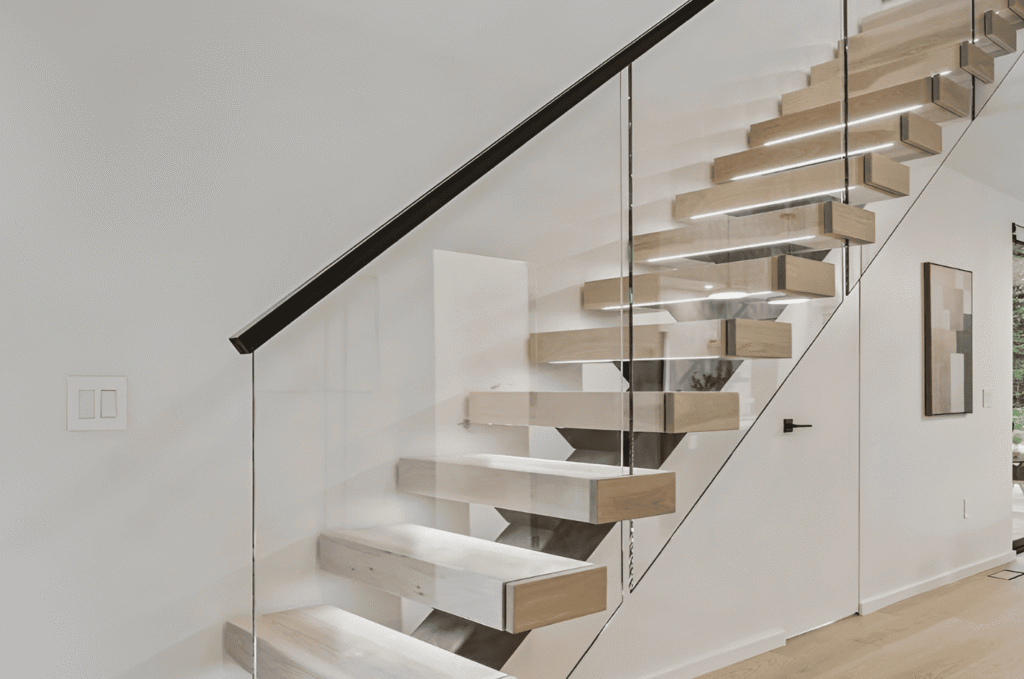
A well-designed railing satisfies both guardrail vs handrail rules cleanly, with the guardrail guarding the edge and a graspable handrail along the steps. Owners of panels in Woodinville plan both from the start to keep the look seamless. Good design meets code without compromise, delivering a railing that is both safe and clean to look at.
Getting Guardrail and Handrail Code Right
The surest way to satisfy both sets of rules is to work with specialists who build to Seattle code daily. Experience with the local guardrail vs handrail requirements keeps a project compliant from design to sign-off.
Why a Professional Gets It Right
A professional designs the guardrail and handrail to their separate rules, coordinates placement, and handles inspection from the start. That removes the guesswork that trips up DIY work. Getting it right the first time is the fastest path to approval.
Why Homeowners Trust Glass Railing Seattle
From code-compliant design to final inspection, homeowners rely on the specialists at Glass Railing Seattle to meet every guardrail and handrail rule. Focusing only on glass means every railing is built to pass.
Start Your Railing Project
Unsure whether your project needs a guardrail, a handrail, or both? Contact our team for a consultation, and we’ll confirm the requirements and build your railing to Seattle code.