
The most common outdoor glass railing problems caused by weather exposure are corroded hardware, water spots and staining on the glass, failed seals and gaskets, and loosening from repeated freeze-thaw and wind cycles. Outdoor railings sit in the elements year-round, so rain, sun, salt air, and temperature swings slowly wear down parts that looked solid on installation day. The damage is rarely sudden; it builds quietly until a fitting rattles, a panel clouds, or an inspection flags a problem. Knowing how weather attacks each component helps you catch trouble before a small issue becomes a costly repair. Here are the weather-driven problems worth watching, what causes each one, and how to keep them from taking hold.
Table of Contents
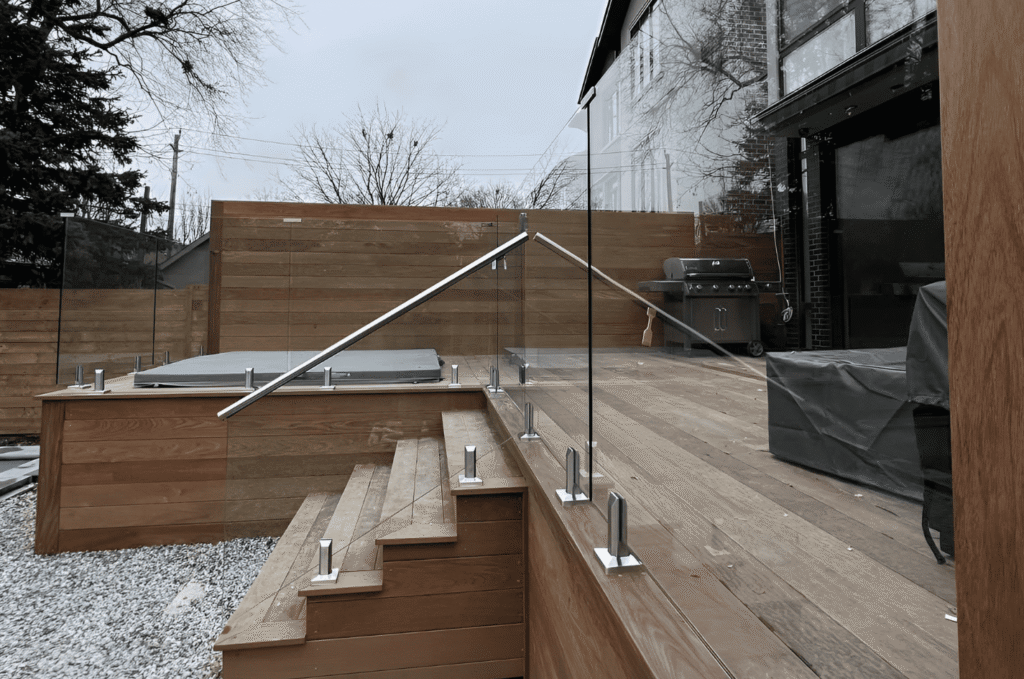
How Weather Wears Down an Outdoor Railing
Every element in your local climate leaves its mark over time, and the Pacific Northwest serves up plenty of them. Understanding weather damage to glass railings starts with the forces working against them day after day
Rain, Moisture, and Standing Water
Constant moisture is the biggest threat to an outdoor glass railing, seeping into base shoes, channels, and fastener holes where it lingers long after the rain stops. Trapped water speeds up corrosion and leaves mineral stains across the glass that grow harder to remove each month. Good drainage and sealed penetrations are the first line of defense.
Sun, UV, and Heat Cycles
Sunlight breaks down rubber gaskets, sealants, and protective coatings faster than most homeowners expect, drying them until they crack and shrink. Daily heating and cooling also expands and contracts glass and metal at different rates. Over the years, that constant cycling loosens fittings and cracks seals, often so gradually that no one notices until something leaks.
Wind, Salt Air, and Freeze-Thaw
Wind flexes panels while salt-laden air accelerates rust, a combination waterfront Mercer Island homes know well. In winter, water that freezes inside gaps and channels expands with real force and stresses everything it touches. It thaws in spring and repeats with the next cold snap, which is why exposed railings age faster than sheltered ones.
Hardware Damage and Corrosion
The metal parts holding your railing together take the hardest hit from weather, because they sit right where water collects and salt settles. Most glass railing hardware damage traces back to moisture and salt attacking fittings that were never built for constant outdoor exposure.
Rusted Clamps, Spigots, and Fasteners
Low-grade or coated steel fittings rust from the inside out once water finds them, and rust is among the most common deck railing problems on exposed decks. Streaks, orange staining, and a weakened grip all follow, and the corrosion usually spreads before it shows on the surface. Marine-grade stainless resists this far better, holding its strength and finish for years longer.
Loosening Base Shoes and Standoffs
Repeated expansion, wind load, and vibration slowly back out the bolts anchoring base shoes and standoffs, a little more with every season. A fitting that was tight at install can wobble a single season later. Loose hardware then puts uneven stress on the glass.
Why Marine-Grade Hardware Lasts Longer
Because outdoor glass railing in Seattle faces near-constant damp, marine-grade stainless and powder-coated aluminum are worth the upgrade for homes throughout Seattle. These materials shrug off the moisture and salt that quietly destroy cheaper fittings. The right metal is the cheapest long-term insurance a railing can have.
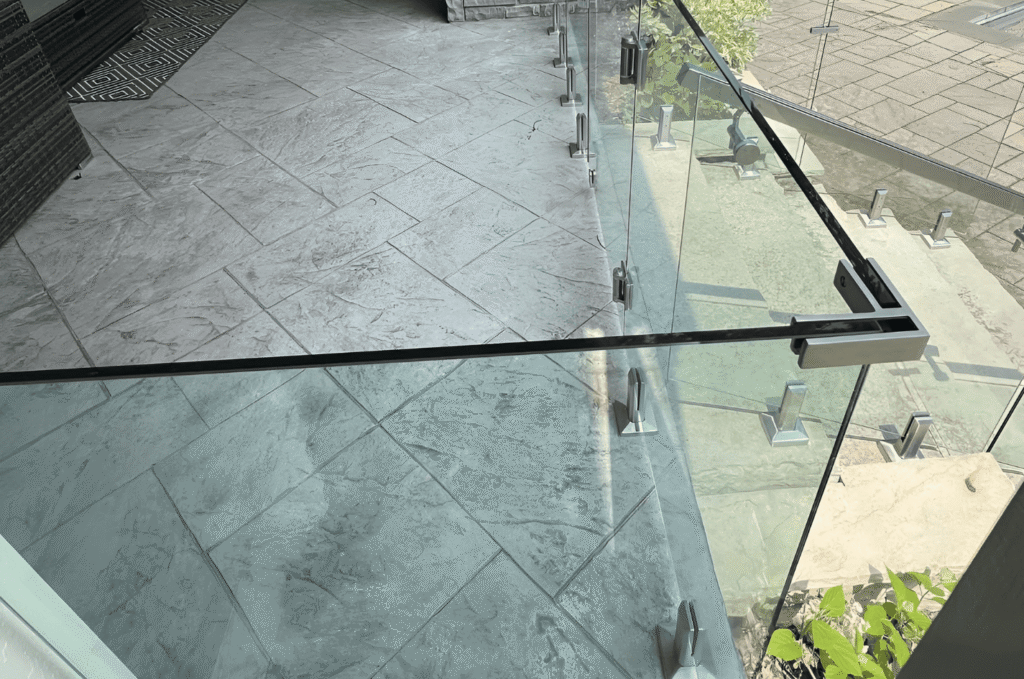
Glass Panel Problems from Exposure
The glass itself isn’t immune to the weather either, even though tempered panels are built to be tough. Panels that start out crystal clear can cloud, stain, or even crack under years of outdoor exposure, and some of that damage can’t be reversed.
Water Spots, Staining, and Mineral Buildup
Hard water, sprinkler overspray, and rain all leave mineral deposits that dull the glass over time, turning a clear panel hazy at the edges first. Homeowners in Bellevue homes often see this filmy buildup on railings near irrigation lines. Regular rinsing stops spots from etching in.
Cloudiness and Trapped Moisture
When seals fail, moisture can work into the edges or laminated layers and leave a permanent haze inside the panel. Unlike surface spots, this cloudiness usually can’t be cleaned away, because the problem sits within the glass itself. It signals a seal or panel that needs attention, and left alone, the haze tends to spread across more of the panel each season.
Cracks from Thermal and Edge Stress
Edge chips from install or flying debris become weak points that thermal swings can grow into full cracks, one of the outdoor railing installation problems that surface months later. Tempered panels can’t be repaired once cracked, so the whole piece has to be replaced. Protecting the edges and keeping panels clean guards against this slow failure.
Preventing Weather Damage with Maintenance
Most weather problems are slowed or stopped with simple upkeep, and none of it requires special tools. A little outdoor glass railing maintenance each season keeps small issues from becoming expensive ones, and a consistent routine matters far more than any single deep clean.
Seasonal Cleaning and Rinsing
A regular rinse clears salt, grit, and mineral film before they can etch or corrode, keeping the glass looking new between deeper cleans. Homeowners in homes in Redmond keep panels clear with a quick wash a few times a year. Clean glass and clear channels simply last longer.
Inspecting Hardware and Seals
A seasonal look at clamps, bolts, gaskets, and weep holes catches loosening and wear early, before a small gap turns into a rusted or wobbling fitting. Tightening a fitting or clearing a blocked drain takes only minutes and prevents much bigger damage later. Building this quick check into your regular outdoor glass railing maintenance is one of the highest-value habits a homeowner can keep.
Protecting Balconies and Elevated Railings
Raised spaces catch more wind and rain, so a glass balcony railing needs extra attention around posts and anchor points where loads concentrate. Exposure at height stresses hardware harder than at ground level, and any loosening tends to show up sooner. Frequent checks keep elevated panels secure through the seasons.
Extra Care for Outdoor Stairs
Exterior steps drain poorly and take constant foot traffic, so an outdoor stair railing installation deserves its own maintenance routine. Water pools on treads and works into angled fittings. Keeping stair hardware clear and snug guards against the early loosening sloped panels are prone to.
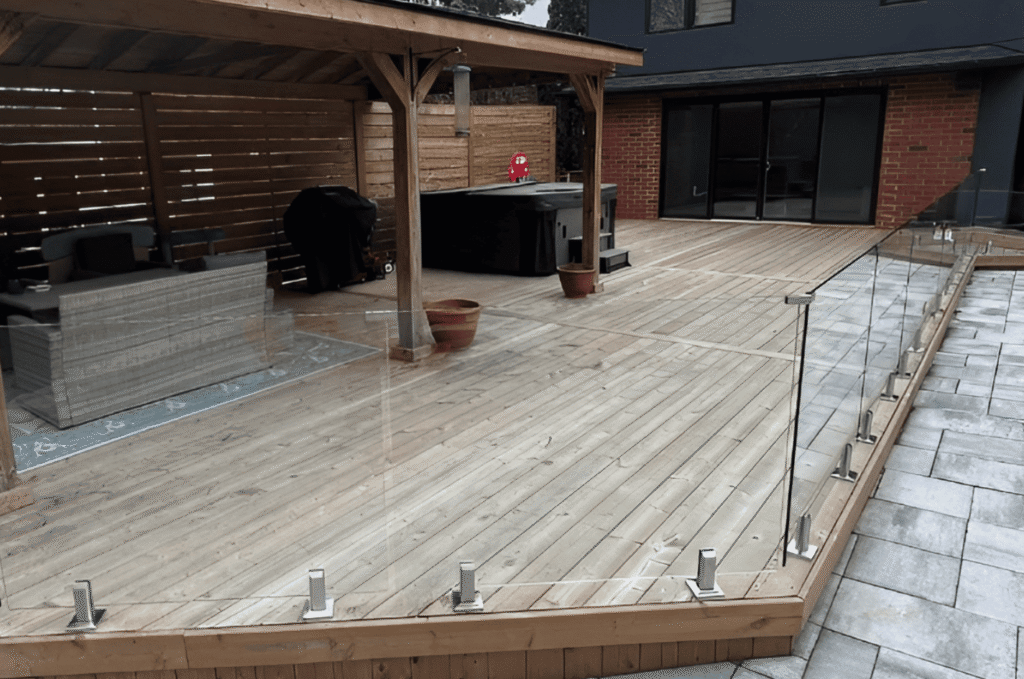
Keeping Your Outdoor Railing Weather-Ready
You can prevent most of these outdoor glass railing problems by pairing good materials with routine care, and the payoff is a railing that stays clear and solid for years. When damage has already set in, a specialist can restore the railing safely rather than masking the issue.
When to Call a Professional
Deep corrosion, cracked panels, and loose structural hardware are jobs for a pro rather than a quick fix, since each one affects how safely the railing carries load. A specialist spots weather damage that a casual look misses and matches the repair to the underlying cause instead of the symptom. That saves both money and safety risks down the line.
Why Homeowners Trust Glass Railing Seattle
From the first inspection to the final fitting, homeowners rely on the specialists at Glass Railing Seattle to keep outdoor railings standing up to the weather. Focusing only on glass means every panel and fastener is chosen for the climate it will actually face, so your railing is built to last where it stands.
Book a Railing Inspection
Noticing rust, cloudy glass, or loose fittings on your railing? Contact our team for a weather-damage inspection, and we’ll pinpoint the problem and recommend the right fix for your outdoor space.