
Outdoor glass railing does something no other railing material can. It disappears. The barrier is Outdoor glass railing does something no other railing material can. It disappears. The barrier is there, the safety requirement is met, but the view stays completely open. Whether you are looking out over a lake, a wooded hillside, or a city skyline, the right outdoor glass railing design makes the surrounding landscape the focal point rather than the railing itself.
This guide covers the key outdoor glass railing design decisions for decks, balconies, and patios, along with the hardware and glass choices that shape the final result.
Table of Contents
Why Outdoor Glass Railing Improves Views and Adds Style
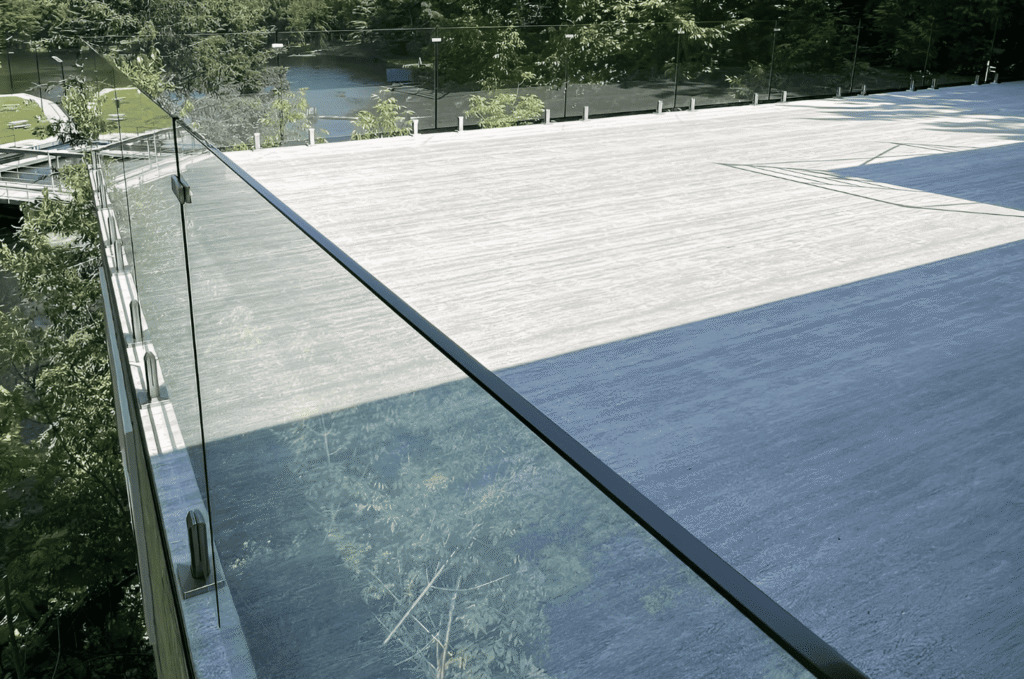
The case for outdoor glass railing starts with what it removes from the picture. A wood railing breaks the view into horizontal and vertical segments. A cable railing improves on that but still puts lines across the landscape. A frameless outdoor glass railing removes all of those interruptions and gives you an unobstructed sight line to whatever is beyond.
Getting familiar with custom glass railing design options before comparing specific systems helps clarify which direction fits your project from the start.
The View Advantage of Frameless Outdoor Glass Railing
Frameless outdoor glass railing systems use no visible posts between panels. The glass is secured in a continuous base shoe channel or held by individual spigots mounted into the deck or balcony surface. The result is a smooth, uninterrupted line of glass that preserves the full width and height of the view beyond.
This difference is most dramatic on elevated decks and balconies where the surrounding landscape extends in multiple directions. Homeowners in Fremont Seattle with waterfront and canal views often find that switching from a traditional railing to a frameless outdoor glass railing transforms how the outdoor space reads and how much time they spend using it.
How Outdoor Glass Railing Adds Exterior Style
Beyond the view, outdoor glass railing contributes to the architectural character of a home. The glass panels have a visual weight and precision that reads as intentional design rather than a standard safety requirement. The hardware finish is where the style expression happens: matte black spigots read as contemporary, brushed stainless suits coastal aesthetics, and powder-coated aluminum in custom colors can coordinate with the exterior palette.
For a deeper look at how hardware finishes work across different settings, the guide on indoor to outdoor glass railing design covers how to carry a consistent finish direction through the whole home.
Outdoor Glass Railing Design for Decks
Glass railing deck design focuses on preserving the view while meeting the structural requirements of the deck framing. The mounting method, panel size, and top rail choice all interact with the deck surface and height above grade. Decks at significant height benefit most from frameless glass because the view is the primary reason for being up there.
Choosing the Right Mounting System for Deck Railings
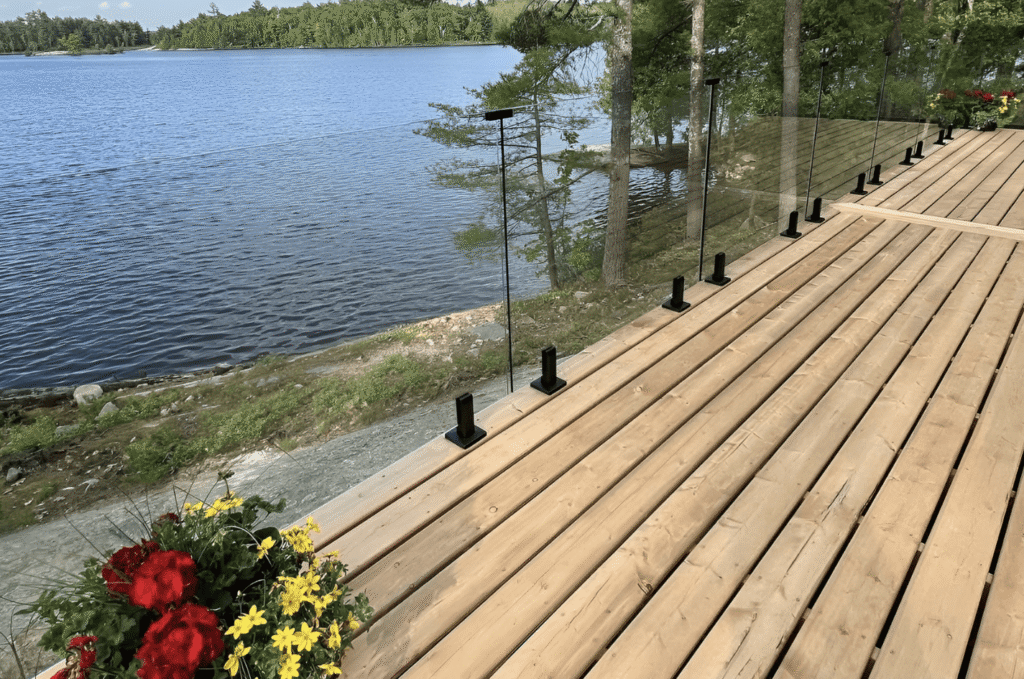
The three main mounting approaches for outdoor glass deck railings are base shoe channel, individual spigot clamps, and post-mounted hardware. Base shoe produces the cleanest result with no visible hardware between panels. Spigot systems allow more flexibility for decks with non-standard framing. Post-mounted systems suit older decks where continuous channel mounting is impractical.
Our glass deck railing service includes a structural review before any work begins to confirm which mounting approach suits your deck.
Top Rail Options for Outdoor Glass Deck Railings
A top rail runs along the upper edge of the glass panels and provides a graspable surface for code compliance. Common choices include round stainless steel tube, flat aluminum bar, and wood cap rail. Each changes the character of the deck railing significantly.
Round stainless tube reads as modern and coordinates naturally with brushed or polished hardware. Flat aluminum bar creates a more architectural profile. Wood cap rail brings warmth to a frameless glass system and suits homes with timber frame elements or natural wood siding. Homeowners in Laurelhurst Seattle near Lake Washington often combine a wood cap rail with frameless glass panels on their waterfront decks to balance the contemporary clarity of the glass with the warmth of natural materials.
Outdoor Glass Railing Design for Balconies
Outdoor glass railing balcony applications involve greater wind exposure and different structural anchoring than deck systems. Balconies project from the building face with no surrounding ground to buffer lateral loads, making panel thickness and hardware specification more critical. The railing is also seen from below as well as above, and it frames the view from inside the home through the door or window that leads to it.
Frameless Glass Railing for Elevated Balconies
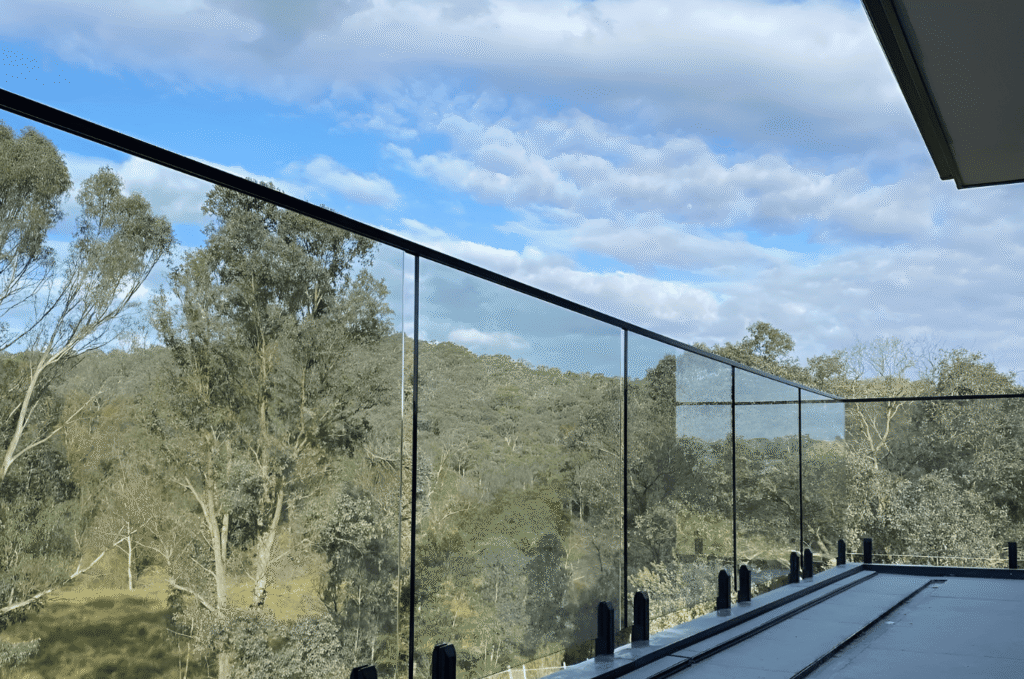
Frameless outdoor glass railing on elevated balconies uses base shoe channels or individual spigots anchored into the balcony slab. The panels run continuously around the perimeter with no visible posts. Half-inch tempered glass is typically specified because the increased rigidity handles wind load better over wider balcony spans.
Homeowners in Juanita Kirkland near Juanita Bay often specify frameless outdoor glass railing on elevated balconies to maximize water views and reduce the visual mass of the railing on a prominent architectural feature.
Adding a Top Rail to Outdoor Balcony Glass Railing
Some jurisdictions require a graspable top rail on balcony railings regardless of panel configuration. Where a top rail is required, the profile choice shapes the overall character of the outdoor glass railing system.
A flat aluminum bar top rail creates a minimal, architectural look that suits contemporary homes. A round stainless tube is more traditional in its proportions but reads cleanly in most exterior settings. Our outdoor glass railing service covers all top rail options and helps you select the right profile for your specific balcony configuration.
Modern Outdoor Glass Railing Design Trends
Modern railing design has moved steadily toward less visible hardware and more glass. Spigots and clamps have become smaller and more refined, and base shoe channel systems have become standard where a minimal look is the goal. Color and tint are the other significant design direction, with bronze, grey, and blue-tinted panels increasingly used for privacy or to introduce a color element to an outdoor space.
Hardware Finish Trends for Outdoor Glass Railing
Matte black has become the most requested hardware finish in residential applications. It coordinates with most exterior palettes and ages well without showing water spots. Brushed stainless remains preferred for waterfront and coastal properties where corrosion resistance is the primary criterion.
For properties in Totem Lake Kirkland and similar areas near water, the hardware specification conversation often starts with corrosion resistance before moving to aesthetics.
Planning for the Pacific Northwest Climate
Railing systems in the Seattle region have to account for consistent rainfall, occasional freeze-thaw cycles, and wind exposure on elevated properties. Powder-coated aluminum hardware performs well in most residential settings. For properties with direct water exposure, stainless steel is the better long-term investment.
If you want to go deeper on mounting methods and system types for exterior installations, the guide on glass railing system design options covers the full range of choices for home exteriors.
Choosing the Right Outdoor Glass Railing for Your Home
The right system starts with the view you are trying to preserve, the architectural style of the house, and the structural characteristics of the deck or balcony. A frameless base shoe system suits elevated decks and balconies where the view is the primary asset. A spigot system suits spaces with irregular framing. A post-mounted system suits older structures where other approaches are impractical.
Getting the Most from Your Outdoor Glass Railing Investment
A well-specified outdoor glass railing adds to the usability of your space and the long-term value of your home. Getting it right means choosing a system that fits the structure, specifying hardware that will perform in your environment, and selecting glass that suits both the view and the privacy requirements of the site.
Glass Railing Seattle works with homeowners across the region on projects of every scale. Explore our completed outdoor projects at Glass Railing Seattle to see how different system types and hardware finishes perform across a range of home styles.
Start Your Outdoor Glass Railing Project
Ready to improve your views and add style to your outdoor space with a new glass railing system? Our team is here to help you work through the options and find the right fit for your specific deck, balcony, or patio.
Contact us today to schedule your outdoor glass railing consultation